Dan Jackson on His New Book All About NUFC
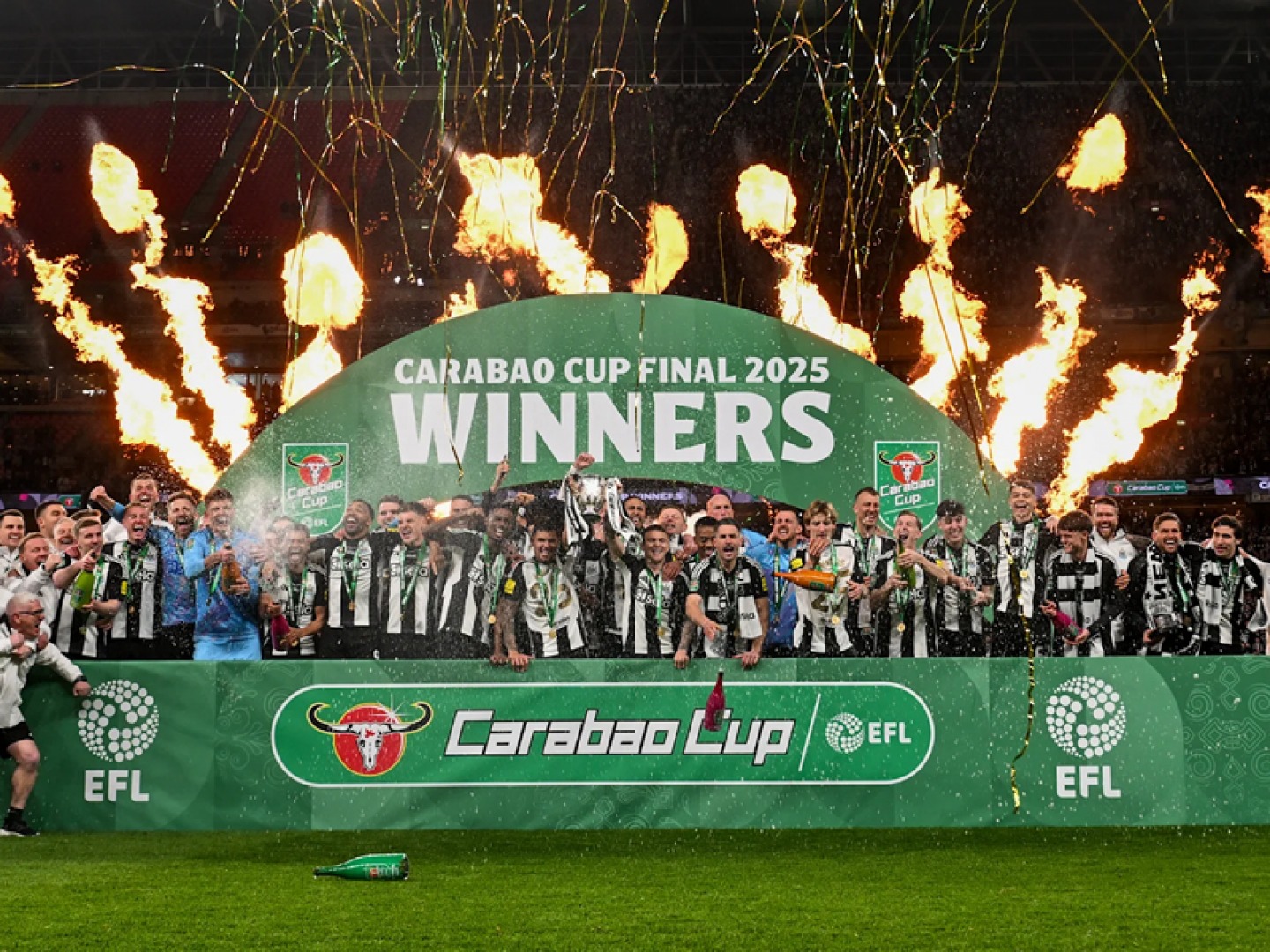
Living North catch up with local historian Dan Jackson ahead of the release of his new book, Howay The Lads! A People's History of Newcastle United, to find out just what the club means to its city


In Howay The Lads!, Dan explores the club's place in the social and cultural life of the North East. ‘Broadly speaking, what I hope I've written is a book that would be interesting to anyone, even if they're not necessarily football fans, or as obsessed with football and Newcastle United as I am, which I am,’ Dan says. ‘But I do recognise that a lot of football books almost have too much football in them. I love football statistics and match reports as much as the next man, but sometimes it's difficult to create a coherent story from all that material. So what I've tried to do with this book is tell the story of the city of Newcastle through the fortunes of its football team. And what I found interesting is that periods of success for Newcastle United have tended to track periods of prosperity, confidence and optimism in the wider city and region. They've tended to go hand-in-hand.’
Dan argues that in Edwardian England, Newcastle United were the best team. They won the First Division title three times (in 1905, 1907 and 1909) and their first FA Cup in 1910. ‘They dominated English football,’ Dan says. ‘They had the best players. They had the best ground. They made the most money. They were a very prestigious organisation, but they were also a vehicle for Geordie pride, and bear in mind Edwardian Newcastle is this incredibly dynamic place. We’ve got a Tyne and Wear Metro now because of Tyneside Electrics, which was one of the very first suburban railway lines anywhere in the world, and was created in 1904, and in 1906 the Mauretania was launched at Wallsend which was the fastest ship in the world for 20 years. The suburbs were expanding. The trade unions were incredibly strong.
'The era that the North East perhaps looks back to with some nostalgia is that pre-First World War world of confidence and prosperity – 1913 was the record year for coal production in the Great North Coalfield, for example. Sunderland were a good team as well. But it's getting on for over a century since Newcastle and Sunderland counted for very much in English football… although the rivalry's been intense ever since. We could talk about the 1950s in a similar way or the 1990s – which are again periods in the region's history when there was something in the air, and that also translated to the football team, which is interesting.’
Dan read many books, newspaper reports and player biographies whilst researching, and found support in Dr Alex Jackson, curator at the National Football Museum in Manchester. ‘He’s a Newcastle fan, which is great,’ says Dan, ‘and he was able to squirrel away stuff from their archives which was really useful.’ Dan also researched the relationship between the club and key figures like T. Dan Smith and Sir John Hall. Dan offers Colin Veitch as an example. ’He was an absolutely fascinating person,’ Dan says. ‘He was Newcastle captain, an England international, a talented amateur actor, friends with George Bernard Shaw, he co-founded the People's Theatre, he was almost selected as the Labour Party candidate in the general election, he was absolutely drop-dead gorgeous on top of that (he looked like Morrissey in the 1980s) – he and his second wife Greta used to reenact Romeo and Juliet on the balcony of their home in Gosforth. He’s not what you expect from a footballer, but this guy was a real Renaissance man, and he is the embodiment of the confidence and dynamism of Edwardian Newcastle. More people should know about him. I hope there's a statue of him before too long, as well as the late Kevin Keegan of course.’
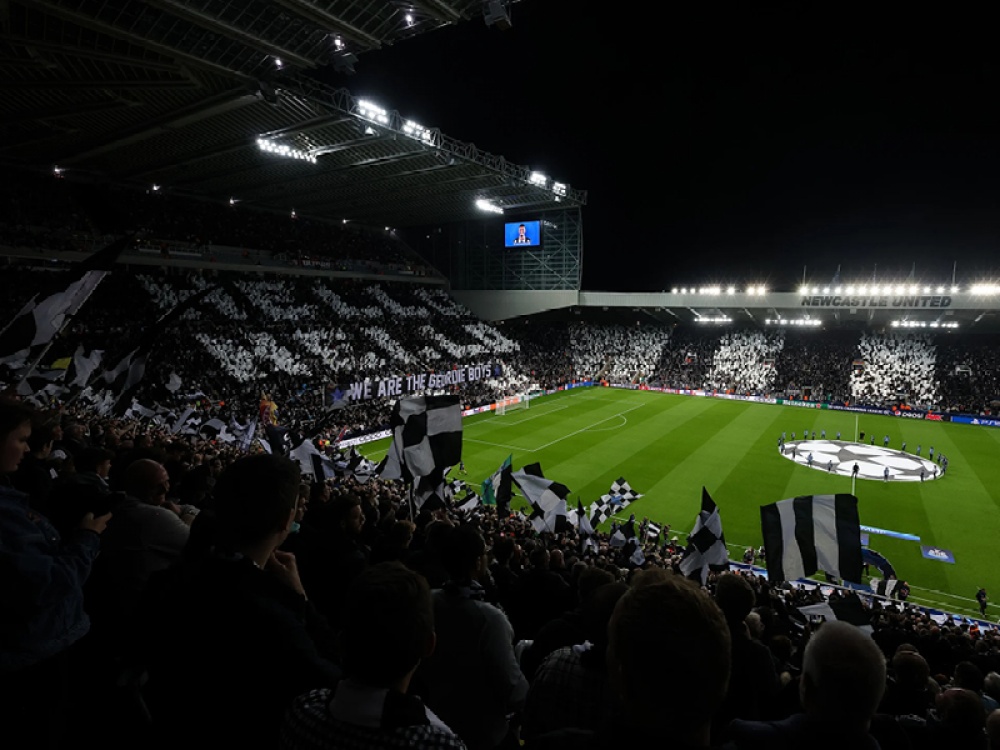
Howay The Lads! highlights the important role the football club has played in people’s identity, and Dan explains this best through the idea of ‘third spaces’. ‘You’ve got your home, your work, but there's a third space to fill. I think some of the problems that our society faces currently is that there's perhaps fewer of those third spaces for people to go to.’ Dan argues that football clubs such as Newcastle United continue to bring people together. ‘I went to see Gerry & Sewell, and I’m not a regular theatregoer really, but I was amazed at how packed it was, people turning out in football colours, the speeches, the people on their feet cheering,’ Dan adds. ‘I think things like that speak to people in the North East who maybe think we've had the rough end of the wedge over the last 100 years.’
The club’s story is of both hope and heartbreak, with a sprinkling of recent controversy. ‘I suspect, like a lot of fans, when the Saudi takeover happened, which many of us had mixed feelings about, we thought at least we might be in a Paris Saint-Germain or Manchester City scenario where they just turn the taps on and we have this team of galácticos,’ Dan suggests. ‘That hasn't really happened. I think the timing of the takeover meant that the rest of the Premier League was able to fight a bit of a rear guard action against Saudi investment. Yet the club's been on a journey. I think they've spent last year strengthening their internal infrastructure and appointing to key positions. They've still got a nucleus of really good footballers. But I think, as fans, we probably want to see more progress on making their mind up about the new stadium and what’s happening with the training ground that's been promised for ages. But we did win a trophy!’
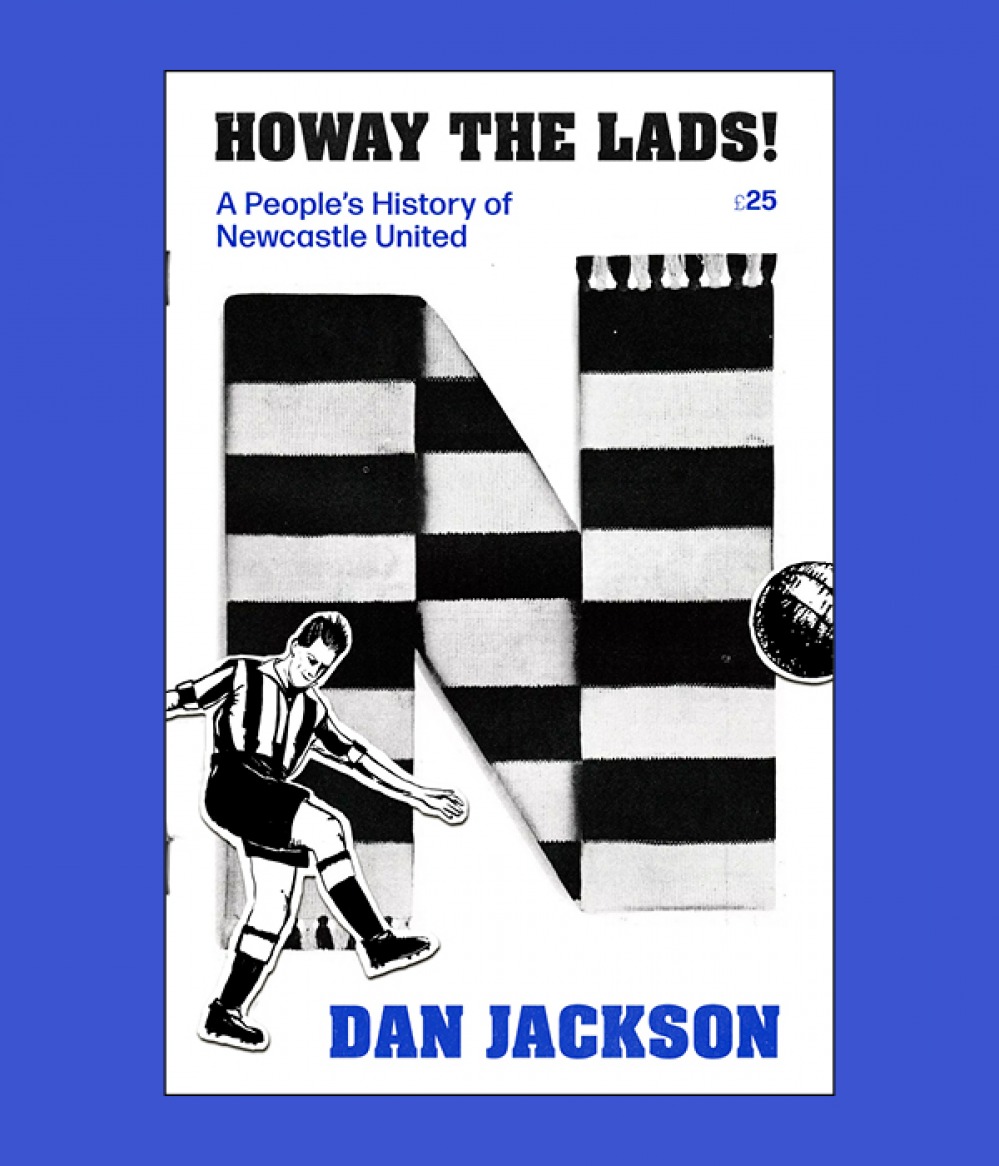
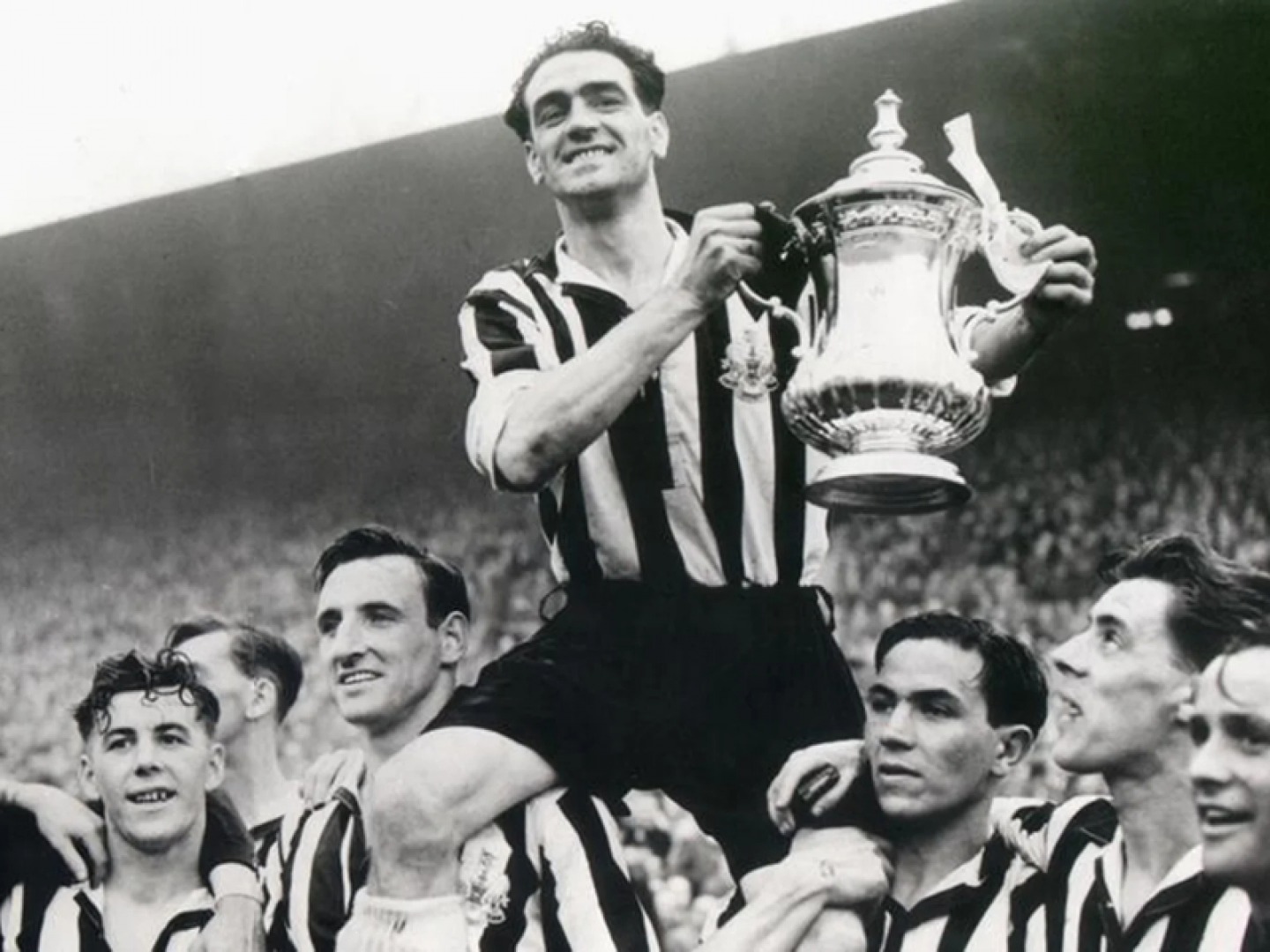
Last year, Newcastle beat Liverpool in the Carabao Cup final at Wembley, securing their first major domestic trophy since 1955. ‘Frankly, like a lot of Newcastle fans, I just assumed that we'd never see Newcastle win anything. I was there at Wembley when we did, and that was extraordinary,’ says Dan. ‘It was a fantastic thing, seeing the homecoming parade. That chimed in with the stuff my dad told me about seeing Jackie Milburn and all those lads bringing the FA Cup back in the 1950s. It was wonderful to see all that.’
Howay The Lads! is published this September but it’s already received praise from the SAS (Shearer and Sandbrook, that is). ‘I was delighted to get Alan's backing,’ says Dan. Shearer describes the book as ‘a brilliant history of the club I love’. ’It'd be interesting to get Alan's reflections on growing up in Newcastle in the early ‘80s, where football was a way out for a lot of young lads. You could plausibly build a career like he did, an amazing one,’ says Dan. Dominic Sandbrook describes Howay The Lads! as ‘an outstandingly rich, entertaining and thoughtful book’. ‘Dominic Sandbrook is an absolutely fantastic social historian, who I've admired for years,’ says Dan. ‘I’ve worked with him on The Rest Is History. I open the book with Bruce Forsyth entertaining the crowd before the 1974 FA Cup final. In Dominic's books, he writes about 1974 as the worst year in British history because so many things were going wrong, then Newcastle find themselves embarrassing themselves in the cup final. I was able to draw on some of the fascinating insights that Dominic's made about British political, social and cultural history. I think he agrees with me that football clubs are a useful way of understanding this country and its cities.’
A key factor in that is spirit. ‘In my concluding chapter in the book, I've got a whole section on what the badge means,’ he adds. ‘What I'm really interested in is the seahorses. They represent the spirit of the place (they’re derived from Roman mythology). There's a really interesting, and I think powerful, tie-in between what the Romans called the ‘genius loci’ – the special character or spirit of a place. I think that's what the book is about, the spirit of the place.’