Find Out What We Thought of Northumberlandland's Only Michelin-Star Restaurant
We head into Northumberland for a Michelin-starred lunch


Nestled in the eaves of an old barn, Pine sits at the heart of Vallum Farm. When we visit on a busy Saturday lunchtime, we’re greeted at the entrance and led straight up the stairs, taking a left turn into Pine’s airy bar, which has plenty of low tables and comfortable seats. The quirky ornaments on the mantelpiece above the stove will be familiar to Great British Menu fans, as chef patron Cal Byerley has appeared on the show three times. Mementoes of his dishes include a tennis racket, a gravy boat in the shape of a duck and (from this year’s appearance) a small striped popcorn bucket.
A cocktail seems to be the order of the day. With a zingy rhubarb margarita and a pale ale brewed by Northumberland’s Rigg & Furrow farmhouse brewery, we browse the drinks menu and decide to order one wine pairing and one of Pine’s homemade soft drink pairings (it is lunch time after all).
Choice made, we’re led into the restaurant proper, where large windows frame views of the open countryside beyond. Our 10-course lunch menu is on the table waiting for us, mounted on recycled paper which the team here make by hand, and which is infused with wild flower seeds so you can take it home and plant it (this is the kind of thing that gained Pine a Green Star for its eco credentials, as well as its coveted Michelin star).
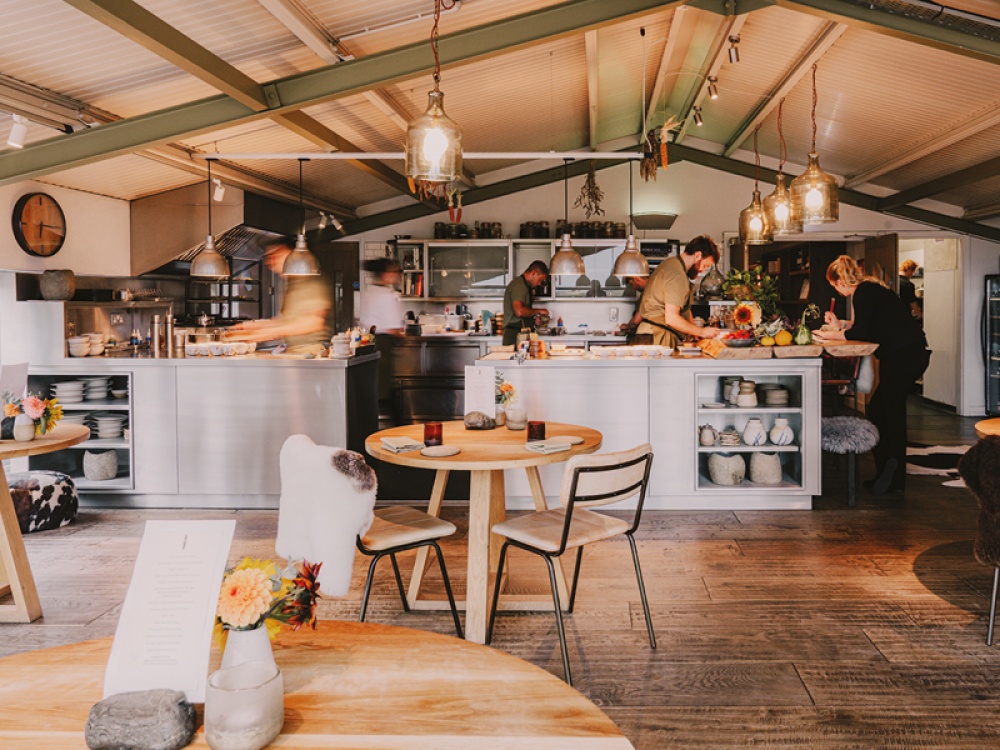
Our table faces the open kitchen, giving us a front row seat as the chefs weave around each other in well-practiced choreography, each focusing on their own task and coming together at exactly the right time to plate up dishes which look spectacular, and taste – well, if our first dish (a spherical sugar kelp dumpling with cherry and cuttlefish balanced on the top) is anything to go by, they taste even better than they look.
After this we’re treated to something really special. Pine’s focus on using every part of the animals they cook means that they don’t often include beef on their menus (a cow is quite simply too big to handle), but chef Ian Waller has been working on something over the last few years. Using Wagyu x Holstein beef (supplied by Heaton’s Block & Bottle), he’s created a cured meat reminiscent of a Spanish cecina. He tells us he’s been aging it since November 2023 (yes, really) – and you can taste it in the richness of the meat and the delicious butteriness of the fat.
But back to the menu. Next, a delicate sourdough cracker is filled with Berwick Edge cheese custard, topped with horseradish and chewy dry-aged carrot (which has been dehydrated and rehydrated and gets stuck in your teeth in the best possible way).
Having grown up in a family where serving two types of potato with dinner was fairly standard, and three not uncommon, I know my potatoes – but nobody does potatoes like Pine. In a small bowl, we discover super-creamy mash spiked with tiny, crispy potato pieces, shallots, the fresh flavour of wild garlic and a swizzle of cucumber reduction. A grapefruity white wine from Kinsbrook, a vineyard run by a young couple in West Sussex, cuts through the buttery dish, while the soft drink pairing (made with foraged geranium and lemon balm) produces much the same effect, and is good enough to drink on its own.
After potatoes, bread was perhaps the second most important food group for my family, so it’s comforting to see the same attitude on display here, and we slather bright green wild leek butter onto chunky slices of wholegrain sourdough made with local grains, before dredging it through a fragrant mushroom broth. The broth hides meaty mushrooms (grown in Whitley Bay) glazed with quince, little dots of green pine cone jam and a crispy kale leaf.
Next we’re treated to an iconic Pine dish – it’s become a menu staple since the restaurant opened. Chewy, sticky-sweet beetroot hides beneath a layer of a cheesy custard made with Doddington’s cheddar, with tiny pieces of walnut adding welcome crunch. It’s all topped with a generous grating of more Doddington’s cheddar, and when we dig our spoons into the bottom we end up with a seriously memorable mouthful.
Our final savoury course is fallow deer glazed with artichoke miso, but first we enjoy some theatre. A dark red beet wine is served in a glass with a wooden lid, while our sommelier brandishes a mysterious implement which turns out to be a blowtorch. The wooden cap is actually a miniature smoker filled with wood chips, which are heated until smoke infuses into the drink in front of us.
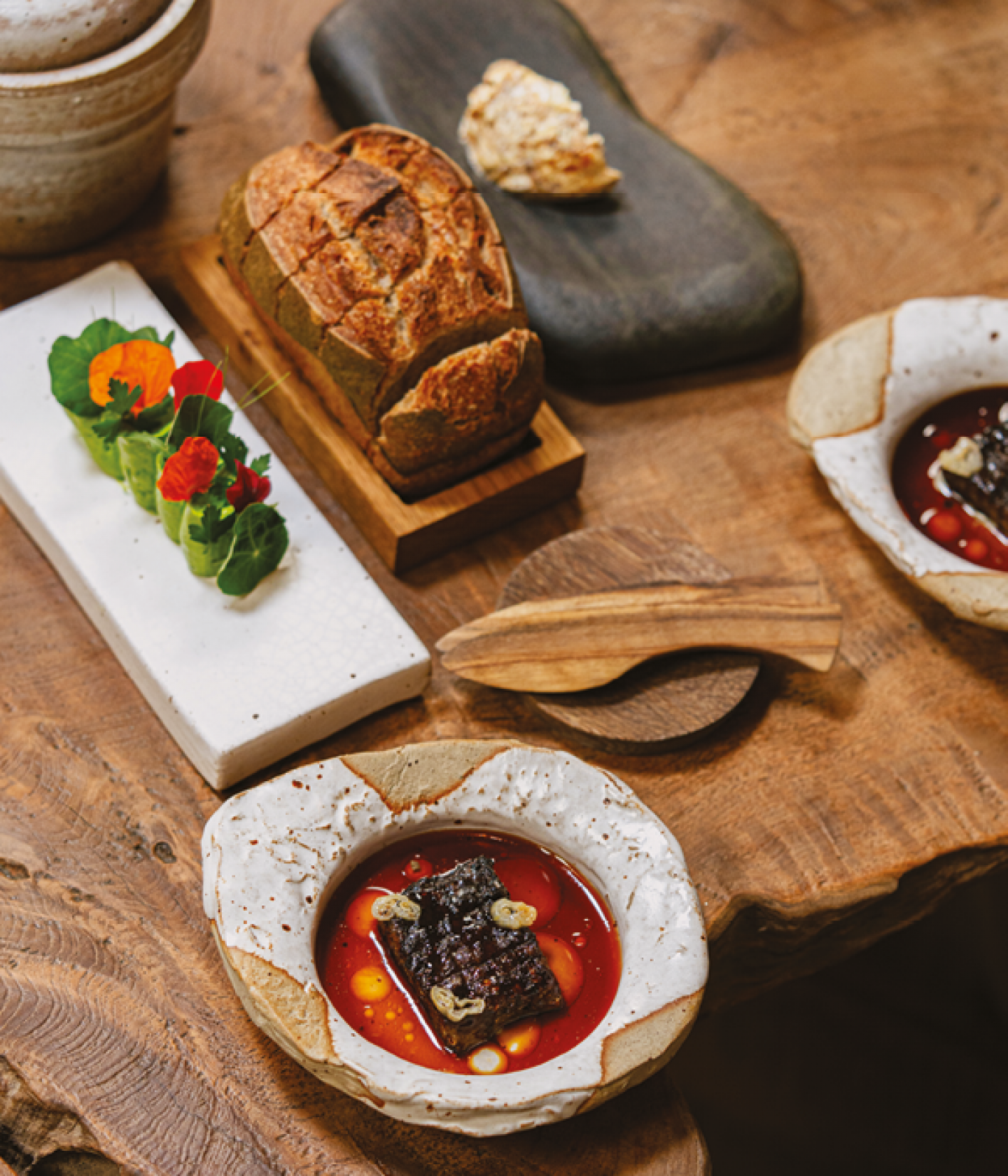
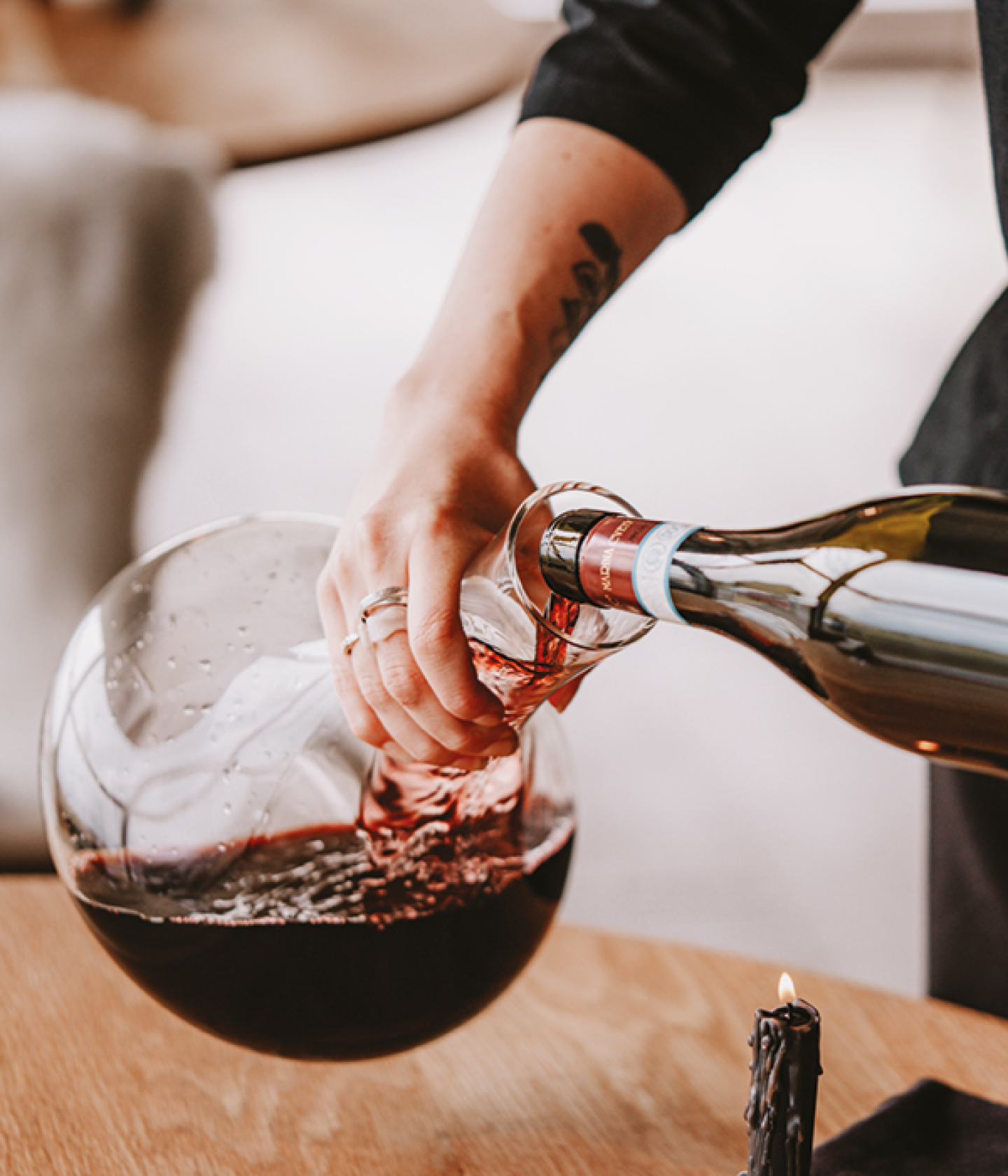
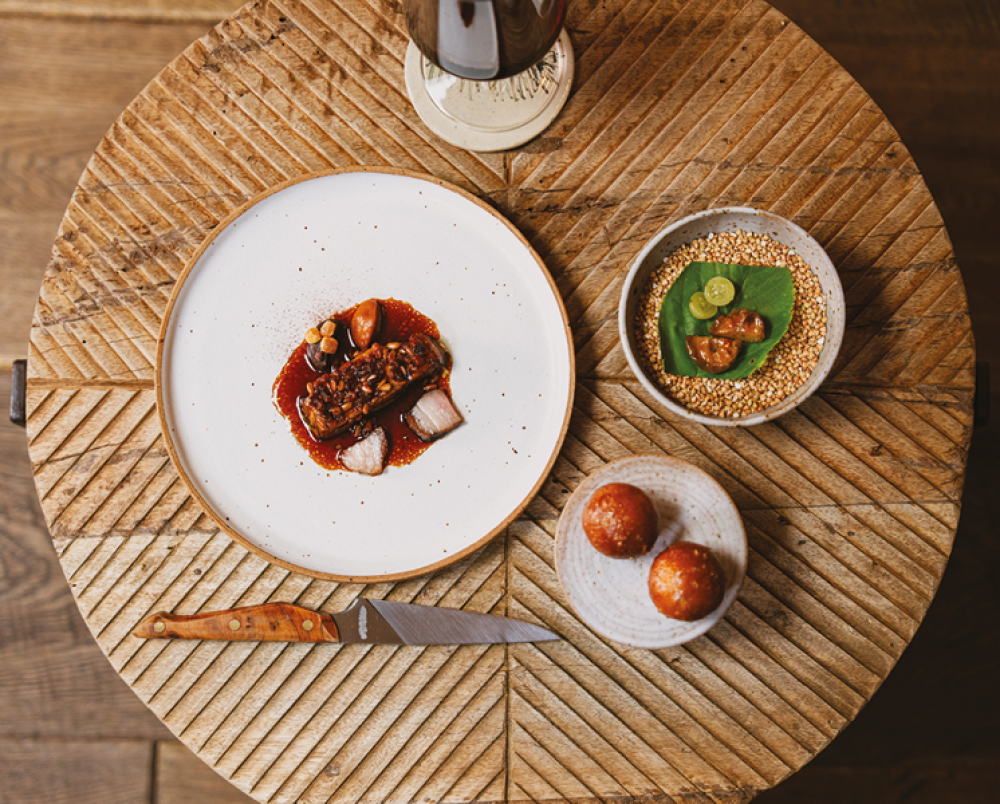
In the spirit of using the whole animal, we’ve got three different parts of the fallow deer on the plate: rump, belly, and a piece of sausage made with all the other bits which it’s sometimes best not to think about but which tastes frankly amazing. There’s also a splodge of jam made with preserved berries, a blob of hollandaise-style sauce, a rich jus and (in case that wasn’t enough) a soft round milk loaf with parsnip and black pudding. Along with that beet wine (or indeed with a glass of slightly damsony Hungarian Blaufränkisch, which is the other pairing for this course), I can’t imagine a better lunch.
At last, it’s time to move onto dessert. My partner has a glass of sweet but not sugary French semillion while the soft pairing is a lightly sparkling blend of lemon verbena and honey which I fully intend to have a go at making myself – Pine helpfully provide detailed information about all their pairings, with links to the wines and proper recipes for their homemade soft drinks. The dessert itself is a truly stand-out dish – a buttermilk base with rhubarb compote and freeze dried rhubarb. Among all this are hidden little pink jewels of chewy rhubarb which Cal describes as ‘rhubarb Midget Gems’. Neither of us has a sweet tooth, but this is something special.
Moving back into the bar and sinking into one of the sofas, we finish with petit fours – sticky nougat with cherry, plum and pumpkin seeds, and geranium and meadowsweet fudge.
So much of what they do here is hyperlocal – you’re not going to be served chocolate until they start growing cocoa beans in the Tyne Valley – that for a lesser restaurant it could be limiting, narrowing the opportunities to create great food, but it’s clear that the opposite is true at Pine. It fits into the landscape so perfectly, nestled in its barn among acres of fertile countryside, and makes such clever use of the produce that can be gleaned from said countryside, that it’s actually forced to be better, more innovative, and more original. This may seem at first to be an unexpected place to find a restaurant like this, but once you’ve tried it, you start to understand that this restaurant couldn’t exist anywhere else – it’s exactly where it’s meant to be.