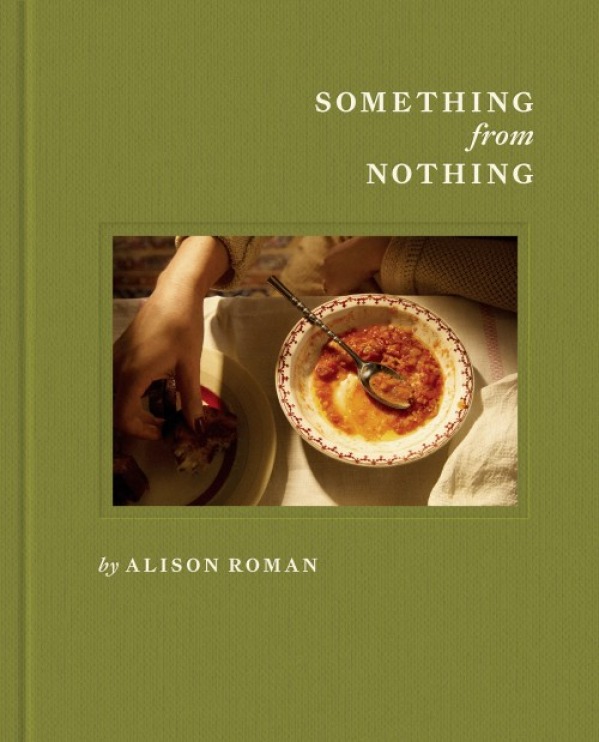
Extracted from Something From Nothing by Alison Roman (Quadrille, £27).
Recipe photography by Chris Bernabeo


Join Our World... Sign up for our exclusive newsletter.
Be inspired every day with Living North
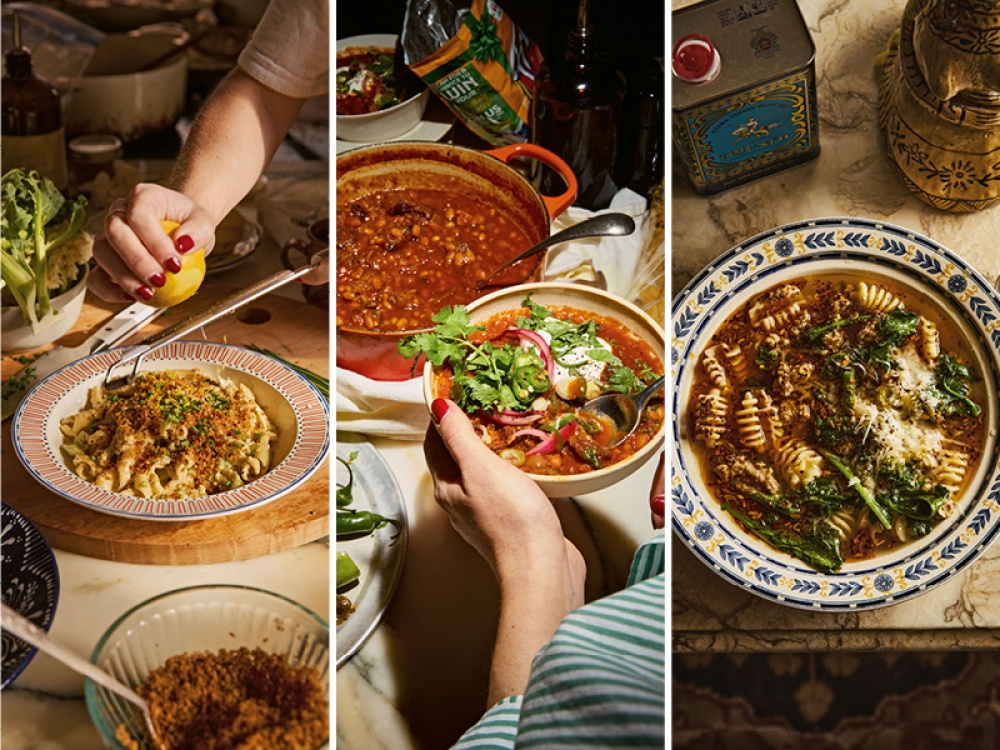


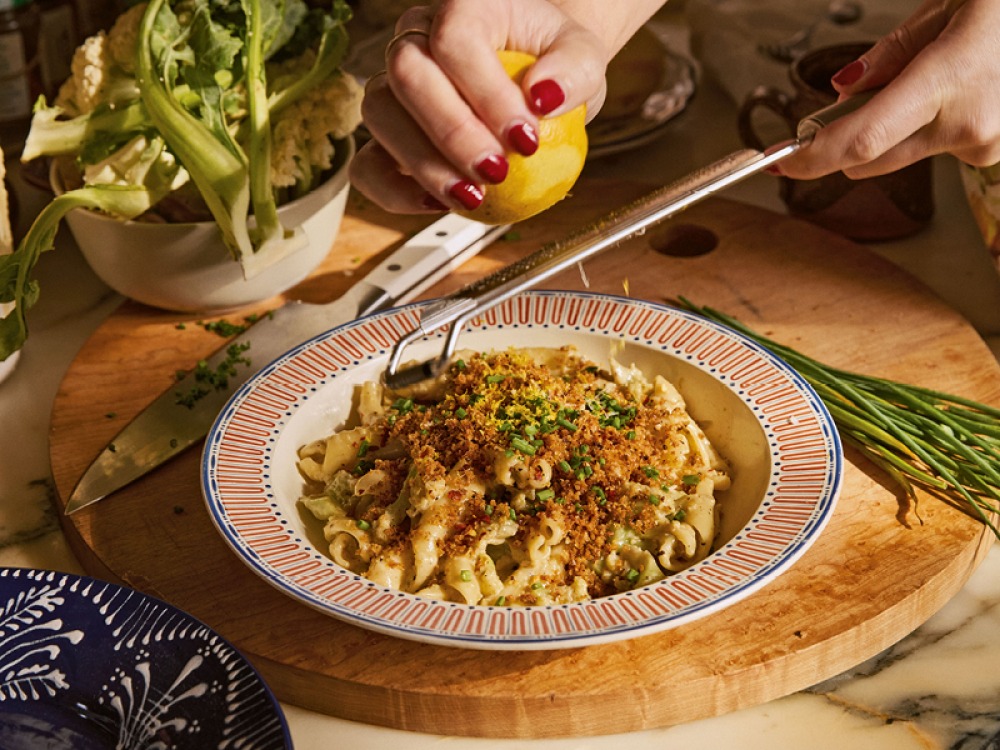
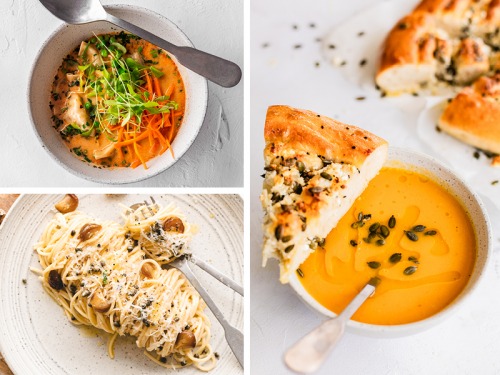
This recipe is wonderful for many reasons: A whole head of cauliflower caramelises in a skillet before being simmered with cream, black pepper, pecorino cheese and a bit of lemon zest, breaking down into a special (and yes, decadent) sauce to coat the pasta shape of your choosing. It’s all very dreamy. But really, it’s the pecorino breadcrumbs we’re here for, and that’s okay – they’re magnificent. A crunchy, oily, salty vehicle for more cheese and much-needed texture, they’re the ideal finish to a saucy pasta such as this, but don’t stop there. Use them as tiny croutons to finish a Caesar salad or scatter them over the top of a pot of saucy beans. Once they’re in your life, you’ll never want to be without them.
Heat three tablespoons of the olive oil in a large skillet over a medium heat. Add the breadcrumbs and season with salt and pepper. Stir to coat evenly in the oil and cook, tossing occasionally, until they’re evenly toasted and golden brown, four to six minutes. Add half of the pecorino and toss to coat, letting the cheese melt and clump among the breadcrumbs (think granola-like clusters). Remove from the heat and transfer to a small bowl or plate; set aside.
Meanwhile, bring a large pot of salted water to the boil. Cook the pasta until al dente; save about 250ml of pasta water, then drain. Wipe out any crumbs from the skillet and heat the remaining three tablespoons olive oil over a medium heat. Add the shallot and cauliflower and season with salt and plenty of pepper. Cook, tossing occasionally, until the cauliflower has completely softened and both the cauliflower and shallots are beginning to caramelise and brown, 12–15 minutes.
Add the cream and lemon zest and bring to a simmer, then let the cream reduce and thicken, two to four minutes. Season with salt and plenty of pepper. Add the pasta to the cauliflower along with the remaining pecorino and 175ml of the pasta water. Cook, tossing to coat the pasta and thicken the sauce, until it’s thick and glossy and almost resembles macaroni and cheese, adding more pasta water by the tablespoon as needed, four to six minutes.
Remove from the heat. Divide the pasta among bowls and top with pecorino breadcrumbs, chives, more lemon zest, chilli flakes (if using) and more cheese if you like.
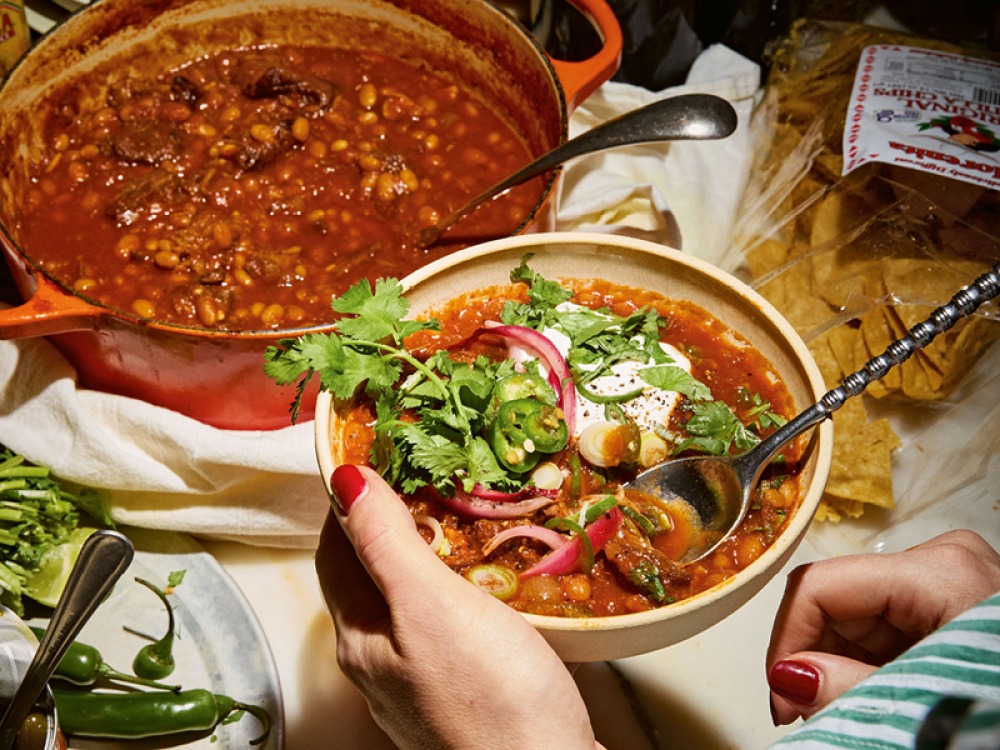
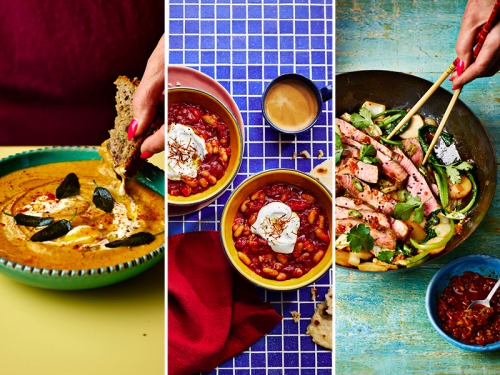
Chilli means many different things depending on where you are. This version calls for tomatoes (Texas chilli purists may as well stop reading now), is well spiced but will not necessarily light your mouth on fire, uses hunks of meat that slowly braise and calls for beans cooked from dried to soak up all that beefy, spiced, tomatoey liquid. It takes a long time to cook, simmering at least three hours. Is it worth it? I really think it is. The way the liquid thickens from both the long braise of the beef and the starches releasing from the beans: it’s gorgeous.
Season the beef with salt and pepper. Heat the oil in a large heavy-bottomed pot over a medium-high heat. Add the beef in one layer (don’t worry too much about crowding) and cook until deeply browned on all sides, 15–18 minutes total. Transfer the beef to a large plate or bowl, leaving the fat behind; set aside. (I do not drain the fat, but you can.)
Add the onions and garlic to the pot, season with salt and pepper, and cook, stirring occasionally, until they’re softened, three to five minutes. Add the tomato purée and cook until it caramelises a bit on the bottom of the pot, two to three minutes. Add the cumin, smoked paprika, hot paprika and chilli flakes and cook, stirring constantly for a minute or so to toast.
Add the beer and use a wooden spoon to scrape up the caramelised bits on the bottom of the pot. Add the tomatoes, beans, 1.4 litres water and the beef plus any juices. Season with salt and pepper and bring to a strong simmer.
Reduce the heat to medium-low (you want a gentle simmer), and cover the pot about 90 percent of the way. (Use a baking tray if you don’t have a lid.) Cook, checking and stirring only occasionally, until the pot has thickened into a beautiful chilli and the beef and beans are completely tender and nearly falling apart, three to three and a half hours.
Remove from the heat and, using a wooden spoon, encourage the hunks of beef to break down into smaller shredded bits by gently pressing them against the side of the pot. Stir so the meat is evenly distributed and season once more with salt, pepper and maybe chilli flakes.
To serve, set out all the toppings you want. Use every small bowl and precious tiny plate to display your shredded cheese, sour cream and pickled things. Do not top anyone’s bowl for them but encourage them to go wild. There are always more toppings where those came from, you say.
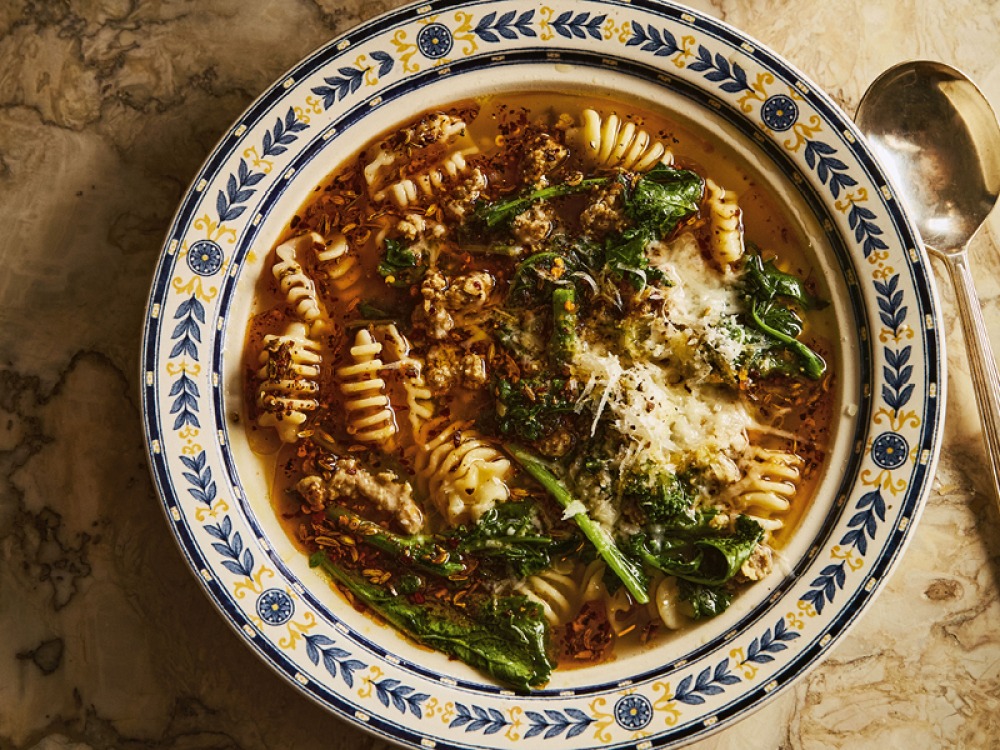
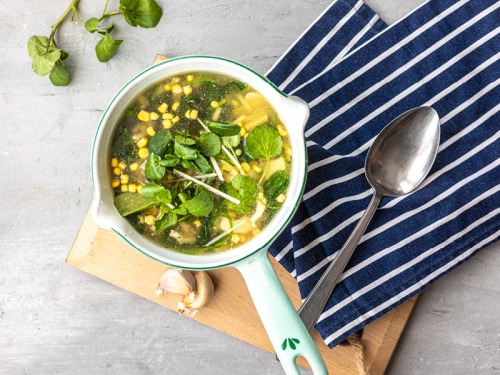
This soup is salty and porky, cheesy and garlicky. There are little whimsical bits of pasta floating about, soaking up all that salty, porky, cheesy, garlicky broth. It’s what I’d call an undeniable ‘crowd-pleaser’. There is also cime di rapa, a vegetable I’ve come to learn is shockingly divisive (shocking to me, as it’s a personal top five). So here’s what I’ll say: The cime di rapa is important here. It has a unique ability to be everything at once: delicate and sturdy, bitter and sweet. Simmering it in the fatty, seasoned broth mimics the effect of blanching, which mellows out the bitterness some people find so off-putting, so I’d love for you to take a leap of faith even if you don’t think you like it. If you REALLY hate it, okay, use kale.
Heat the olive oil in a large pot over a medium-high heat. Add the pork and season with salt and pepper. Cook, resisting the urge to break it up too much at first. As it browns, break it up into small pieces; some of the pork will get very small (these bits will get very brown and crispy), and some will stay larger, in sausage-like clumps (these will be tender and juicier). Once the pork is about 80 percent browned to your liking, eight to 10 minutes, add the garlic. Continue cooking until the pork is well browned throughout and the garlic is softened and starting to brown around the edges, another four to five minutes.
Add the fennel seeds and chilli flakes. Give them a stir to toast in the pork fat, cooking for a minute or two. Add the stock, season with salt and pepper and bring to a simmer. Meanwhile, cook the pasta in a medium pot of salted water until just before al dente. (It’ll continue to cook in the soup, but it’s good to give it a head start. I don’t love cooking raw pasta in a brothy soup – it makes the broth too starchy and cloudy.)
Once the soup has simmered for a few minutes, add the cime di rapa and the pasta, stirring to wilt the cime di rapa. Simmer until the rapa is tender and the flavours have mingled appropriately, another five to eight minutes or so. Season with salt, pepper and more chilli flakes if you like.
To serve, ladle into bowls and top with a drizzle of olive oil and tons of cheese. Sometimes I squeeze lemon over, but not always (doesn’t need it, but it can be nice).
Extracted from Something From Nothing by Alison Roman (Quadrille, £27).
Recipe photography by Chris Bernabeo