What to Expect from Yorkshire's Gardens this Month
The May garden and the art of looseness with our new columnist, Yorkshire gardening expert Andrew Jackson


If earlier months have been about structure, about bones and beginnings, May is where the gardener’s hand begins, subtly, to withdraw. The theme is looseness: not neglect, but a deliberate softening of control. It is the point at which a garden starts to become something more than its plan.
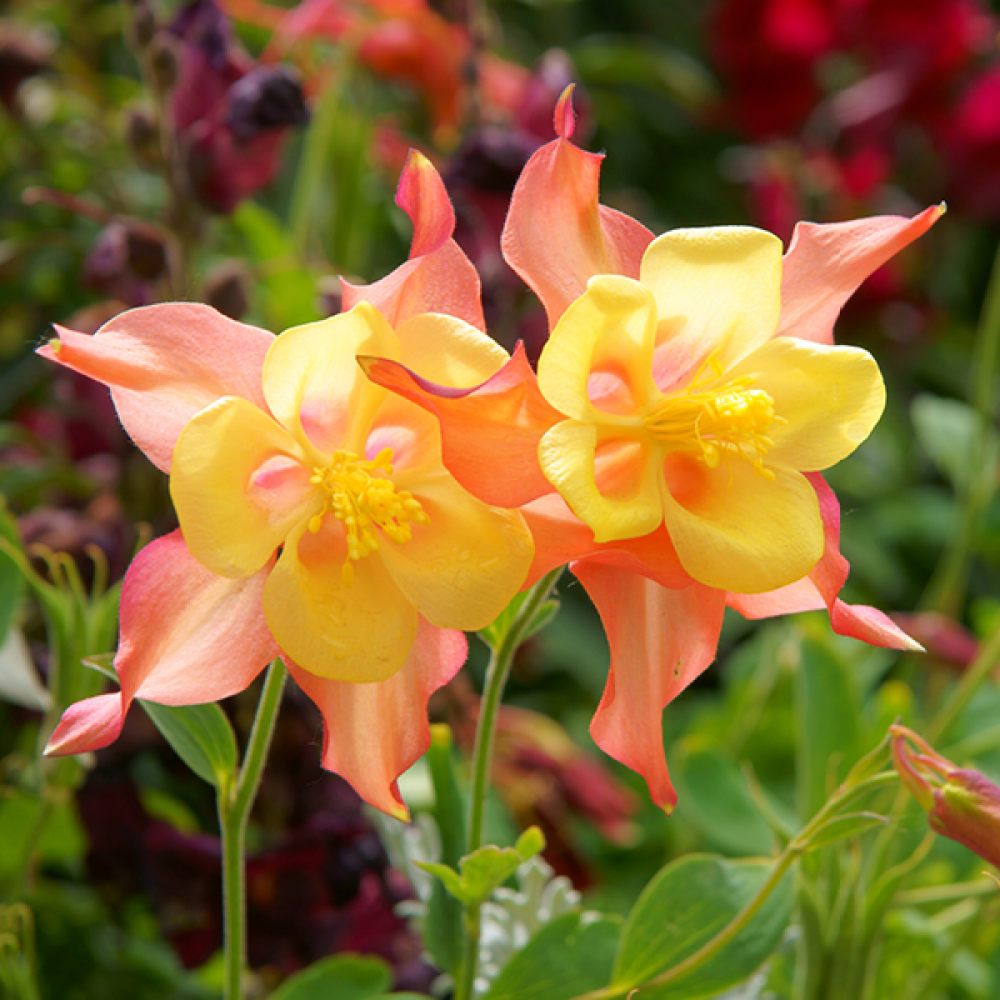
You see it first in the self-sown plants. Aquilegias, perhaps the most eloquent of May’s messengers, appear where they will: at the foot of walls, between paving stones, leaning into paths. Their colours, smoky purples, washed pinks, the occasional pale, improbable yellow, seem to belong more to light than to pigment. They resist the gardener’s instinct to tidy. To remove them is to erase a kind of conversation the garden is having with itself.
In my small garden in Beverley, set among the familiar geometry of new-build plots, this principle has been taken to heart. What began as a blank rectangle of compacted soil is now, in its fourth May, something more conversational. Here, aquilegias are allowed to wander freely, threading through a matrix of hardy geraniums and early-flowering salvias. There are no rigid edges. Instead, the planting spills and overlaps, creating a sense that the garden is in motion, even on still days.
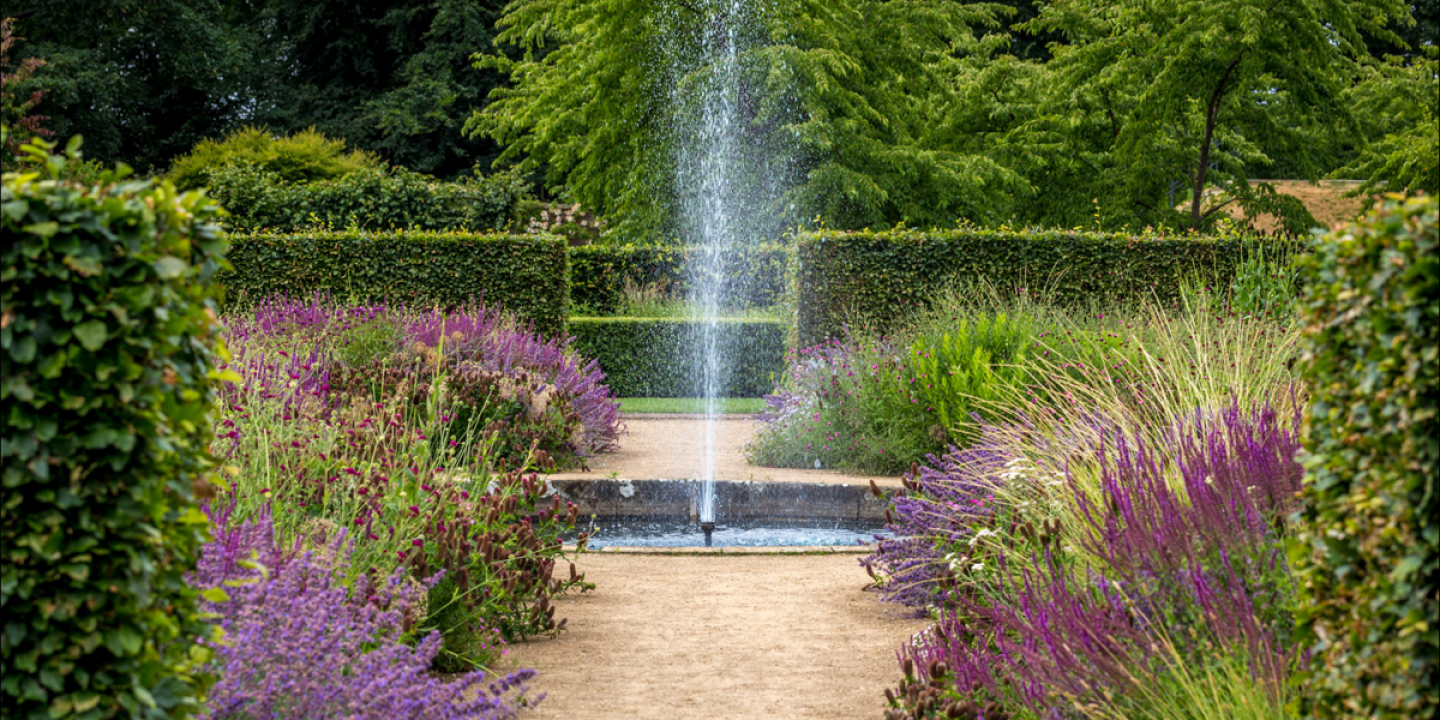
The effect is not untidy. Rather, it carries a kind of coherence that comes from repetition and restraint. Colours are limited, blues, soft purples, the green-white of euphorbia, and this allows the looseness of form to feel intentional. It is a useful lesson for smaller spaces: that freedom works best within a framework, however lightly drawn.
Further north, at Beningbrough Hall, Gallery and Gardens, the same idea plays out on a grander scale. The formal avenues and long sight-lines remain, but in May the edges begin to blur. In the walled garden, planting is allowed to breathe. Tulips fade back without ceremony, and in their place come alliums and early perennials, rising through a haze of fresh green. There is a sense of succession, but also of overlap, a refusal to let one moment end cleanly before another begins.
It is this overlap that defines May’s looseness. In more controlled planting schemes, each season can feel like a series of discrete events: bulbs, then perennials, then summer colour. But in the most compelling Northern gardens, these phases are allowed to merge. A late tulip might find itself standing among the first froth of cow parsley; an early geranium might begin its long flowering run while the last of the spring foliage is still tender and bright.
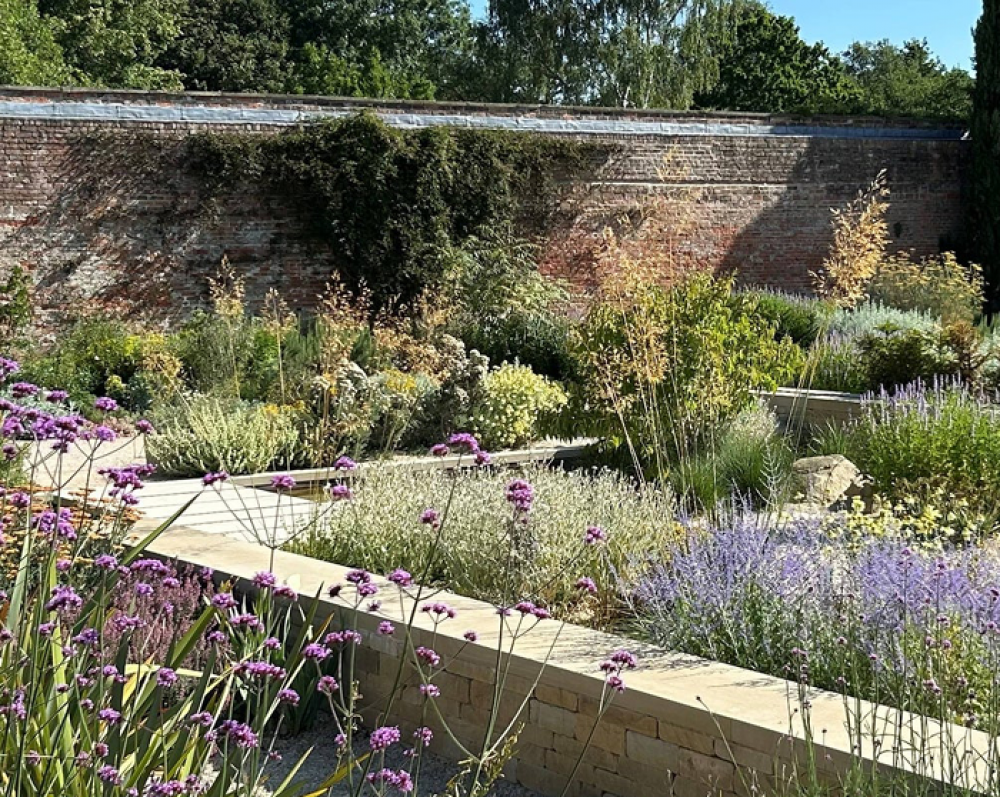
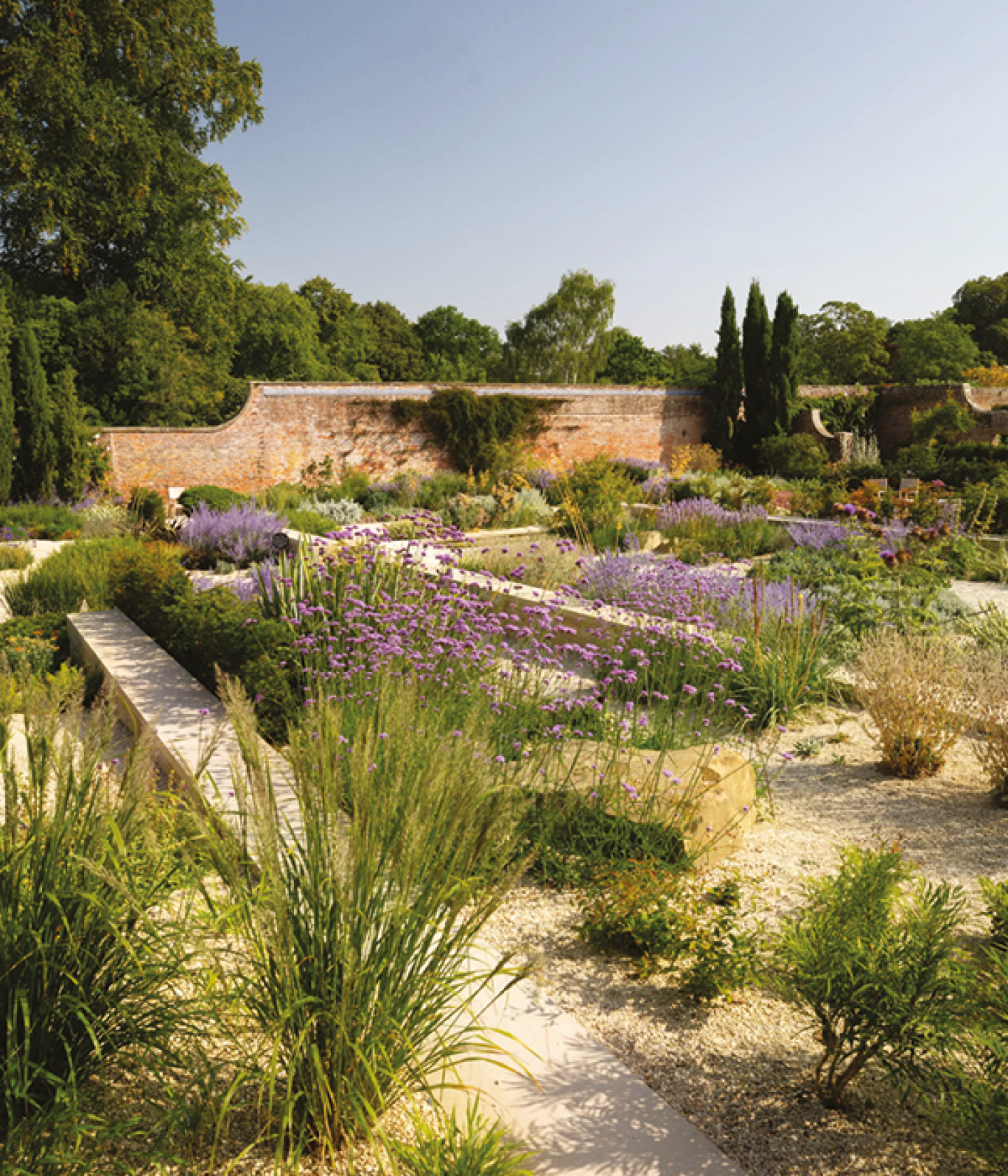
At Scampston Hall and Walled Garden, where contemporary design meets a deeply rural setting, this approach is handled with particular subtlety. The planting, though carefully composed, has a looseness of gesture, drifts that dissolve at the edges, species that recur in slightly altered combinations. In May, the garden feels less like a series of rooms and more like a continuous landscape, each part echoing the next.
For the gardener at home, the question is how to invite this looseness without losing clarity. One answer lies in planting by communities rather than individuals. Instead of placing a single specimen and expecting it to perform alone, you create a small gathering: a few geraniums, a handful of grasses, perhaps a self-seeder or two. Over time, these plants will shift their positions, some advancing, others retreating, until a balance is found.
May is the moment to begin this process in earnest. The soil has warmed sufficiently to support new planting, but there is still moisture enough to ease establishment. It is also the time to resist over-intervention. Not every gap needs filling. Some of the most successful plant combinations arise from chance, the seed carried by wind or bird, the unnoticed seedling that proves, in time, to be exactly right for its place.
There is, too, an ecological dimension to this approach. A looser garden tends to be a more hospitable one. The layered planting provides shelter for insects; the extended flowering season offers a steady supply of nectar. In May, when pollinator populations are building, this continuity is crucial. A patch of forget-me-nots left to seed, a clump of chives allowed to flower, can make a measurable difference.
Yet looseness should not be mistaken for absence. It requires attention of a different kind: a watching rather than a directing. You notice which plants are thriving, which are struggling, and you adjust accordingly, not by imposing a new scheme, but by nudging the existing one. It is a slower, more responsive way of gardening, attuned to the particularities of place.
And place, in the North, is never a neutral backdrop. The shifting light, the often capricious weather, the underlying geology, all these shape what a garden can be. In May, when growth is at its most generous, there is a temptation to believe that anything is possible. But the most resonant gardens are those that work with these conditions rather than against them, allowing the character of the region to inflect every choice.
As the month progresses, the early exuberance will deepen into the fuller textures of June. The looseness of May will begin to resolve into something more defined. But for now, there is a brief, luminous interval in which the garden is neither tightly held nor fully released, a state of becoming. To garden well at this time is to recognise that moment, and to step back just enough to let it unfold.
Planting for Looseness
If May is about softening edges and encouraging a more natural rhythm, these plants will help you achieve that balance between structure and spontaneity:
Aquilegia (Columbine)
The quintessential self-seeder. Let it wander and
surprise you. Best in light shade or sun, and tolerant of poorer soils.
Geranium ‘Rozanne’ and G. phaeum
Reliable, long-flowering ground cover. ‘Rozanne’ for extended colour; phaeum for early, moody tones and a willingness to seed about.
Nepeta (Catmint)
Soft, billowing mounds of blue that knit planting together. Drought-tolerant once established and loved by pollinators.
Salvia nemorosa ‘Caradonna’
Provides vertical accents without rigidity. Its deep purple spires bring early structure to looser schemes.
Euphorbia characias wulfenii
Architectural but generous. Acid-green bracts lift the whole palette and pair beautifully with purples and blues.
Deschampsia cespitosa (Tufted hair grass)
A native-leaning grass that adds movement and transparency. Its airy flower heads hover like mist through borders.
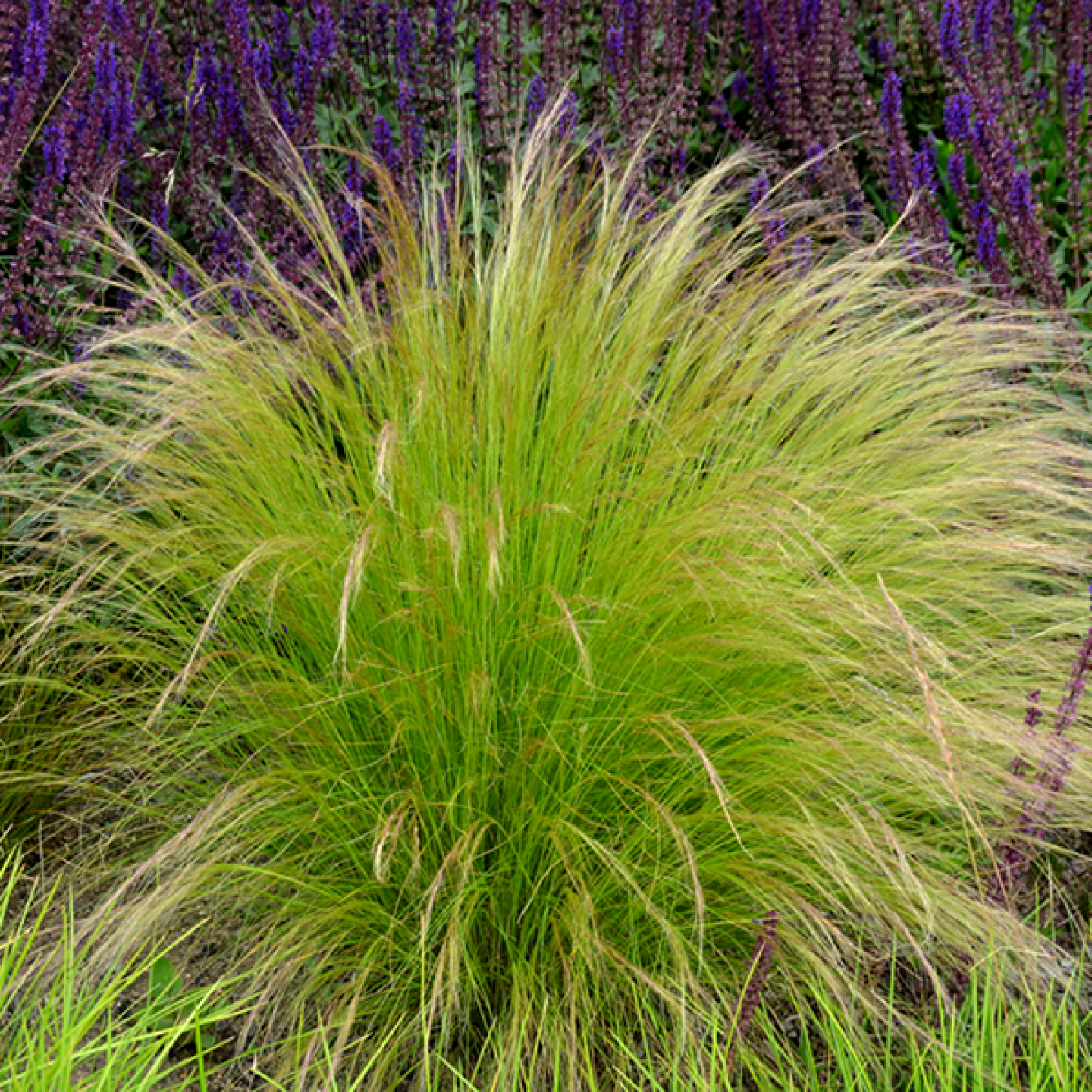
Stipa tenuissima
For lighter soils and sunnier spots, this brings constant motion – catching even the slightest breeze.
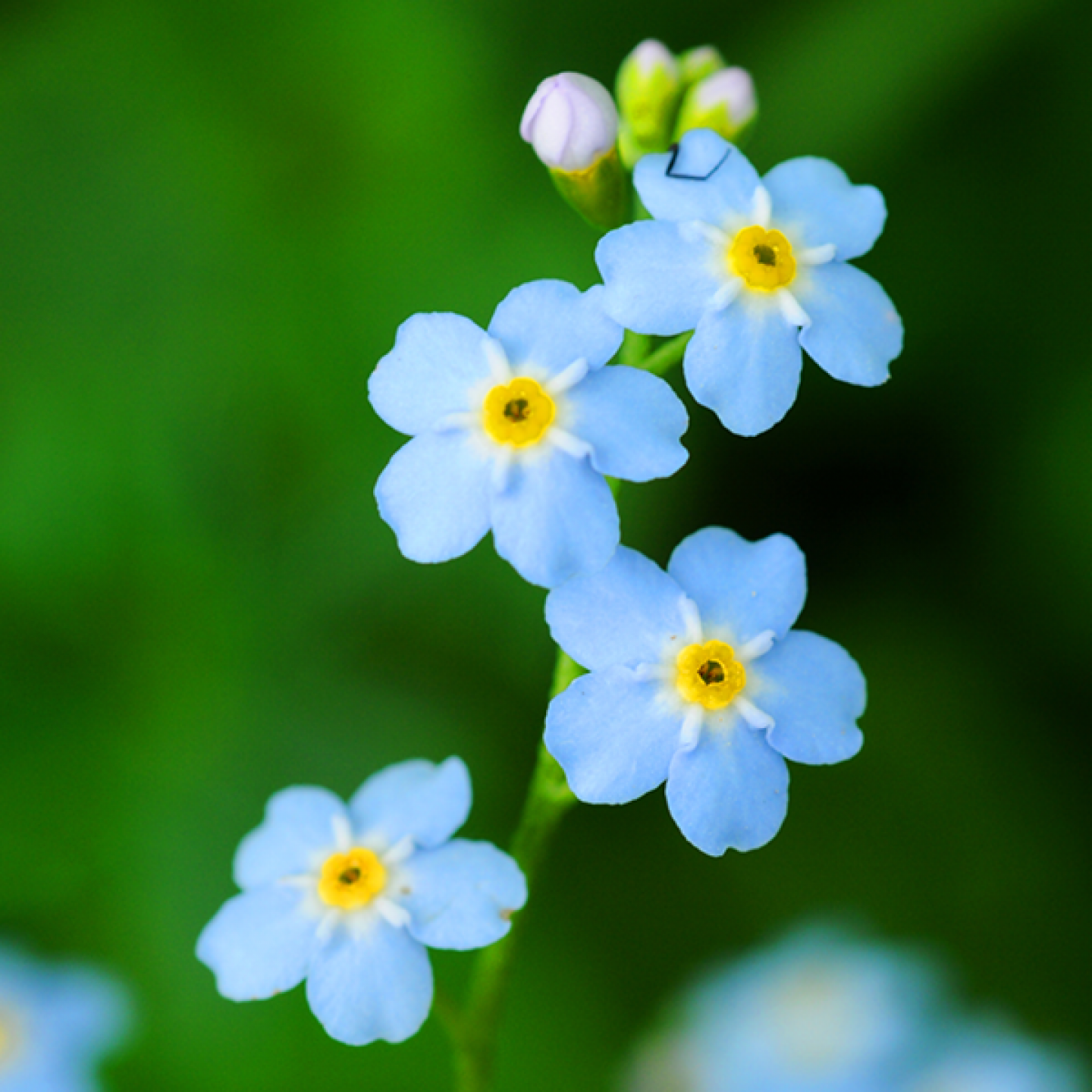
Myosotis (Forget-me-not)
Allow it to seed freely. It acts as a living mulch in spring and fades just as other plants take over.
Allium ‘Purple Sensation’
Threads structure through informality. Plant in drifts and let emerging perennials obscure the fading foliage.
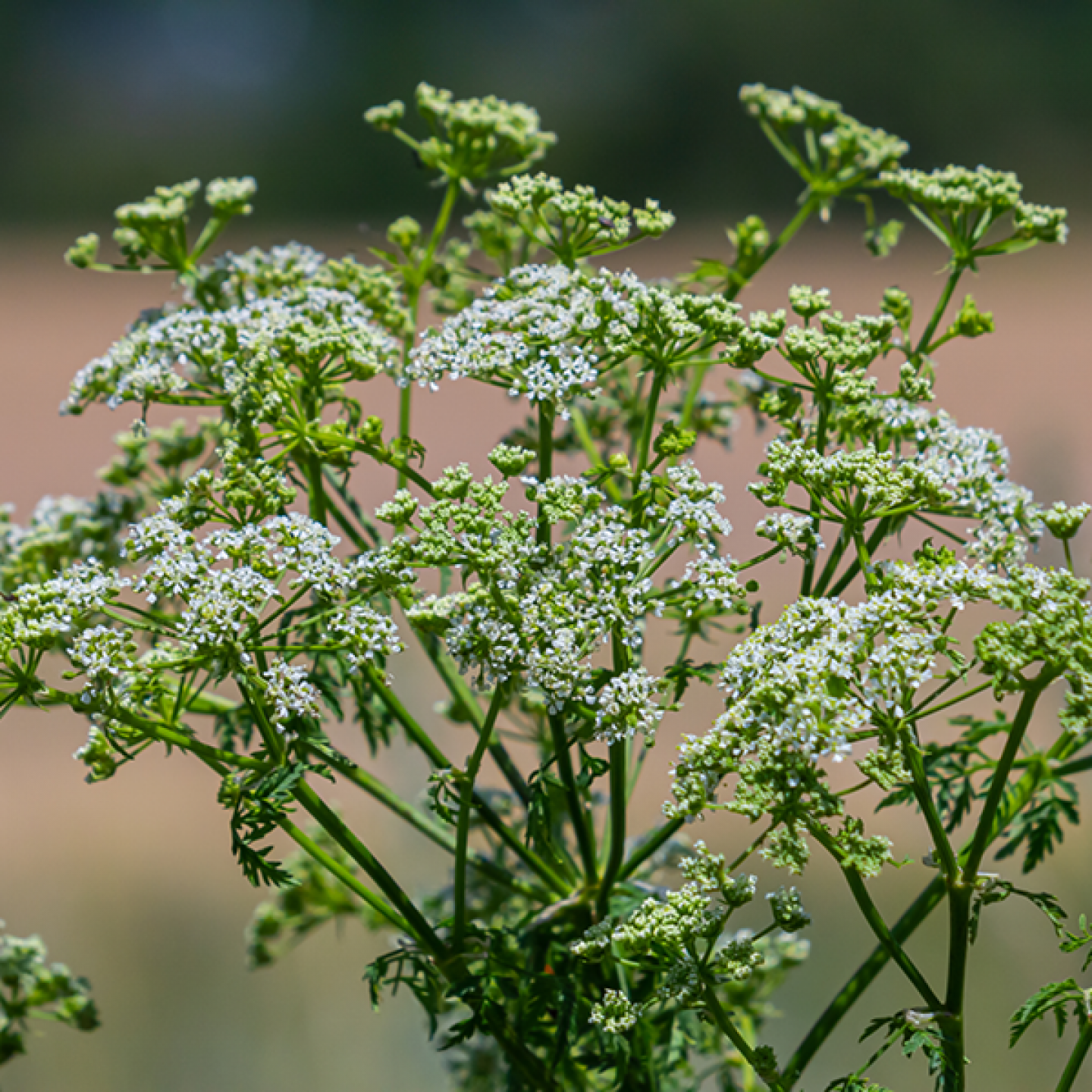
Anthriscus sylvestris (Cow parsley)
For larger spaces, or a wild edge, this introduces the surrounding landscape into the garden – ephemeral, but transformative.
Tip: Plant in small groups of three or five, then leave space. The gaps are not emptiness, they are invitations.
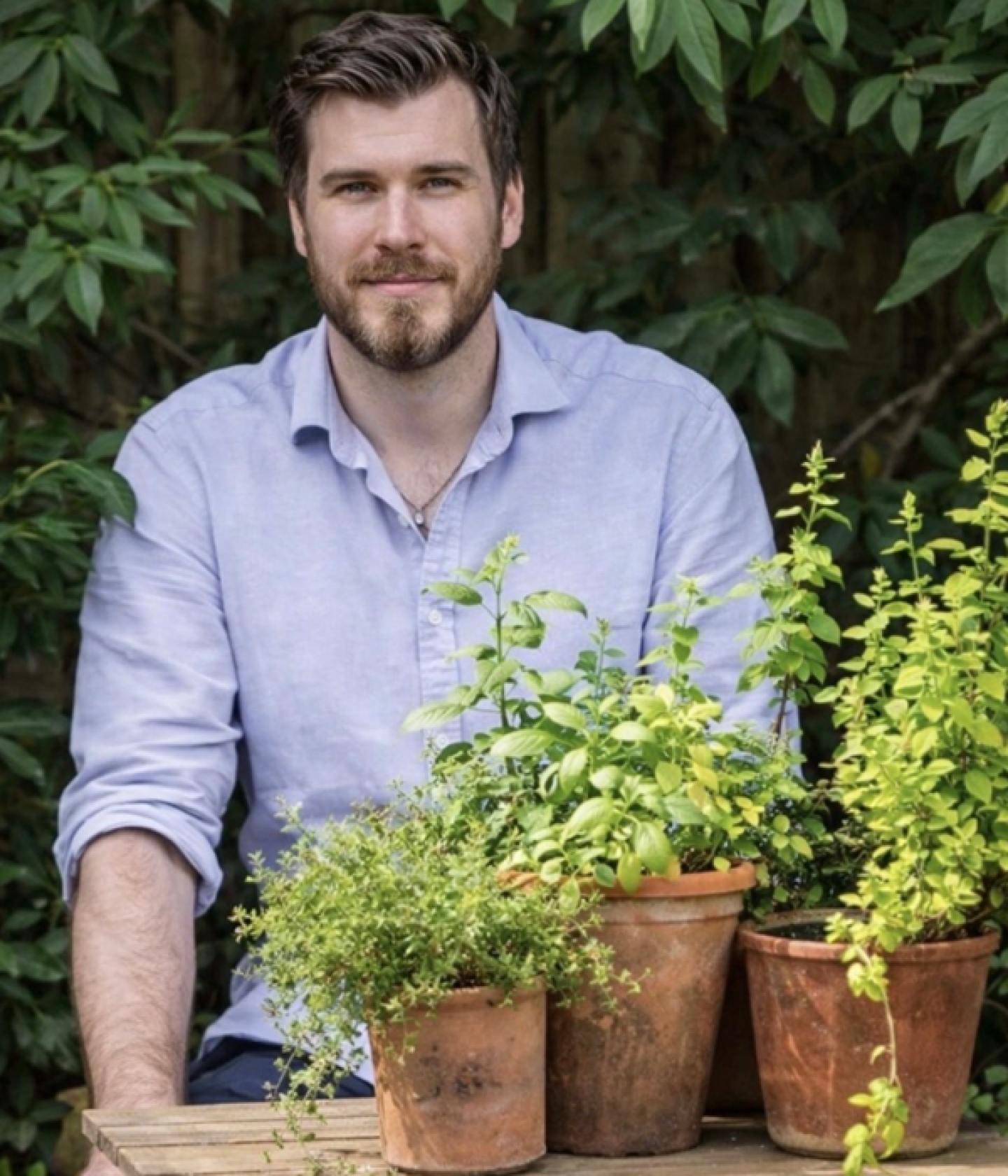
Beverley-based Andrew Jackson is the winner of the Garden Media Guild New Talent Award 2025. A new build gardener, he is the author and founder of the New Build Manifesto, a campaign for greater access to and greater quality new build spaces. An award-winning garden designer, he has appeared on BBC Gardeners’ World and is Writer in Residence at Helmsley Walled Garden and York Gate Gardens.
@thenewbuildmanifesto