Behind The Scenes of Emerald Fennell's Wuthering Heights in Yorkshire
Living North go behind the scenes of the most talked about movie right now


Emily Brontë published her only novel, the gothic and tragic romance Wuthering Heights, in 1847. Controversial in its own time but now considered by many one of the greatest novels ever written, it has inspired creatives far and wide. From a 1920s silent film to a popular adaptation starring Ralph Fiennes as Heathcliff, a two-part series featuring Tom Hardy, and a Kate Bush hit only the brave dare to hit the high notes on, the turbulent tale of Cathy and Heathcliff has been told time and time again.
Emerald Fennell’s take on Wuthering Heights stars Aussie actors Margot Robbie and Jacob Elordi, as well as Martin Clunes and young Owen Cooper (who rose to fame in the miniseries Adolescence), and it retells the story with shock factor. But is anyone surprised? The darkness of this classic novel has been shocking readers for years. In what feels like a fever dream and ends, inevitably, with heartache, one thing stands out – the power and cinematic beauty of our county.
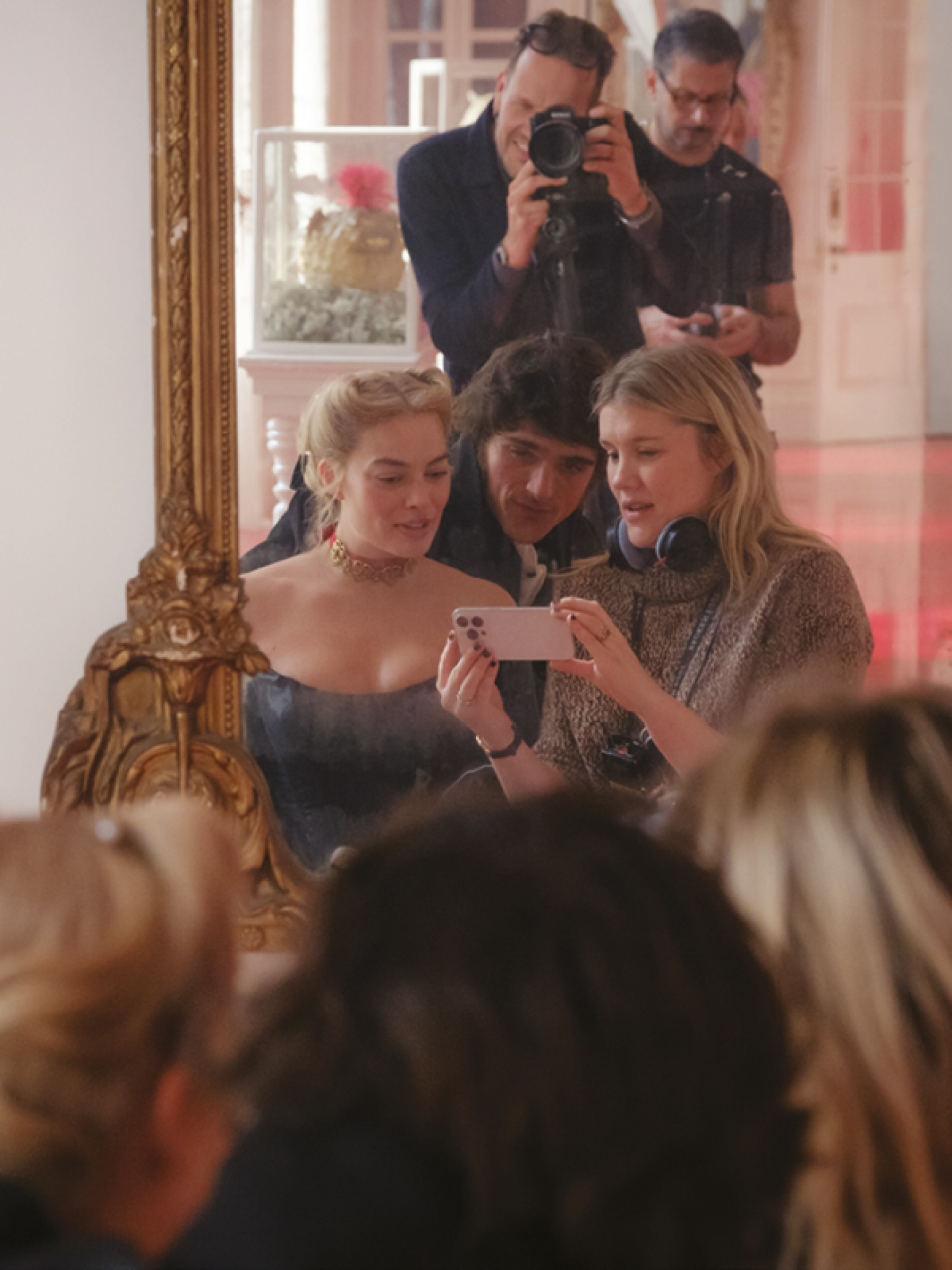
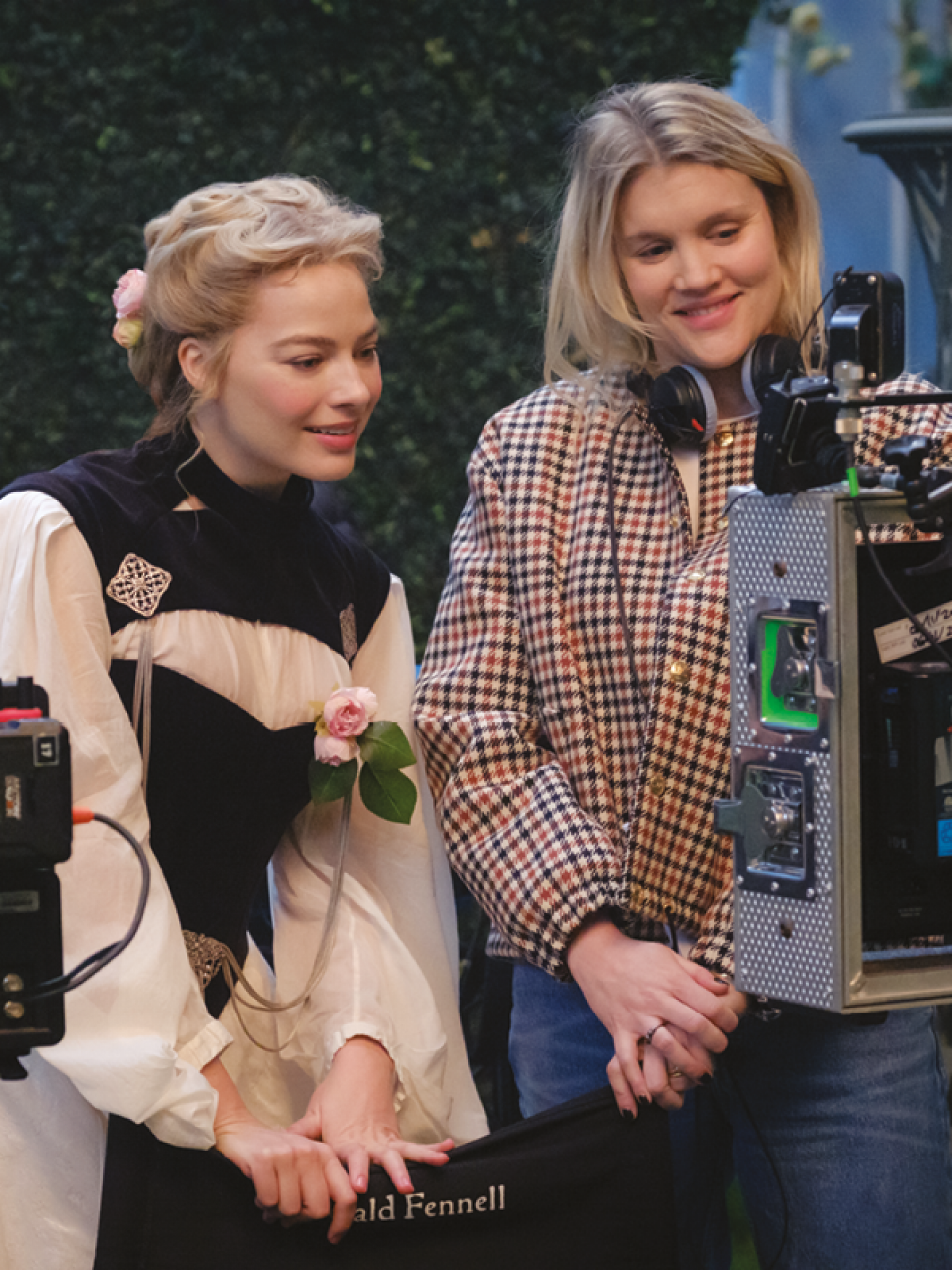
‘[Emerald] very much wanted to be in the Yorkshire moors. So our task was to go and find the right moors in Yorkshire’
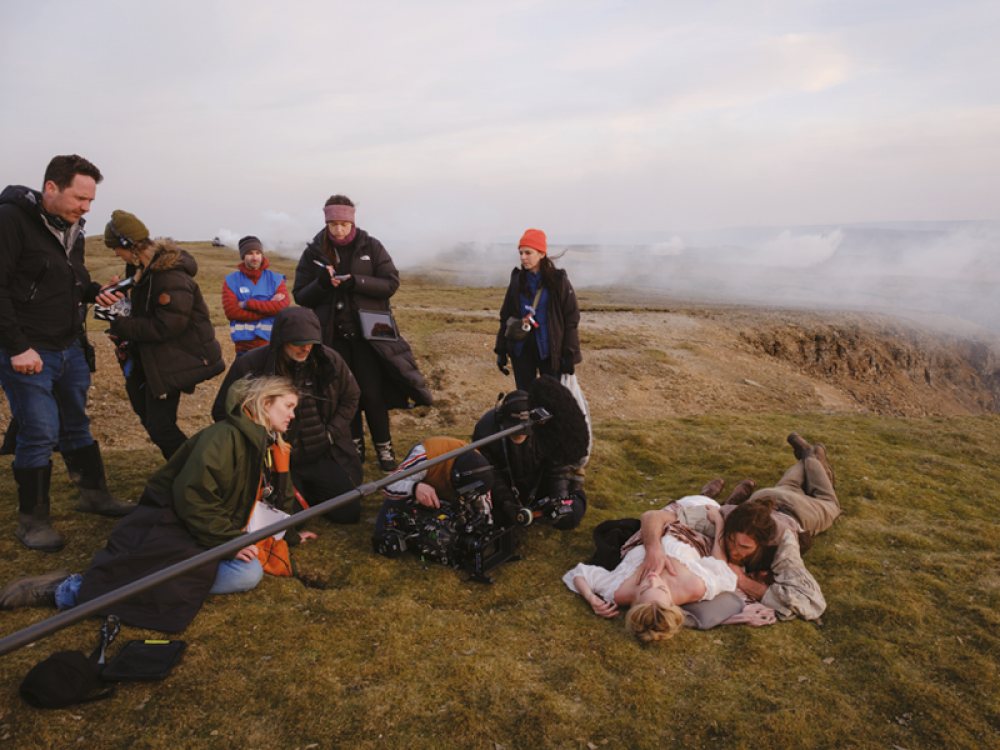
From moors and crags to bothies, filming took cast and crew right across Yorkshire. Supervising location manager Aurelia Thomas had previously worked on filming for Deadpool & Wolverine, Harry Potter and the Goblet of Fire, and Love Actually, but was less familiar with what Yorkshire has to offer.
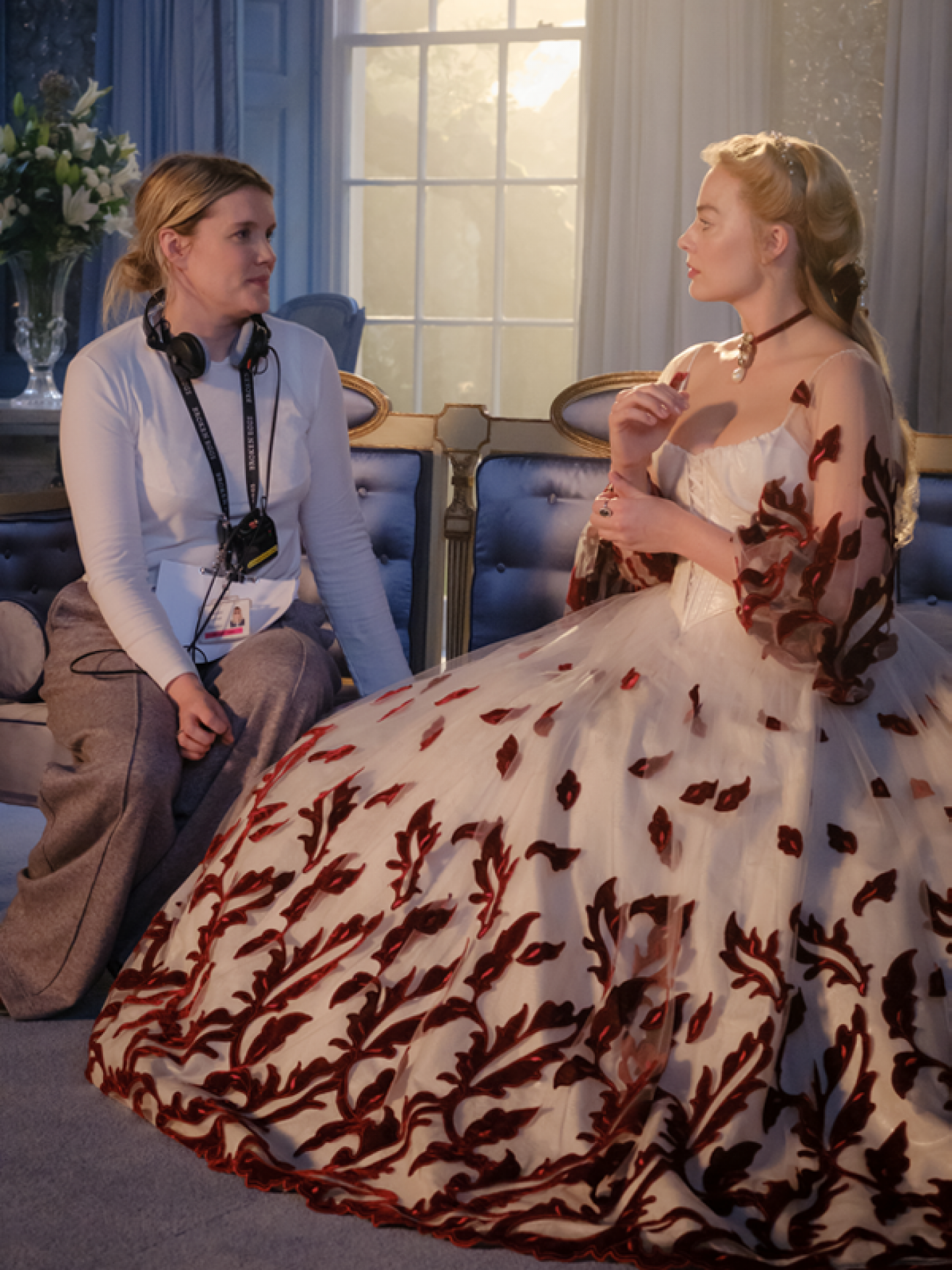
‘I was very excited when I got asked to work on the film, with the combination of Emerald Fennell who's fantastic and the [production] designer Suzie [Davies],’ says Aurelia. ‘This just seemed like a thrilling project to be a part of. I think Emerald’s version of the story gets to the visceral point of how intense their love is, and we were there to find the areas to stage it.’
Filming in Yorkshire was important to the entire team. ‘I think Emerald would quite often say (and various people have said) how the moors are almost like the third [main] character in the story,’ explains Aurelia. ‘Their intense love is that much more dramatic because of where they are – they're so remote and they don’t really see other people. I think Emerald wanted to be very much true to that, to be in Yorkshire. There've been interviews with Jacob Elordi saying how he really then understood the story (from being and sitting in those places).
‘You don't hear anything other than the odd grouse flittering around. You sometimes don't see any cars and, in the case of a lot of the places we found, there’re not really any other buildings in the distance, and it’s peaceful in a way but also, if the weather sets in, you're like “this is quite bleak”. [Emerald] very much wanted to be in the Yorkshire moors. So our task was to go and find the right moors in Yorkshire.’
For Aurelia that process started around two years ago. ‘The first thing you want to do is to find some good location scouts who are Yorkshire-based and understand the terrain,’ she says. Yorkshire was split into sections for the scouts’s initial searches. ‘It was agreed that around Haworth, where we would imagine the Brontës had originally written the stories, is now very built up. In the 1800s, even though it was around the Industrial Revolution, from those moors you wouldn't have seen Bradford and other towns in the distance,’ says Aurelia. ‘Then we were looking in the north east of Yorkshire, towards Whitby – a lot of the estates are beautiful, but very flat. It's not dramatic in the way that the director and designer were after. So we had a look around Bolton Abbey, which is beautiful and the hills are rolling and very pretty… what they didn't want was pretty. It needed to feel epic and big.’
They found what they were looking for in Arkengarthdale and Reeth. ‘We’d looked around the rolling areas, and quite a lot of other sections of moors further south too, because there were still a lot of moors – Yorkshire's a big place! We focused our time around there and liked the area around the Old Gang Smelting Mill at Reeth,’ says Aurelia.
‘It was a real privilege to come up, and I have to say it was stunning’
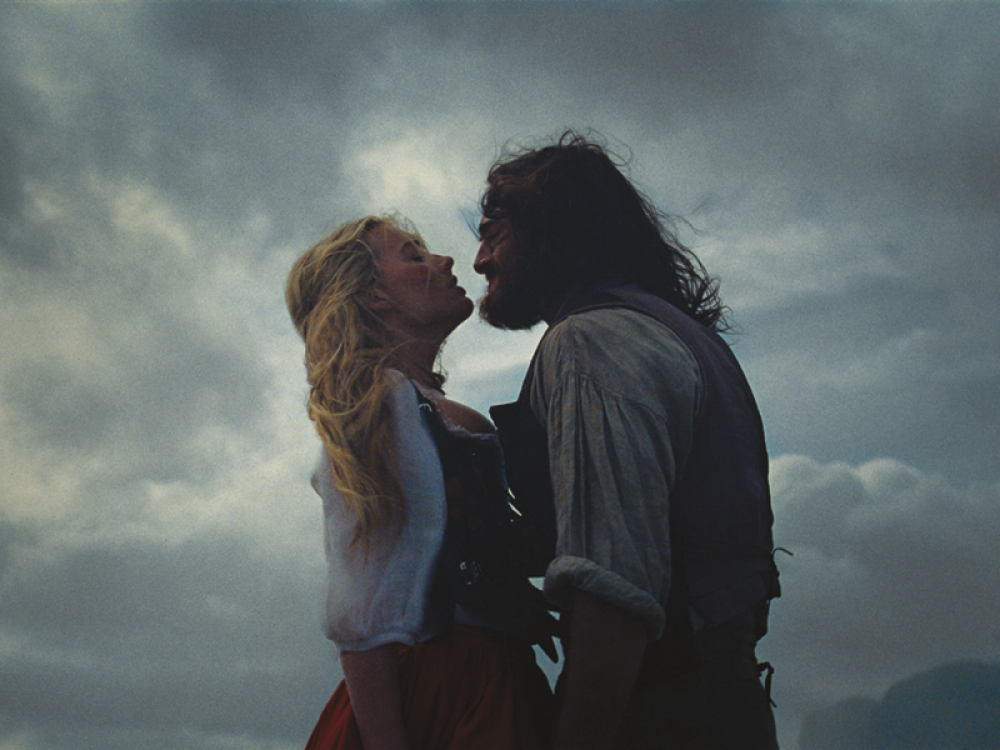
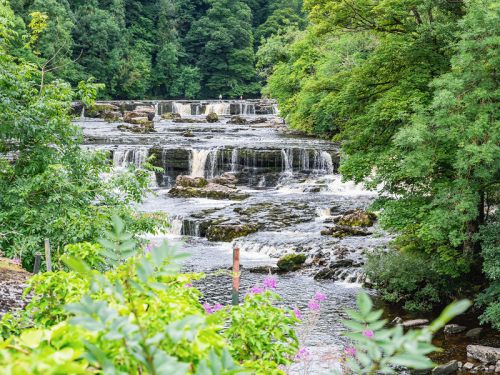
The Old Gang Smelting Mill was used for the external shots of the Wuthering Heights house. ‘It's got this lovely river that kind of weaves its way along and I remember I'd asked one of our team to do a light study at sunrise and sunset. You're wanting to see what you see east and what you see west – the wonderful sunrises you could get. The smelting mill’s in the environment so when you see the back and forth of the children in the early part of the story, and then them as adults, you've got that visual reference.’
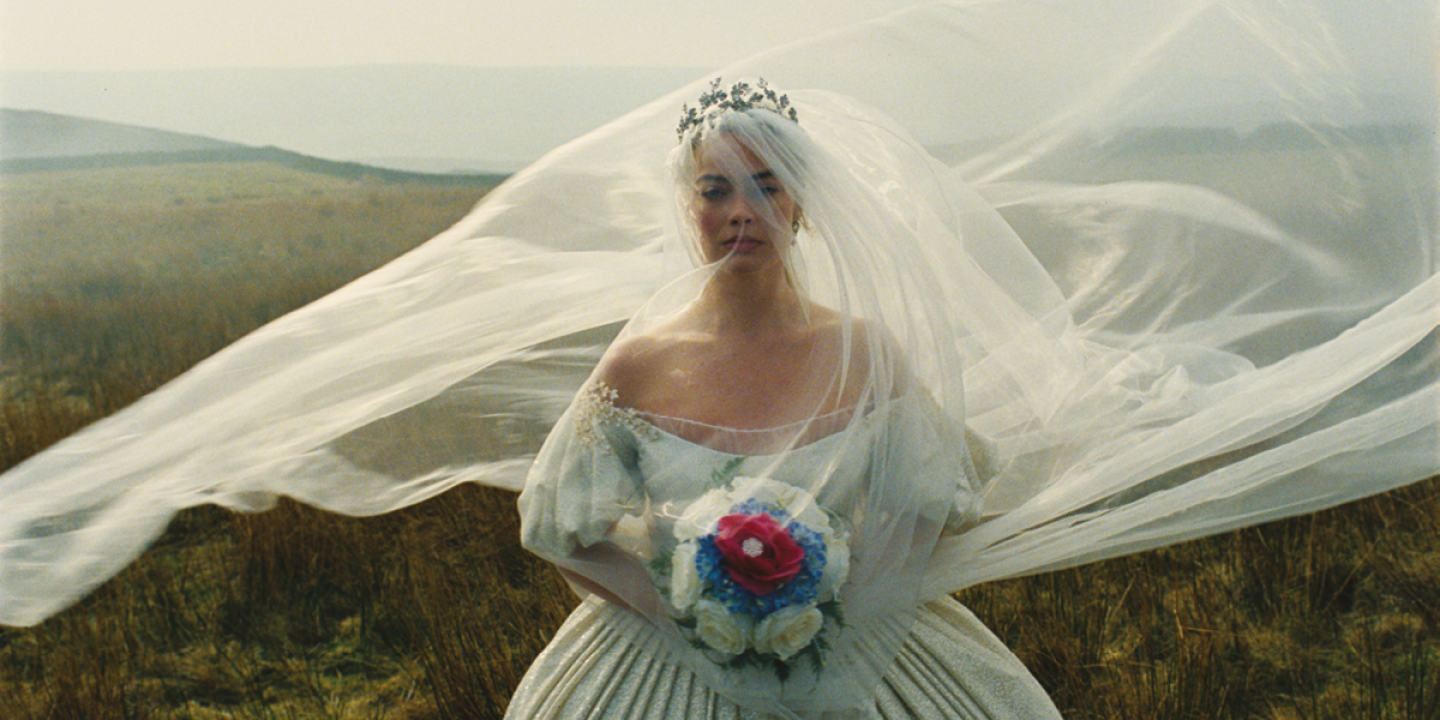
At Booze Moor, the crew filmed the view down the hill to where Thrushcross Grange is in the film. They wanted it to feel like Thrushcross Grange is in pastureland, contrasting the wild moor (and Heathcliff and Cathy being quite wild), with a manicured, perfect house down the hill and slightly off the edge of the moor. ‘We filmed a barn that's geographically between those two locations, where the wedding scene is (which is how we ended up with pap photos of [Margot] in her dramatic veil because it's by a road!),’ says Aurelia.
Filming also took place in South and West Yorkshire. Viewers might recognise The Needle's Eye with its Gothic arch at Wentworth Woodhouse, where the characters run to hide from the rain. ‘It has these wonderful aged walls,’ Aurelia says. ‘We also filmed for a day and a half at Bridestones [Moor] in West Yorkshire, and actually it was really nice to end on that because it’s very close to Haworth. It's the scene where Cathy gets caught by Heathcliff unawares and gets terribly embarrassed! Then there's a scene where he pulls her up (which we had a rig on her for) – that’s at Bridestones too. We had a good mixture, in the end, of different parts of Yorkshire that we filmed in which was nice. It was a real privilege to come up, and I have to say it was stunning.’
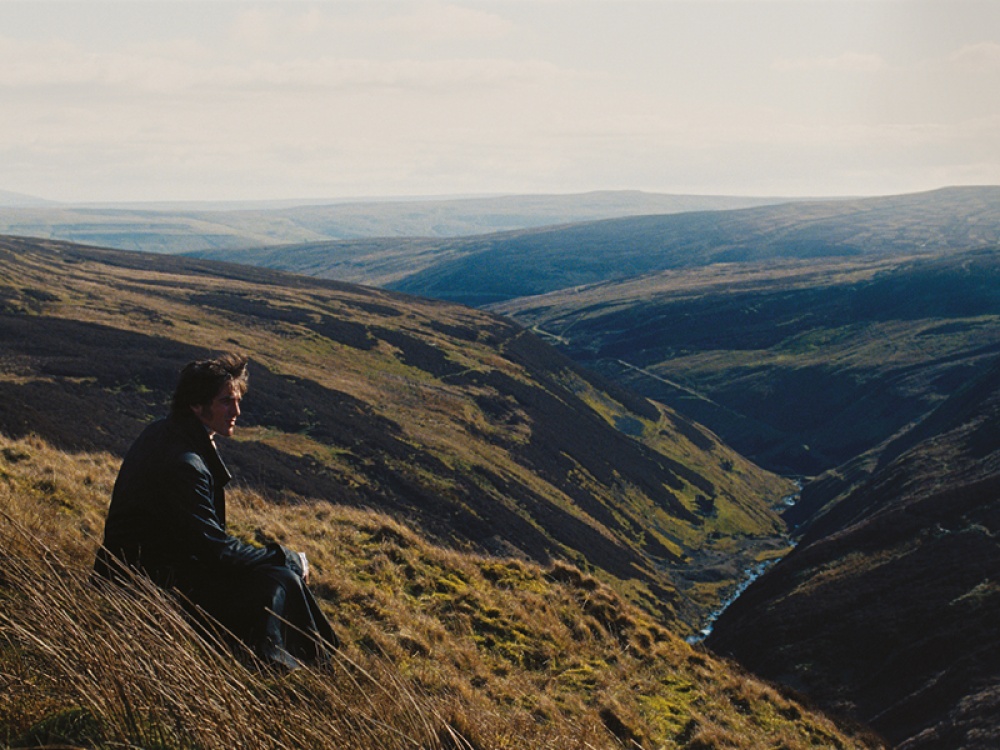
Aurelia is particularly fond of the scene where Heathcliff is sitting on the edge of a moor looking down a ravine, at Reeth. ‘You get these large moors, and then you have this deep ravine, and then it goes into the next moor and then into the next moor. He's sitting, and you've got this lovely valley and you can't see any houses or any structures,’ she explains. ‘It was really rather lovely. And Booze Moor, where they have a tarn, where Heathcliff lifts Cathy into a tree, that also had this endless vastness to it which looked rather good.’
Of course getting to such remote areas didn’t come without challenges. ‘In North Yorkshire, the trucks were all down near The CB Inn in a farmer's field there. Then you had to convert everything into pickups with trailers to tow things onto the moors,’ Aurelia explains. ‘Where Cathy waits for Heathcliff, and where the children play with the rockpools, is high on Reeth Moor. I remember when our scout was looking for it, and she'd gone to one ridge, and I said to her, “I'd love it if you could try and get to the really top ridge”. But it’s all heathland, and you're in deep heather, navigating your way through. She got up there and had these photos, and it was like, bingo, that is the “waiting rock”.
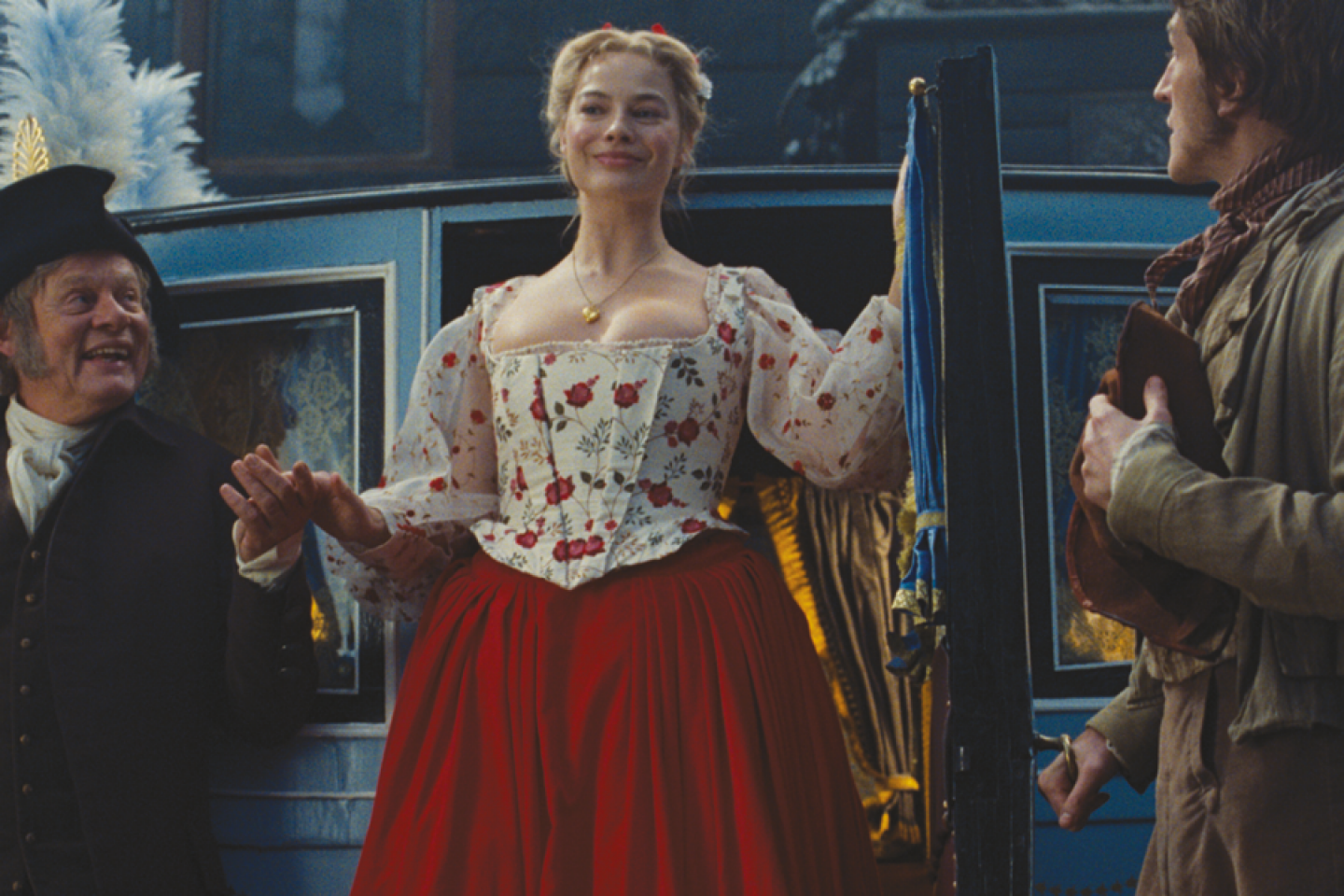
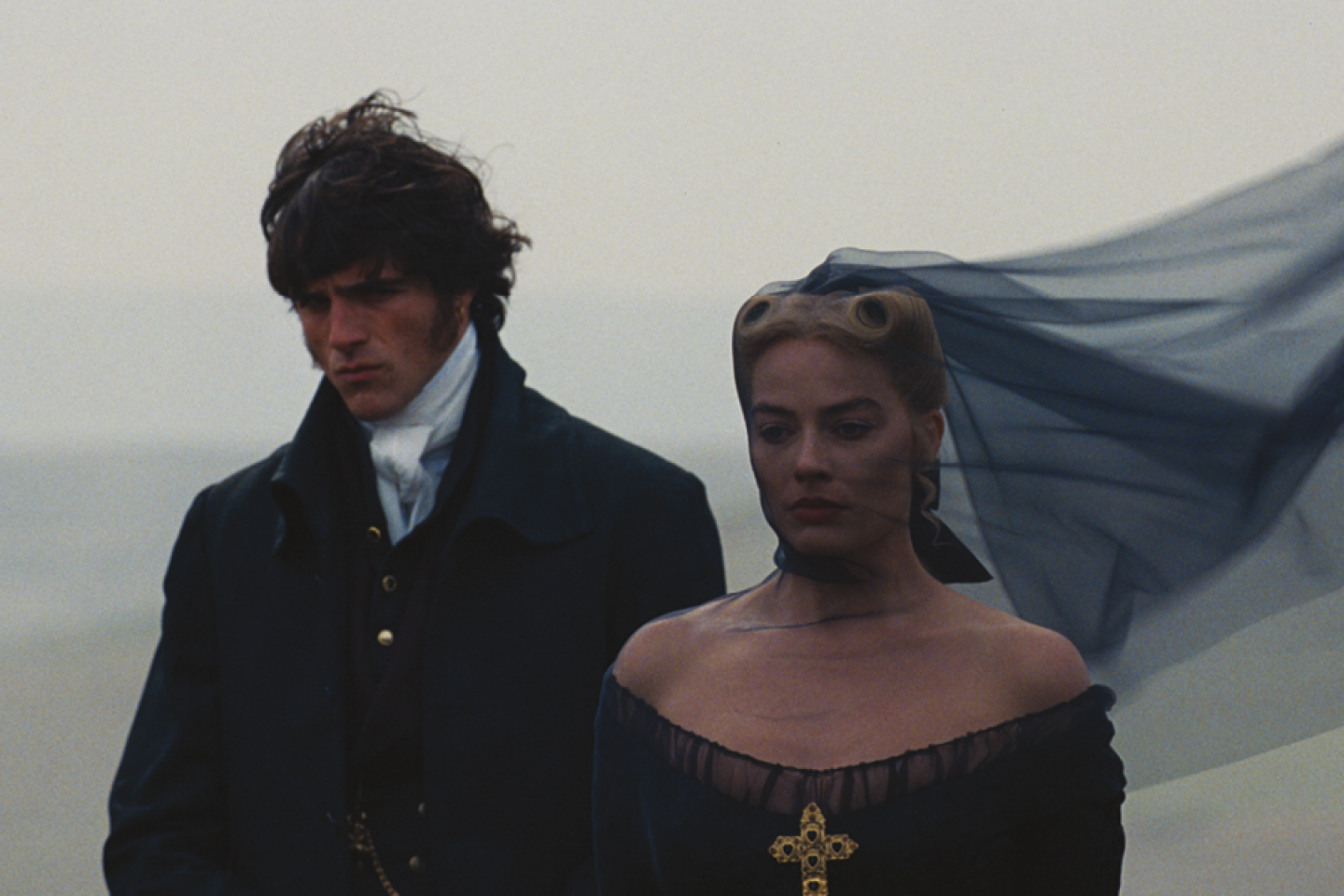
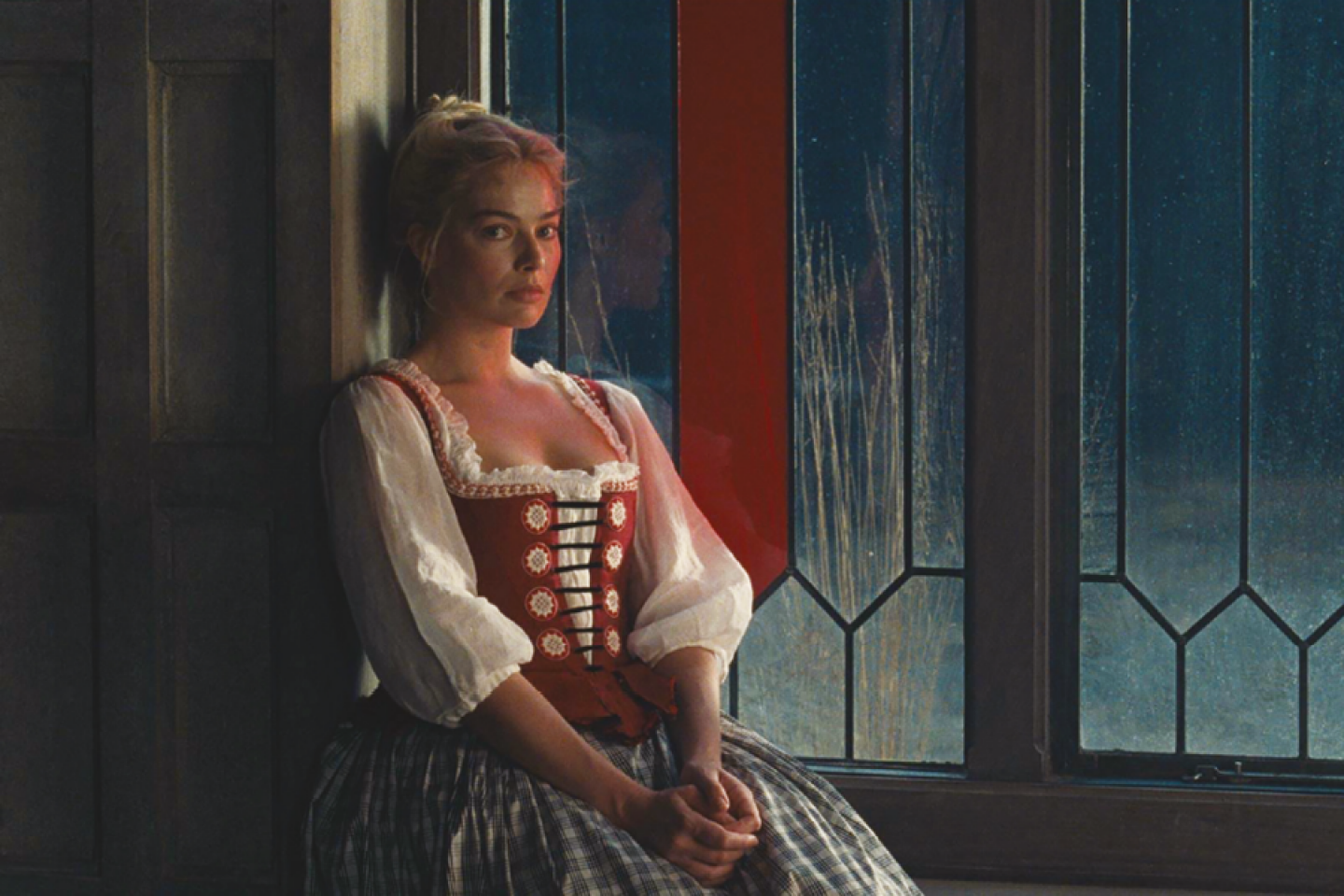
‘One of the cameramen said “it's like counting the blues up there”. You could see one hill in the distance, and then another hill, and then another hill, and on it went and, at sunset, those hills all go lovely different shades of blue. That was the hardest phase because you'd travelled from the truck with your kit, then you've driven this pickup to a point, and then you're walking another 20 minutes uphill with everything to get to that point. We were filming ‘til sunset, and then we needed to get everyone off the hill safely, so we had all these festoon lights to get people back. There’s a bothy on the edge of Reeth that’s even more remote in terms of how far it was away from the entrance to the moor and that looks down onto a ravine. But it all worked, they're happy and we were very lucky with the weather!’
Aurelia says the final cut looks beautiful. ‘It has that sort of shock factor. It's nice seeing how the moors are combined with these very intense scenes that take place at the Wuthering Heights house and how different those are in the sort of technicolour aspect of Thrushcross Grange,’ she says. ‘The buildings around Wuthering Heights I think look like a lot of the buildings that are around Hebden Bridge, this sort of very dark stone, then you get Thrushcross Grange which is a beautiful big Georgian house, a bit like Harewood House.’