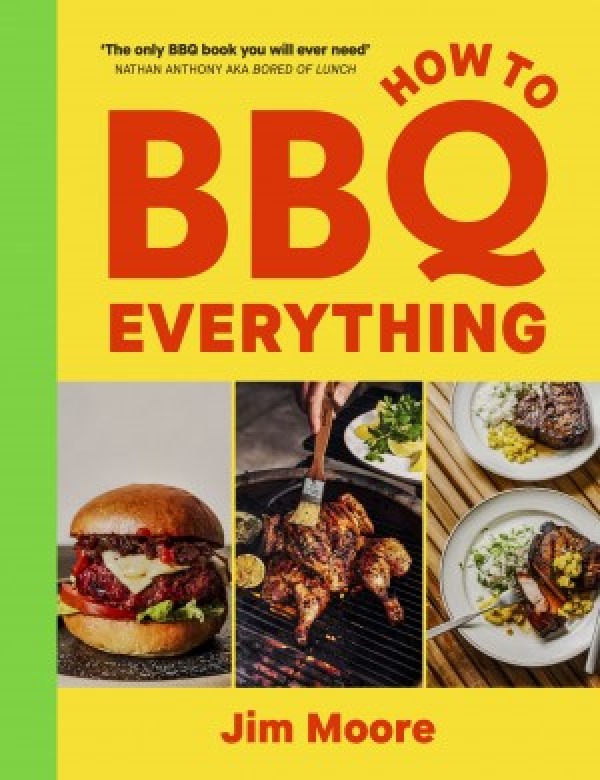
How to BBQ Everything by Jim Moore (Ebury Press, £25).
Photography by Liz and Max Haarala Hamilton.


Join Our World... Sign up for our exclusive newsletter.
Be inspired every day with Living North
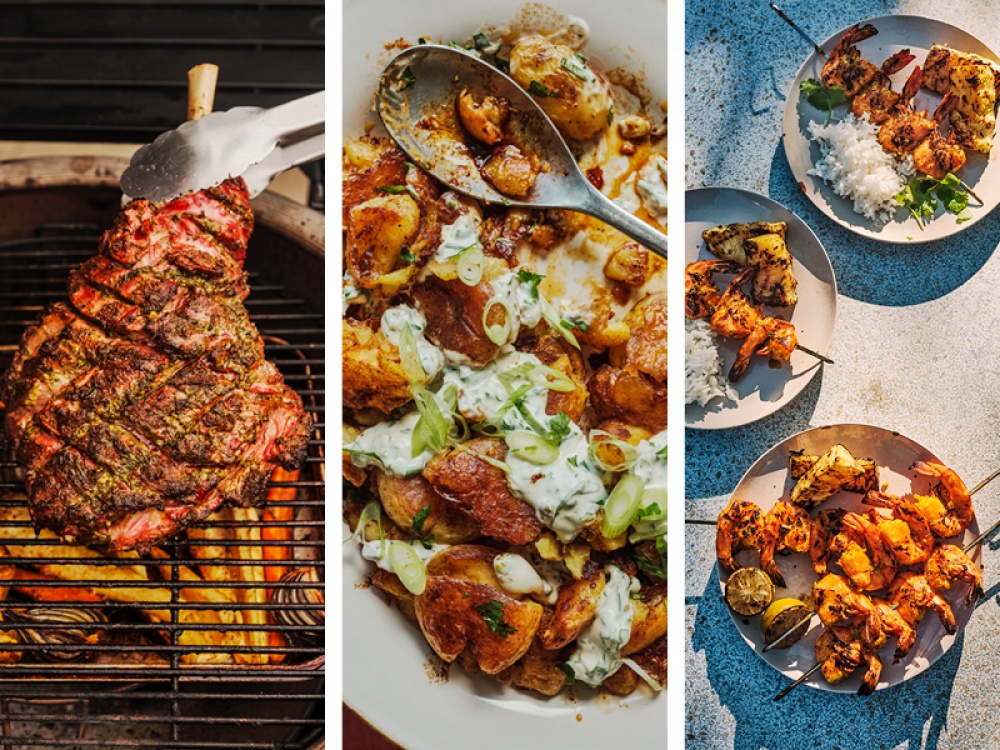


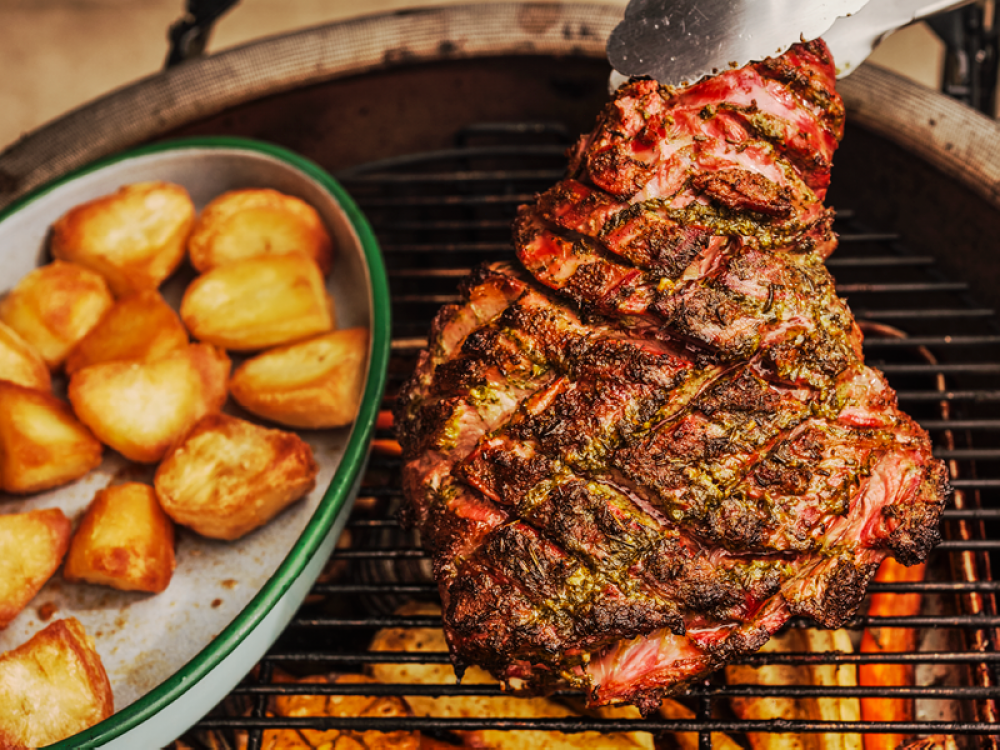
A smoky spin on the classic. This one’s straight from the heart and the barbecue. A golden, herb-crusted leg of lamb slow-roasted over coals, soaking the tray of root veg below in its glorious drippings, all rounded off with puffed-up Yorkshire puddings that rise to the occasion every time.
Blitz the rosemary, mint, garlic, lemon zest and juice, olive oil, salt (or anchovies), pepper and your optional extra into a thick paste. Spoon off a couple of tablespoons to use on the veg later.
Score the skin of the lamb in a crisscross pattern to help the rub sink in. Slather the lamb all over with the herb mix, getting right into the cuts. Let it sit for at least 30 minutes at room temperature – or stash it in the fridge for a few hours to deepen the flavour.
To make the Yorkshire pudding batter, whisk together the eggs and milk, then sift in the flour and salt. Mix to a smooth batter, then rest in the fridge for an hour or overnight. Fire up the barbecue for indirect cooking at around 200C.
Pop all the veg, except the potatoes, into a tray, toss with the reserved herb rub and a good glug of dripping or oil, then position the lamb directly above them on the grill grates. As the lamb roasts, it’ll baste the veg with its juices.
Cook until the lamb hits 60C internal temperature for medium (about one and a half to two hours). Once done, take it off the grill and tent it loosely with foil for at least 20 minutes, to rest and reabsorb its juices.
While the lamb is resting, crank your barbecue or oven to 250C.
Preheat a muffin tin with fat until smoking hot, then carefully pour in the batter. Bake for 25–30 minutes until golden and puffed – no peeking!
Boil the potatoes for six minutes, then drain and let them steam-dry. Toss into hot oil or dripping and roast alongside the lamb or separately until crisp and golden brown.
Carve thick slices of lamb, stack with golden roasties and caramelised veg, then top with a giant Yorkshire. Drizzle over a proper gravy or go fancy with a minty jus.
Cheesy Twist: Add grated Cheddar or a spoonful of English mustard to the Yorkshire batter for extra flavour.
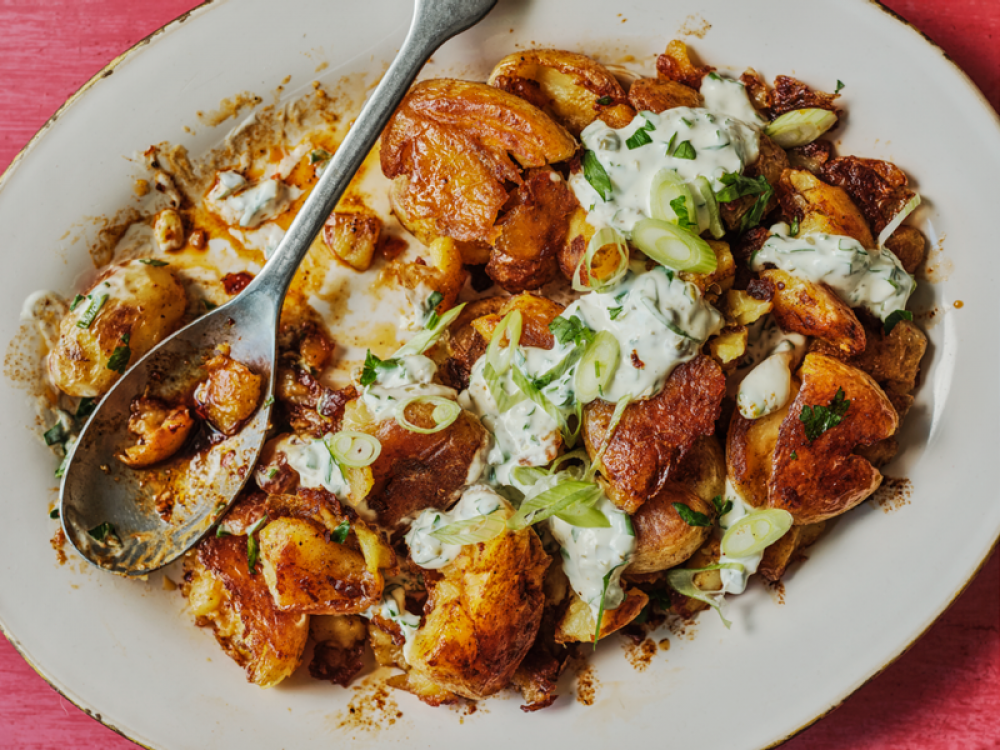
Golden smashed spuds kissed by flame. There’s something about crispy potatoes and smoky barbecue flavour that just works, especially when it’s all finished off with a tangy, herby sauce that cuts through the richness. This one was inspired by a simple tapas-style potato dish I had in a local restaurant in Belfast, but with a full-blown barbecue twist. Instead of roasting, we crisp the smashed baby potatoes directly over the coals or in a hot griddle pan, giving them that fire-charred edge. The dressing brings everything together – creamy, lemony and packed with capers, mustard, garlic and herbs.
Add the potatoes to a saucepan of salted cold water and bring to the boil. Simmer for 20–25 minutes until fork tender. Drain and let them steam-dry in the colander for a minute or two.
Place the potatoes on a tray or chopping board and gently press each one with the bottom of a glass or metal cup to flatten, aim for one to one and a half centimetres thick. Let them cool slightly to firm up.
While the potatoes are cooling slightly, stir together the mayo, yoghurt, garlic, capers, mustard, lemon zest and juice, half the spring onions and half the parsley. Taste and adjust seasoning as needed, adding a touch more lemon if you like it extra zippy.
Preheat your barbecue for direct heat (medium-high 180–230C). Brush the potatoes lightly with olive oil and season with smoked paprika, salt and pepper.
Grill the smashed potatoes directly on the grates or a griddle, turning occasionally until crispy and golden on the edges, 10–15 minutes depending on heat. Watch for flare-ups and move them to a cooler zone if needed. Once crisp, transfer to a baking tray and let them cool for five minutes.
Lightly toss the grilled potatoes with half the dressing until just coated, then pile them up on a platter. Spoon over the remaining dressing and scatter with the remaining parsley and spring onions. Finish with a crack of black pepper and maybe a few chilli flakes if you’re feeling bold.
Serve warm or at room temperature with grilled chicken, ribs or just a cold cider in hand.
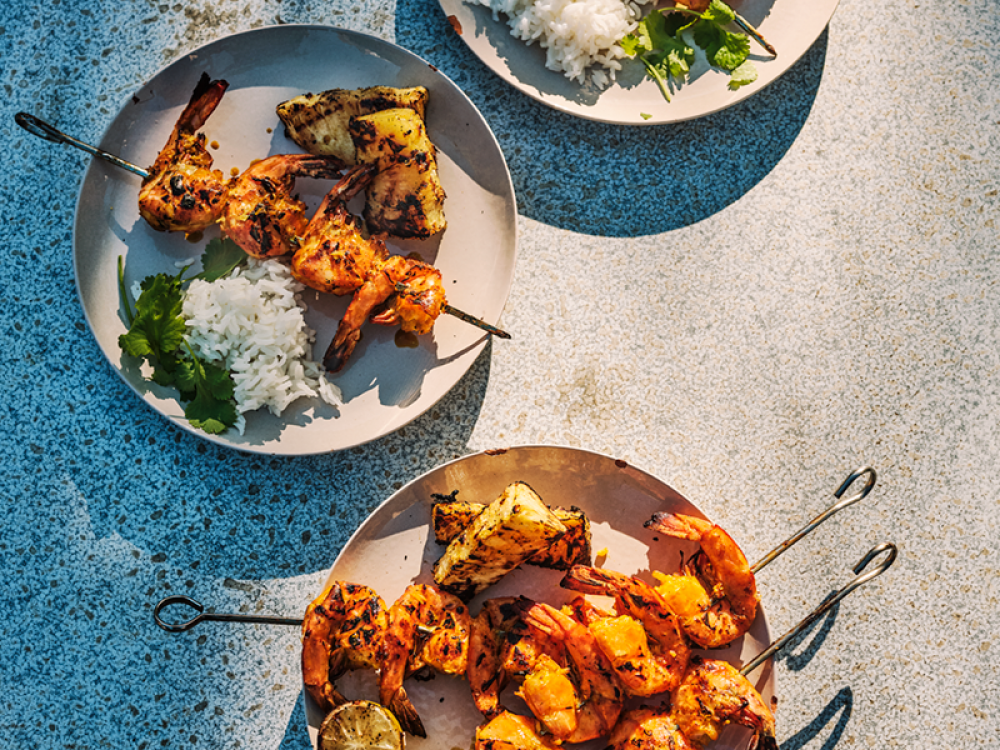
Bright, beachy and dangerously snackable. This dish takes me back to the sun-soaked sands of the Gold Coast in Australia, where prawns are almost a way of life and cooking over fire is second nature. We found ourselves in a lovely beachside restaurant that was serving grilled skewers of prawns scented with lime, lemongrass and coconut – the aroma alone was unforgettable. These grilled prawn skewers bring that Queensland spirit straight to the barbecue. Marinated in coconut milk, lemongrass and chilli, then grilled to perfection on a barbecue plancha, soapstone or skillet, they’re vibrant, bold and unmistakably coastal. Finished with a small pinch of flaky sea salt, they are perfect with a chilled sauvignon blanc, and even better with the sound of ocean waves crashing nearby.
Rinse the prawns under cold running water and pat dry with kitchen paper.
In a bowl, whisk together the coconut milk, curry powder or paste, turmeric, ginger, lemongrass, chilli and fish sauce. Stir in the coconut. Add the prawns to the marinade and toss to coat. Cover and refrigerate for at least 30 minutes, or up to two hours.
Thread the prawns onto the soaked skewers and brush lightly with the reserved marinade.
Place the skewers directly on the grill on a high heat (230–290C) and cook for about two minutes per side, until the prawns are pink, firm and opaque.
Serve on a bed of grilled pineapple and rice, with lime wedges on the side.
Street Food-Style: Serve with a spicy sweet chilli dipping sauce or a fresh mango salsa.
Tropical Aussie Vibes: Add chunks of grilled pineapple or green mango to the skewers.
Surf Club Twist: Serve over avocado-lime slaw or wrap in a warm flatbread with a slather of coconut yoghurt.
How to BBQ Everything by Jim Moore (Ebury Press, £25).
Photography by Liz and Max Haarala Hamilton.