How This Sunderland Sculptor is Celebrating Female Steelworkers
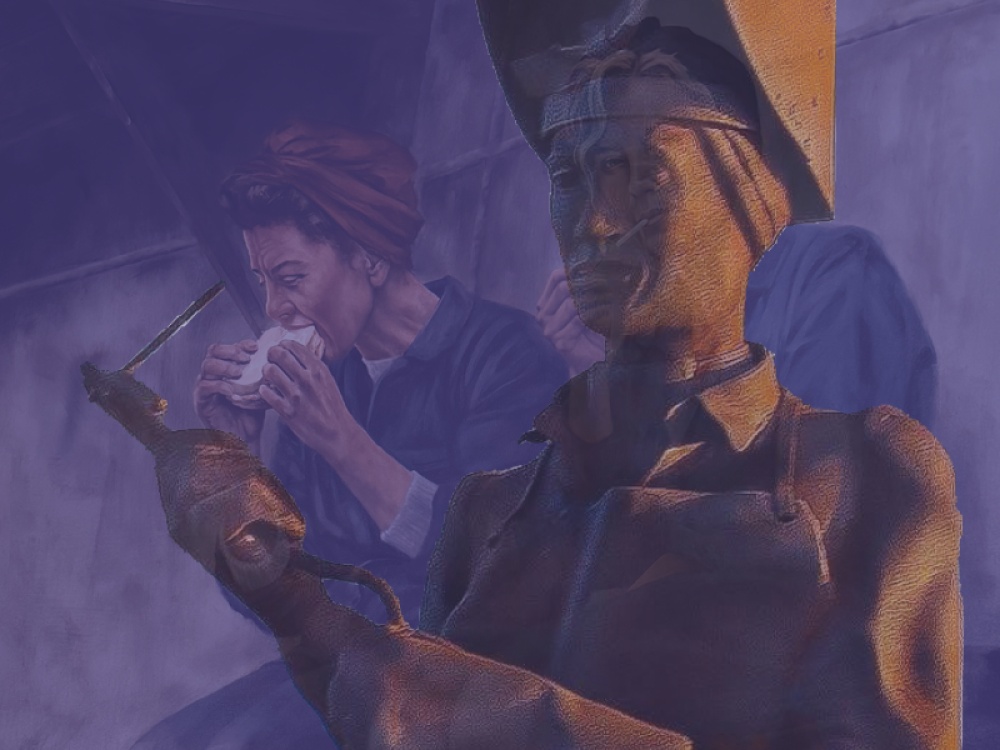
Sunderland-based sculptor and painter Ron Lawson is celebrating the women who worked in local steelworks during World War II in the hope of putting a permanent sculpture on display in Consett


Ron works under the artist name Stanson and brings together painting, bronze casting, steel sculpture, blacksmithing and heritage metalwork. ‘My working life has followed a varied path,’ he tells us. ‘I began as an apprentice sheet-metal worker before becoming a police officer, an operations manager and, latterly, an academic, teaching leadership and professional practice at the University of Sunderland. Throughout those different careers, I remained fascinated by people, their work and their stories. I also continued to paint and sculpt, gradually developing my own artistic style.’
The combination of practical metalworking experience and years spent observing people had a lasting influence on Ron’s work. ‘It eventually led to commissions for several public-art steel sculptures across the North East and gave me the confidence to make the leap into working as a full-time professional artist,’ he reveals.
‘My earliest creative memories are of my dad, Stan Lawson, who was a keen amateur artist. He encouraged me to be creative and taught me to draw when I was a toddler. By the time I started school, I had become quite proficient at drawing the naked human form – which got me into a little trouble at infant school. Drawing progressed into oil painting, which was another of Dad’s passions, and during my teens I began exploring pottery and sculpture. By that stage, I was determined to become an artist like Dad and a drummer like my older brother David.’
Ron’s parents, perhaps sensibly, advised him to learn a trade first, so he became an apprentice sheet-metal worker. ‘The heritage metalworking skills I acquired during that apprenticeship continue to influence my sculpture today,’ he reveals. ‘Art and music never left me, regardless of where my career took me. I now paint, sculpt, and play drums and percussion with several local bands, so in many ways those childhood ambitions have been fulfilled.
‘I adopted the name Stanson because another established contemporary painter was already working under the name Ron Lawson. The solution became something much more meaningful than a practical rebrand. My dad was Stan, I am his son, and he was my earliest artistic inspiration: Stan’s son.’
Last year, Ron was approached by Ken Devine, a fellow artist and former gallery owner, to join a group of 24 like-minded North East artists who wanted to establish a community-focused, artist-run gallery in Sunderland – which is now 24NE Gallery on Fawcett Street. ‘I jumped at the opportunity,’ says Ron. ‘We collectively rolled up our sleeves and transformed an old sweet shop into what is now a high-quality contemporary gallery. It has been operating for almost a year as a community interest company, presenting seasonal exhibitions while continually showing recent work by its artists.
‘The gallery has become much more than an exhibition space. It gives artists an opportunity to collaborate, curate, teach and contribute their practical skills. I used my metalworking experience to help construct the picture-hanging system, I teach life drawing there, and I particularly enjoyed curating an exhibition of original paintings by David Bowie. For my own practice, 24NE has also provided an important setting in which to test ambitious work at a larger scale and see how audiences respond to it.’
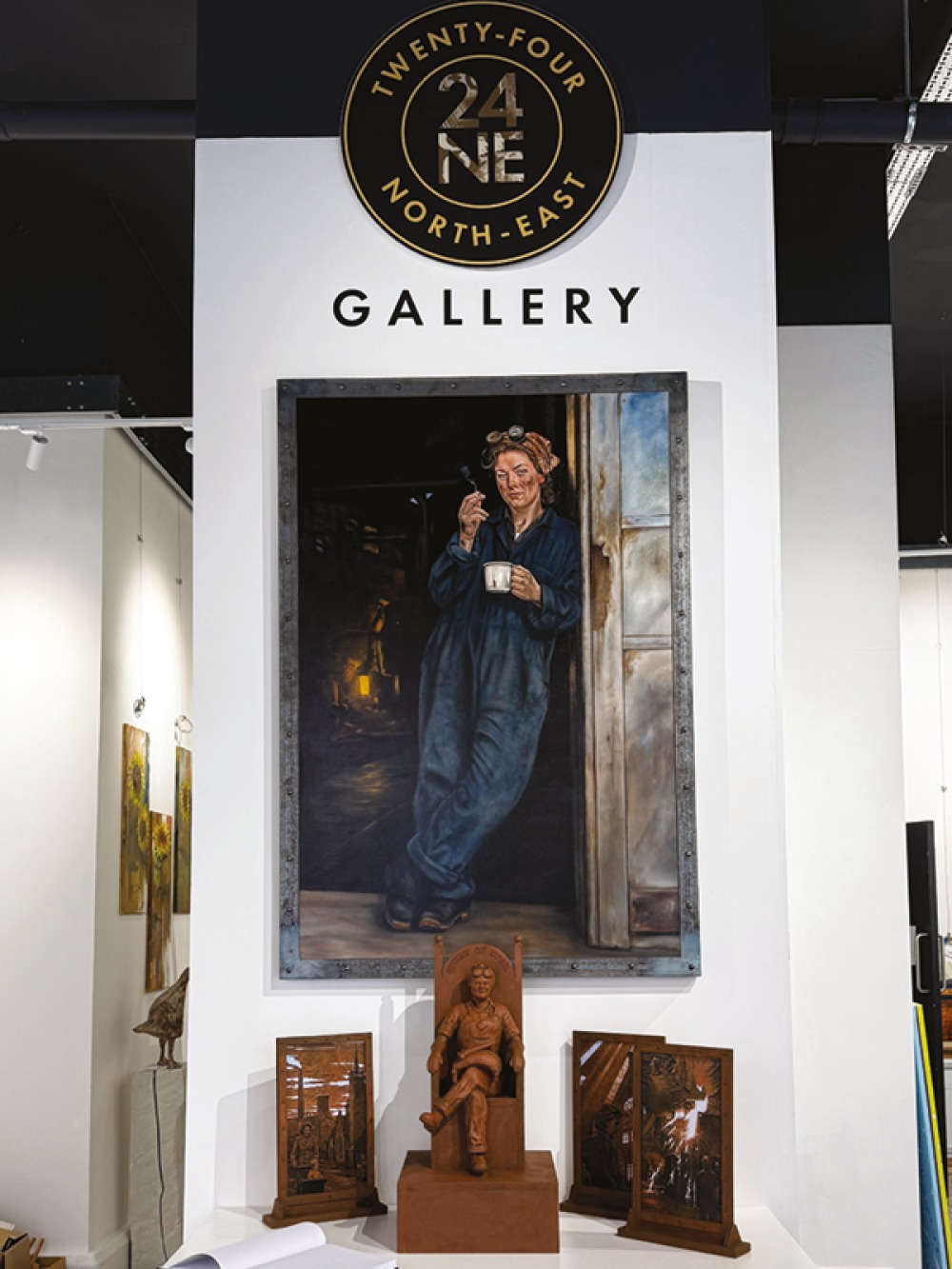
The gallery has arrived at an important moment in the regeneration of that part of Sunderland, and Ron says each exhibition launch has been very well attended. ‘Our most recent exhibition featured my large painting Ruth alongside the maquette – the scale model – for the proposed Queens of Steel public artwork,’ he says. ‘As part of the consultation, I placed a book in the gallery to capture visitors’ responses. People began writing about their own working lives and their memories of family members who had worked in industry. Many described feeling captivated by Ruth because she was looking directly back at them from the painting. I became fascinated by how long some visitors stood in front of her, apparently fixed in that exchanged gaze. They had come to look at the painting but seemed to experience the unsettling realisation that its subject was also looking at them. That response has opened an unexpected new direction in my practice.’
Queens of Steel is a proposed life-size public sculpture commemorating the women who worked in Consett Steelworks during the Second World War. The project was initiated by the Friends of Blackhill and Consett Park. ‘They commissioned artist Anna Harding to undertake community consultation, and the brief emerged particularly strongly from ideas contributed by local children,’ says Ron. ‘The children wanted to see a female wartime steelworker seated on a throne, wearing oversized overalls, a headscarf, goggles and foundry clog work boots. They also imagined her with a cushion on her knee carrying the tools of her work. It was a wonderfully specific and imaginative brief. Because of my earlier sculpture Molly in Sunderland, Anna recommended me to help consolidate those ideas and develop the design and maquette for the Friends.’
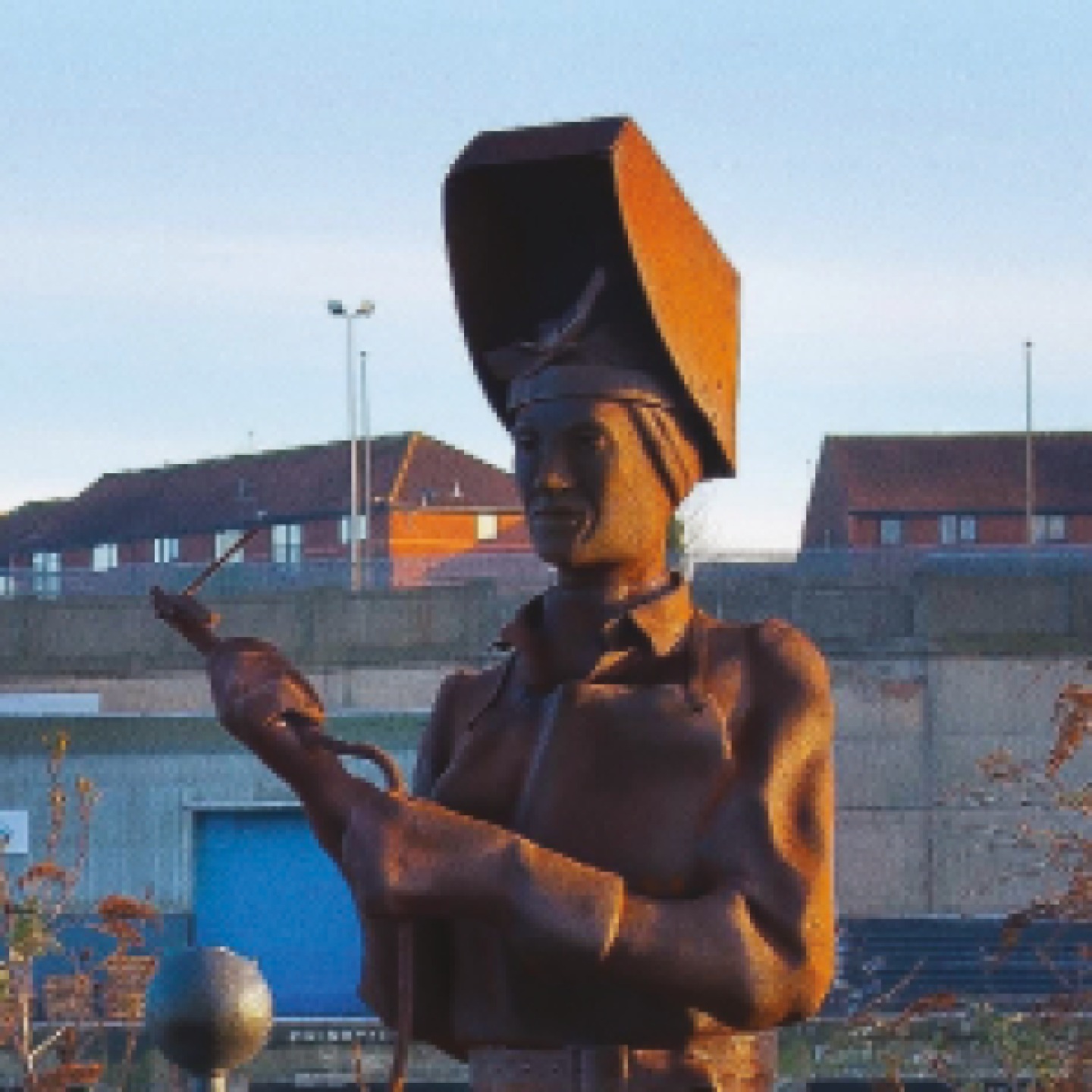
For Ron, Queens of Steel represented a natural progression from Molly, his sculpture of a female wartime welder standing on the former Sunderland shipyard site. ‘There is a powerful connection between the two stories,’ Ron reveals. ‘The women working in Consett helped manufacture the steel plate that Molly and her workmates used in Sunderland to build ships for the war effort. The sculptures are therefore connected through the work those women performed and through the industrial relationship between the two places. Their contribution was in danger of being forgotten. I consider it an absolute privilege to help retell their stories and capture something of them in art for future generations.’
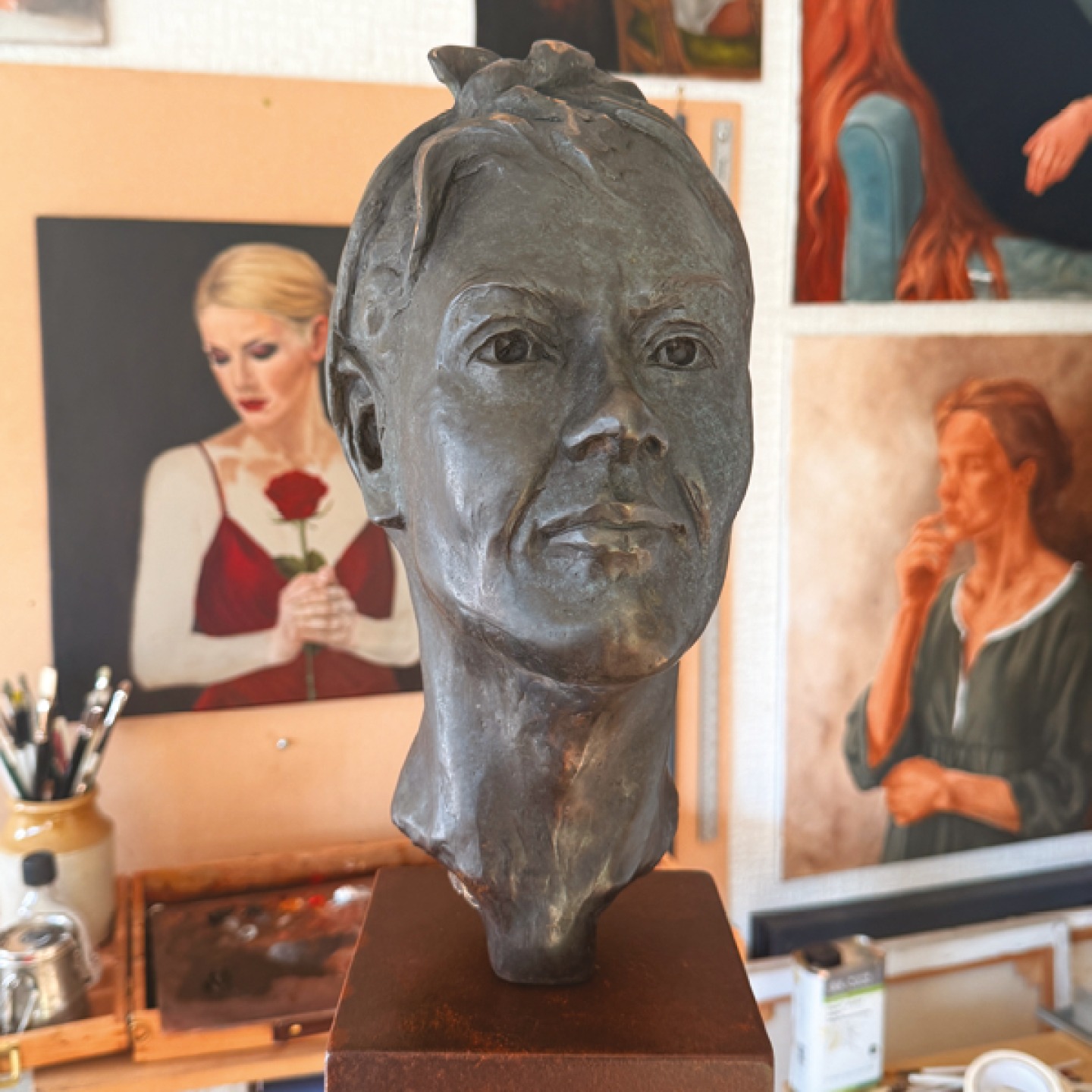
Now the project has reached an important stage of its development. ‘The design has been fixed, the maquette has been completed, and I have produced a reference head for the sculpture which I have subsequently cast in bronze,’ says Ron. ‘Funding applications for the wider project are now underway. The completed sculpture will be life-size and fabricated from self-weathering Corten steel. It is intended to stand on the former site of the steel plate works in Consett, at the centre of a planned building development.’
‘I consider it an absolute privilege to help retell their stories and capture something of them in art for future generations’
The sculpture is just one part of a much wider community engagement programme. ‘The intention is to explore the heritage through a range of art-based activities, including visual art, drama and music,’ Ron adds. ‘My earlier sculpture Molly inspired a folk song by Andy James Fraser, for whom I play drums and percussion. We are now working with Consett-based folk singers Janet Mills and Dave Farrell on a collaborative suite of original songs that will add another dimension to the story. It is becoming a substantial collective effort to celebrate and interpret a unique part of North East industrial heritage.
‘Like Molly, the central figure is not intended to represent one documented individual. She represents many women and has emerged from a combination of community ideas, historical understanding, lived experience and my imagination. I named the corresponding painting Ruth because the strong character standing in the foundry doorway reminds me of my mam, Ruth. I believe something of that stern gaze emerged unconsciously as I painted her.
‘I feel a deep working-class connection with both the sculptures and the paintings. I also share something of their material experience through my own history of working with steel and learning heritage metalworking skills. I hope that connection influences the work and helps me create something that feels truthful to the public – and particularly to the descendants of the remarkable women being represented.’
Ron is now creating a substantial body of work exploring what he calls ‘the engaging gaze’ – the moment when the depicted figure appears to recognise the viewer’s presence and looks back at them. ‘I hope this will develop into a significant exhibition and help establish a sustainable practice in which public sculpture and gallery painting are equally important and continually inform one another,’ he says. ‘I will also continue working with my son, Alex Lawson, through Atlas Forge & Arts Foundry to create steel and bronze sculpture. Through our community interest company, ATLAS Action CIC, we hope to pass on the heritage metalworking skills used within our practice.
‘There is an important continuity in that for me. My dad introduced me to painting, I carried those creative ambitions throughout my working life, and I am now making work with my own son while helping another generation encounter traditional skills and overlooked histories.’