Matthew Wolfenden and Roxy Shahidi Guide Us on a Walk Through Muker's Hay Meadows
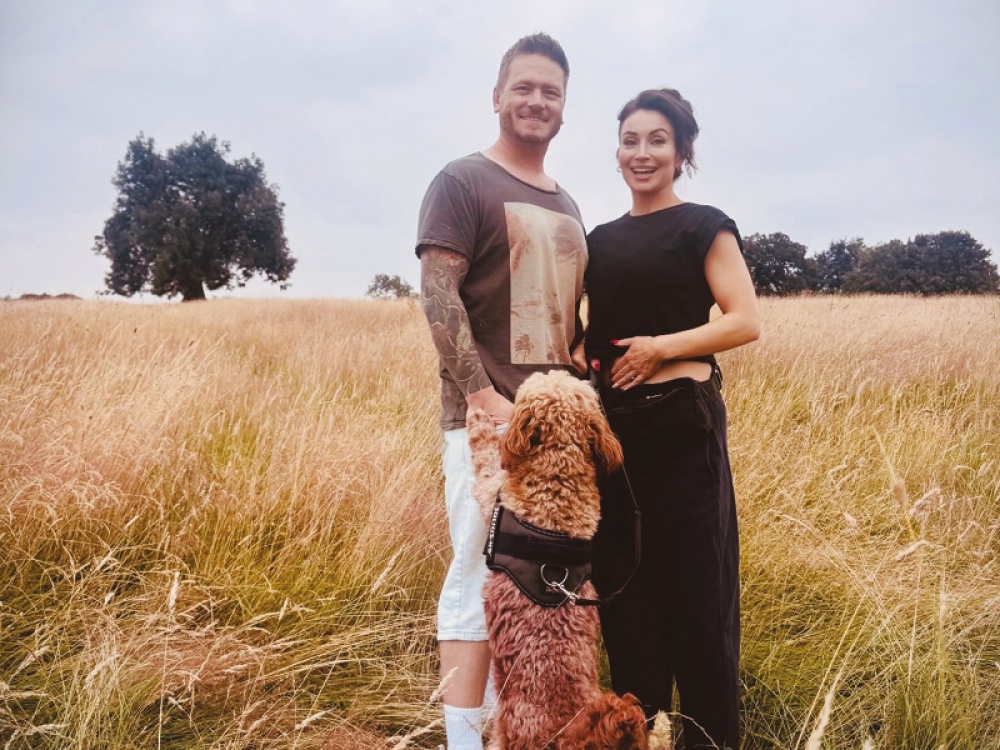
Living North's columnists, actors Matthew Wolfenden and Roxy Shahidi (best known for their roles as David and Leyla on Emmerdale), continue their journey exploring Yorkshire one walk at a time


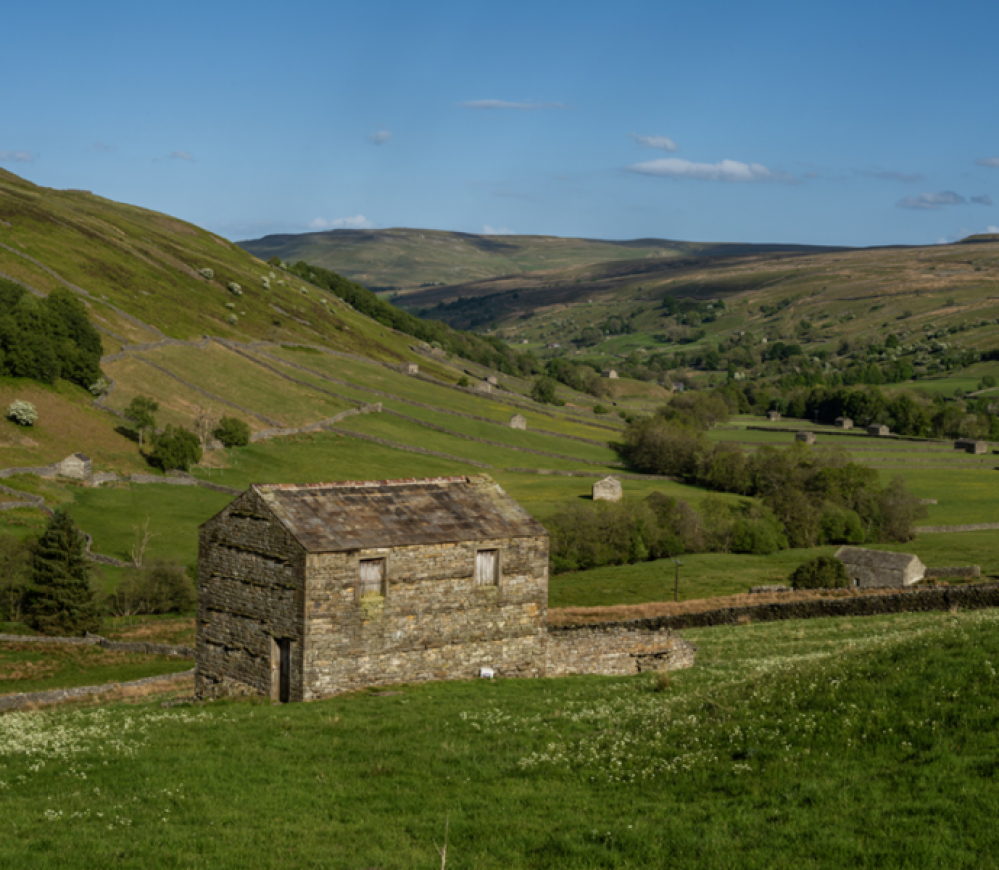
Beginning and ending in the picture-perfect village of Muker, this circular walk explores one of the most traditional farming landscapes in Yorkshire. Dry stone walls criss-cross the valley, ancient field barns dot the hillsides, and rolling meadows stretch out in every direction beneath the surrounding fells.
The route follows quiet footpaths towards Keld before looping through the internationally renowned hay meadows that have made this part of Swaledale so special. These meadows are among the finest surviving examples of traditional hay meadow management anywhere in the country and remain an important haven for wildlife and rare plant species.
Although many visitors arrive in late spring and early summer to see the spectacular display of wildflowers, early autumn offers a completely different experience. The bright colours have mellowed into warm golds and earthy browns, the fields are freshly cut, and the valley feels quieter, slower and somehow even more peaceful.
It’s a walk that encourages you to slow down. Rather than chasing summits or dramatic viewpoints, the reward comes from wandering through a landscape that has remained remarkably unchanged for centuries.
Why Muker?
Roxy: ‘This might be one of the prettiest villages we’ve visited so far.’
Matt: ‘It looks like someone built a Yorkshire village specifically for postcards.’
Roxy: ‘Or a film set.’
Matt: ‘Talking of filming, wasn’t The Yorkshire Vet filmed around here quite a bit?’
Roxy: ‘Yeah, a lot of Swaledale features in the programme. You can see why – it’s stunning.’
Matt: ‘I think if I lived here I’d spend most of my day staring out of the window.’
Roxy: ‘You already spend most of your day staring into the distance.’
Matt: ‘That’s called thinking.’
Roxy: ‘No, that’s called procrastinating!’
Matt: ‘Fair point.’
Roxy: ‘At least we’ve got The Farmers Arms waiting for us afterwards.’
Matt: ‘Now that is the kind of forward planning I can get behind.’
Let’s Walk…
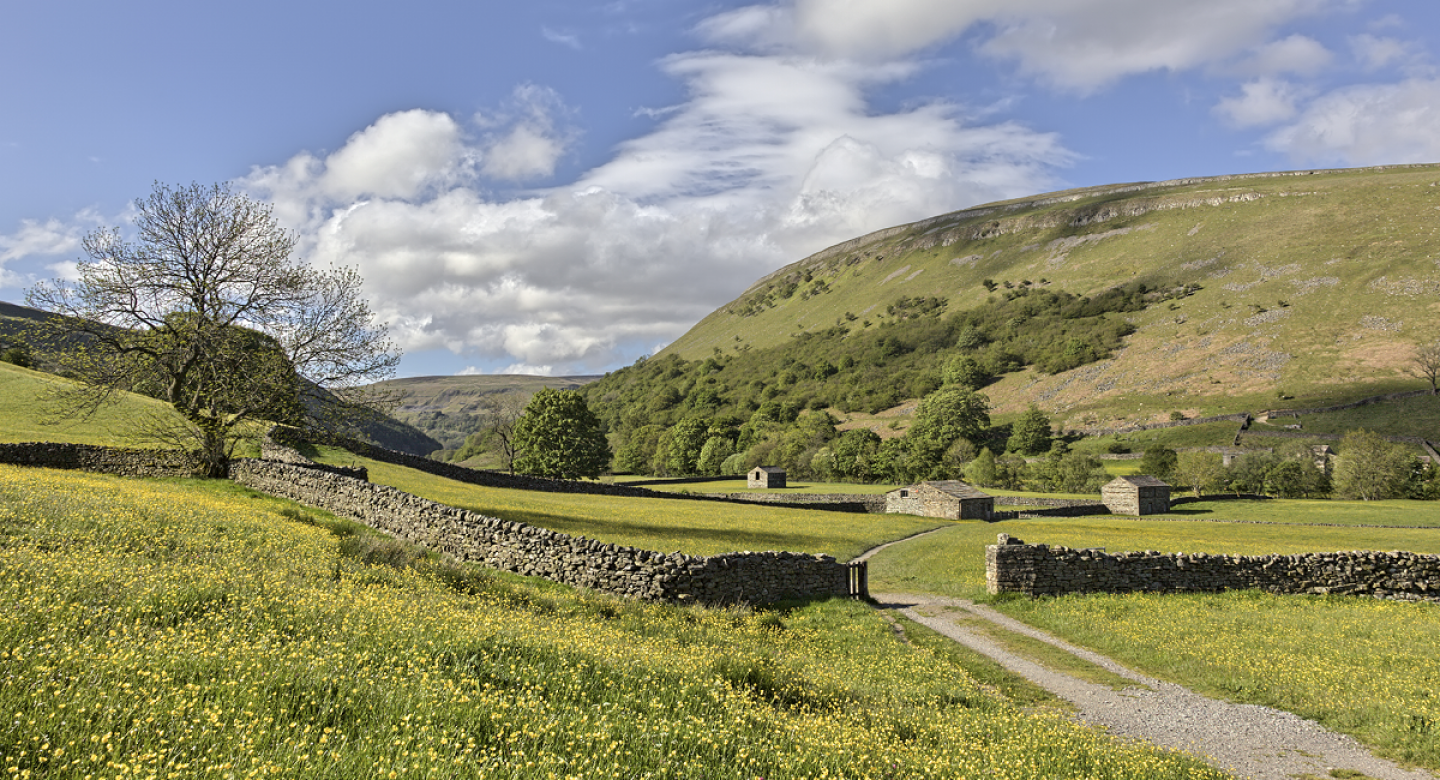
We set off from Muker’s village green beneath clear skies. Stone cottages line the narrow lanes, and almost immediately the village gives way to open countryside. The first thing you notice is the sheer number of dry-stone walls. They weave across the landscape in every direction, dividing the meadows into smaller fields that climb the hillsides towards the fells beyond. Between them sit traditional stone barns, many centuries old, standing exactly where generations of farmers built them.
The route is well signposted throughout, so it’s easy to relax and simply enjoy the scenery rather than constantly checking a map. There’s no demanding climb either, making this a gentle walk that lets the landscape take centre stage. Underfoot, the paths are generally good, though after wet weather some sections can become muddy, so decent walking boots are still a good idea. As we leave Muker behind, it quickly becomes apparent why this area is so highly regarded. Every field seems to have its own character. Some have already been cut for hay, others remain covered in long grasses, while sheep graze quietly beneath the dry-stone walls that have shaped this landscape for generations.
As we follow the path towards Keld, the views begin to open out as Swaledale stretches ahead, the River Swale winding through the valley below. Although often hidden below by the folds of the valley, you regularly catch glimpses of the water sparkling between trees and stone walls. The sound of flowing water never far away.
One of the things that makes this walk so enjoyable is how quiet it feels. Even on a pleasant weekend, it’s entirely possible to walk for long stretches seeing only the occasional farmer, cyclist or fellow walker. Instead, the soundtrack comes from birdsong, sheep calling across the fields and of course the babbling of the river.
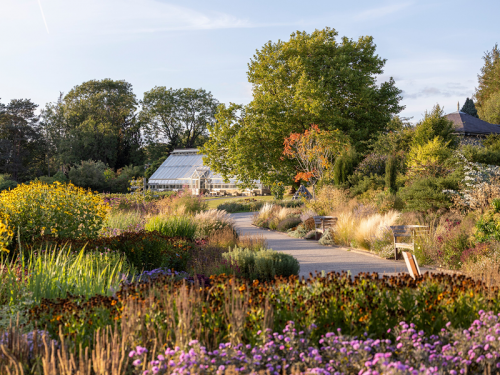
The famous hay meadows are undoubtedly the highlight of the route. These flower-rich fields have been managed using traditional farming methods for centuries, creating a landscape that has become increasingly rare elsewhere in Britain. Although the colourful blooms have now disappeared for another year, the meadows remain every bit as beautiful.
The grasses glow golden in the sunlight, seed heads sway gently in the breeze, and the surrounding countryside takes on rich autumn colours that seem perfectly suited to this time of year. It’s easy to understand why photographers, walkers and nature lovers return here year after year.
It is impossible not to stop regularly. Every gateway reveals another view. Every rise in the path offers another perspective across the valley. There is also something reassuring about knowing that much of what you’re looking at has changed very little over the generations. The stone barns remain where they have always stood, the walls continue to mark the fields, and farmers still work this landscape much as their families have done for centuries.
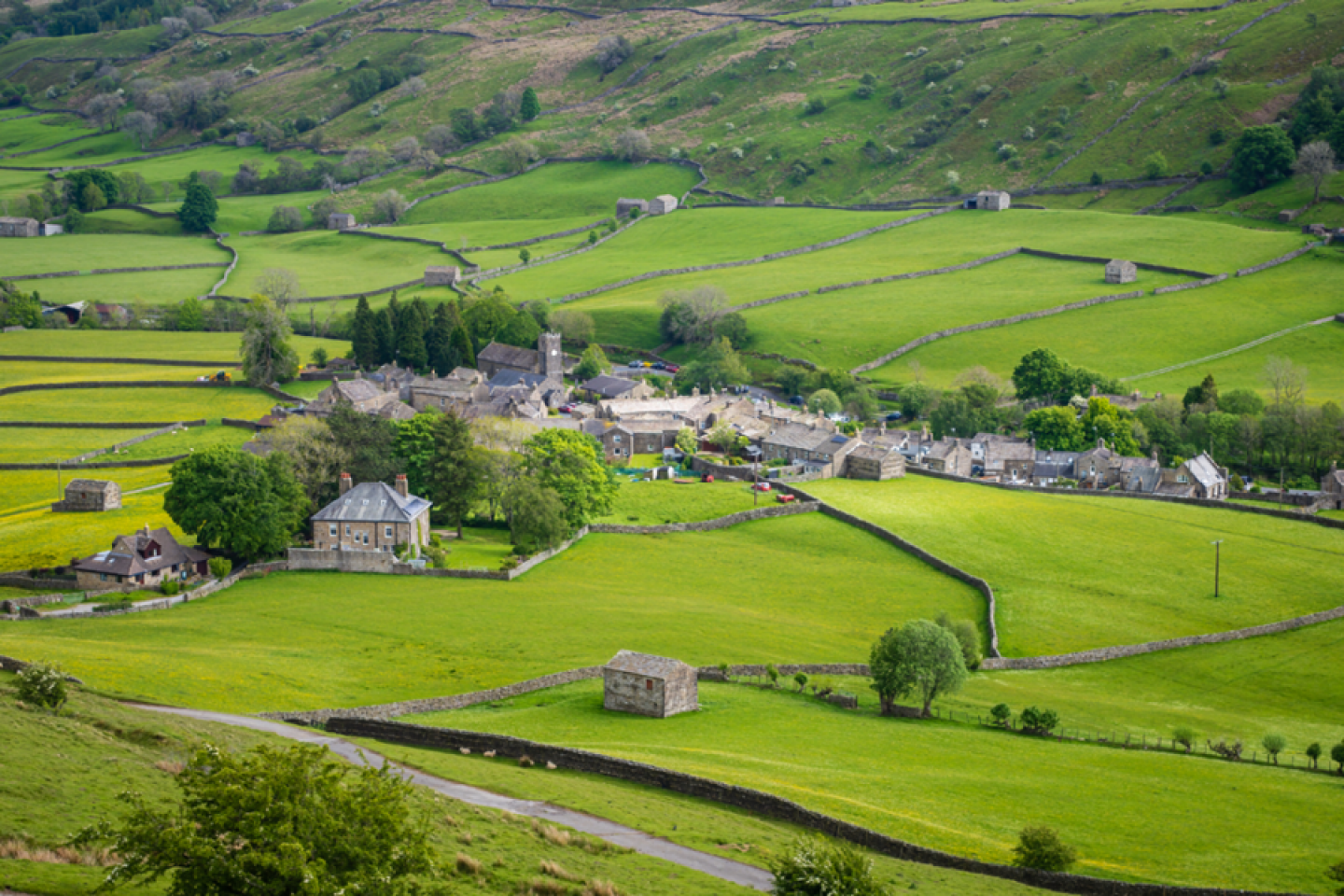
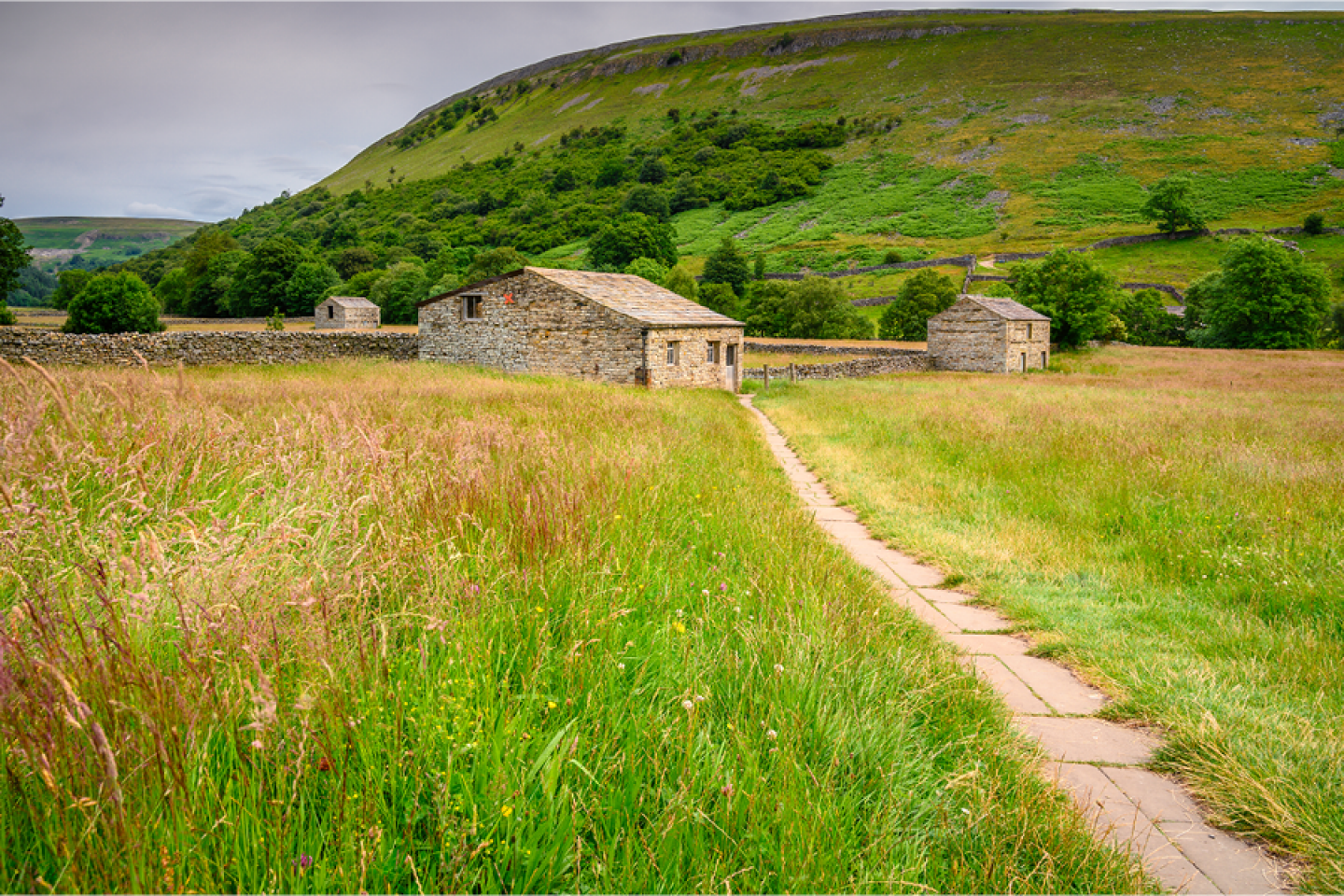
‘As the loop begins to return towards Muker, the village gradually reappears beneath the surrounding hills. This is picture-postcard Yorkshire’
Back in the village, it is worth taking a little time to wander before heading home. Muker’s narrow lanes, stone cottages and quiet village green make it one of those places where people naturally slow their pace.
No walk would be complete without a proper pub stop, and thankfully The Farmers Arms sits right in the heart of the village. Few things feel better than pushing open the door after a few miles on the trail, finding a spot by the fire or in the garden, and settling in with a well-earned drink. Whether you’re stopping for a quick pint or making an afternoon of it with lunch, it feels like the perfect ending to a walk that celebrates everything people love about the Yorkshire Dales.
At around five miles, this is an easy-going route that allows plenty of time to stop, explore and simply enjoy the scenery. There’s no rush. In fact, rushing would rather miss the point.
From the picture-postcard streets of Muker to the famous hay meadows of Swaledale, this walk offers a glimpse of Yorkshire that feels largely unchanged by time. It isn’t about ticking off a summit or racing around a route. It’s about appreciating one of the county’s best-loved landscapes at a slower pace, taking in the history, the wildlife and the remarkable scenery that has made this corner of the Dales famous.
A classic Yorkshire walk, and one we’ll happily return to.
For more from Matt and Roxy, tune into their podcast, Matt & Roxy’s Quick Natter, and follow them on Instagram at @mattandroxyspod