Meet Alex Sowden, the Artist Blacksmith Behind Hammer and Hound Forge
Keeping an ancient craft alive on the Northumberland coast


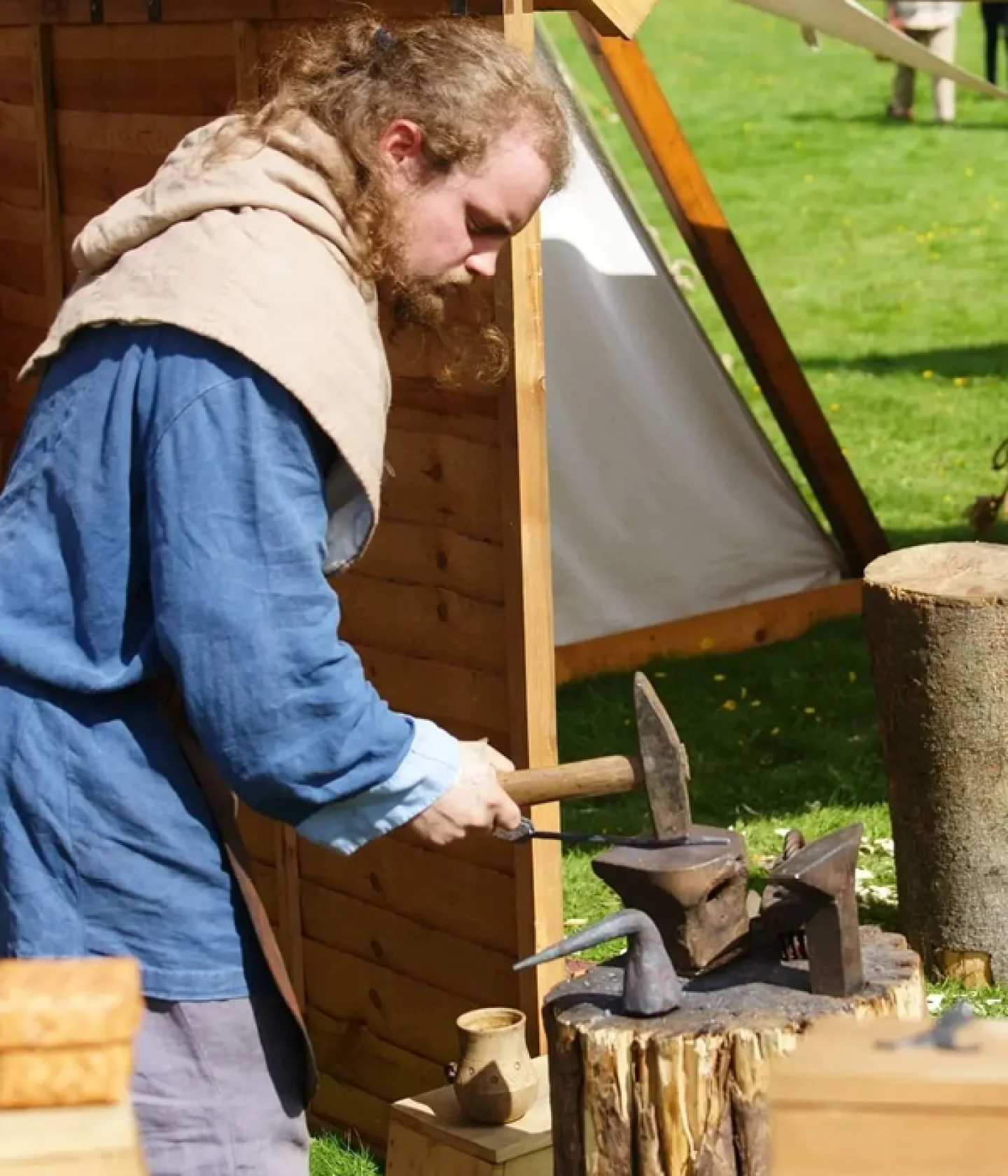
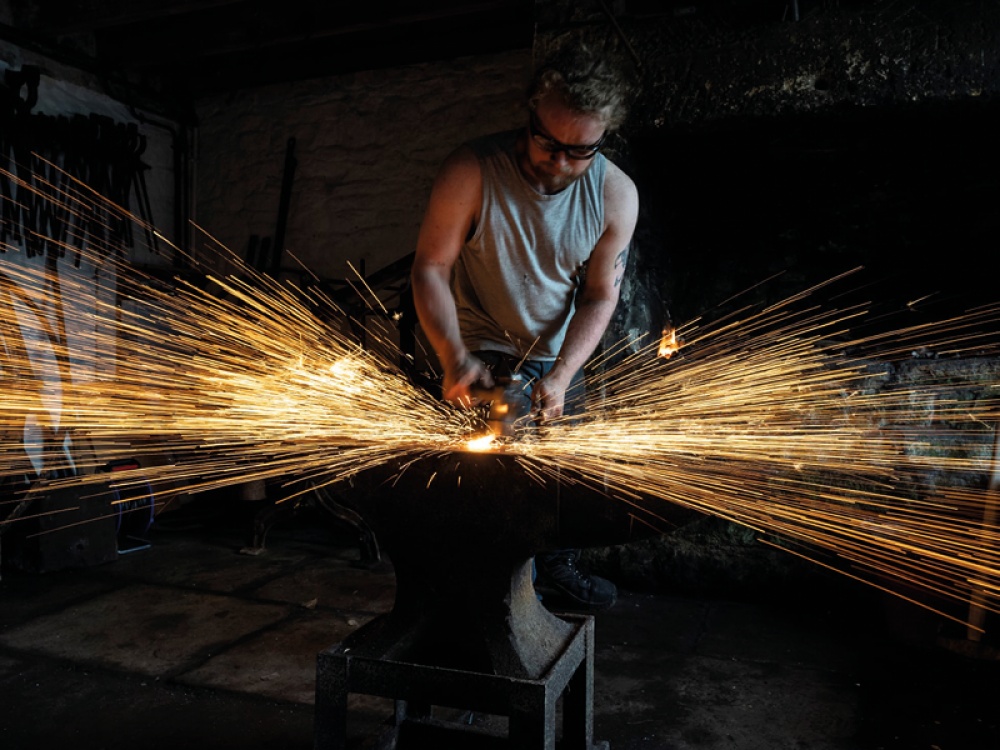
For many outside the world of heritage craft, blacksmithing may seem like a fading art from a bygone age, and Alex would be the first to admit that the road to founding his own blacksmithing business was not a smooth one. His interest was first sparked after a testing childhood of illness. ‘As a little kid I was often out of school,’ he explains. ‘As you go through your childhood, that compounds, and I found myself to be quite a lonely, introverted kid.’
In an attempt to get Alex out of the house, his dad would encourage him to create things using scrap in the family shed. ‘We’d go into the shed and knock about with bits of wood and make stuff. I really enjoyed it,’ says Alex. ‘And for my 16th birthday my dad took me to a blacksmithing day with a smith in Darlington.’
Years spent immersed in fantasy video games and films failed to prepare Alex for the physical demands of blacksmithing. ‘I was terrible! I had noodle arms and I could barely lift the hammer. I was annoyed with myself for not being very good, but I loved the process of it so much that I wanted to keep doing it.’
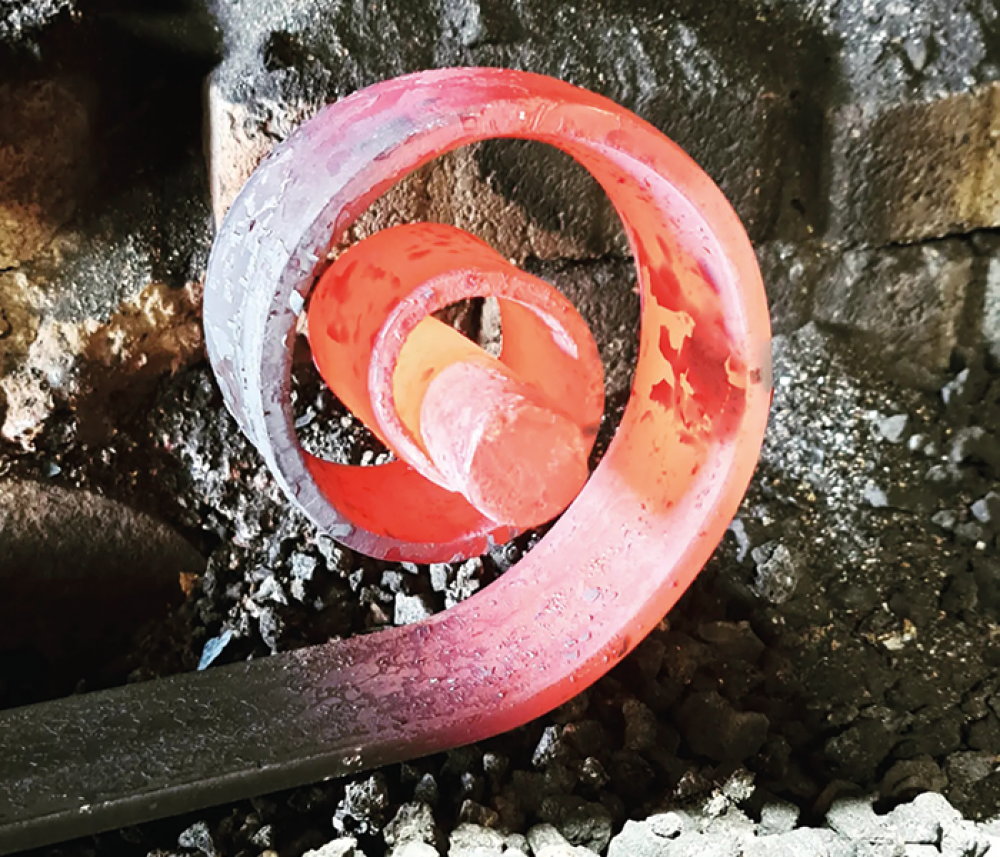
Though academically gifted, Alex became disillusioned with traditional higher education routes and turned his attention to his true love – the forge, which was not only a way to transform his career, but his self-esteem too. ‘I was going to step away from academia, focus on my craft, and get some space between where and who I was, and who I wanted to be,’ he explains. Even at a young age, Alex knew he’d found something special and could appreciate how much had been sacrificed to help him.
‘I would never have made it had it not been for the mountain of people that supported me. But I absolutely fell in love with the craft, and my mental health rapidly improved. At the end of each day I can go home and feel honest that the money that I’ve made is made with the sweat of my own brow, and I’ve made something that is genuinely going to help people. I find that it gives me a sense of belonging.’
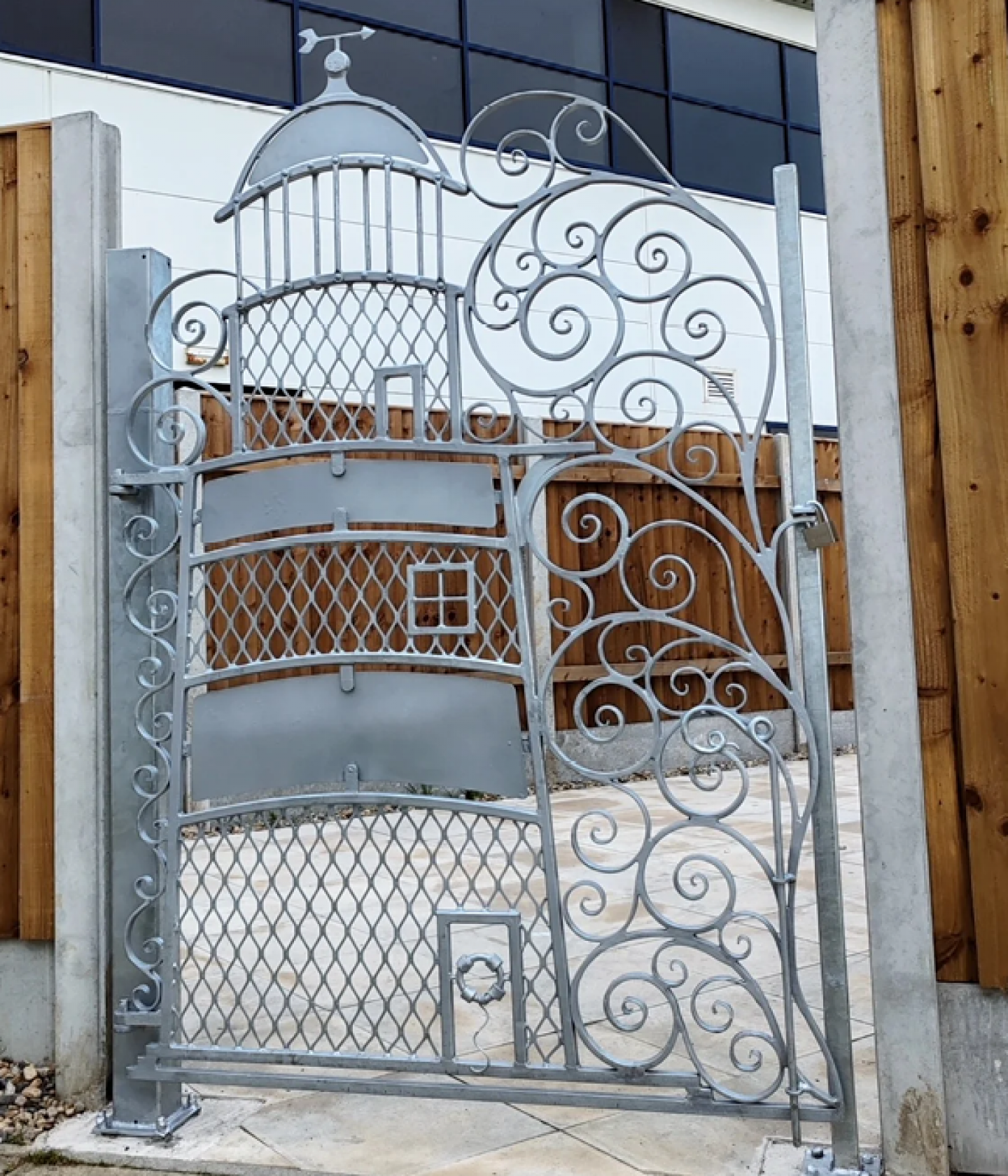
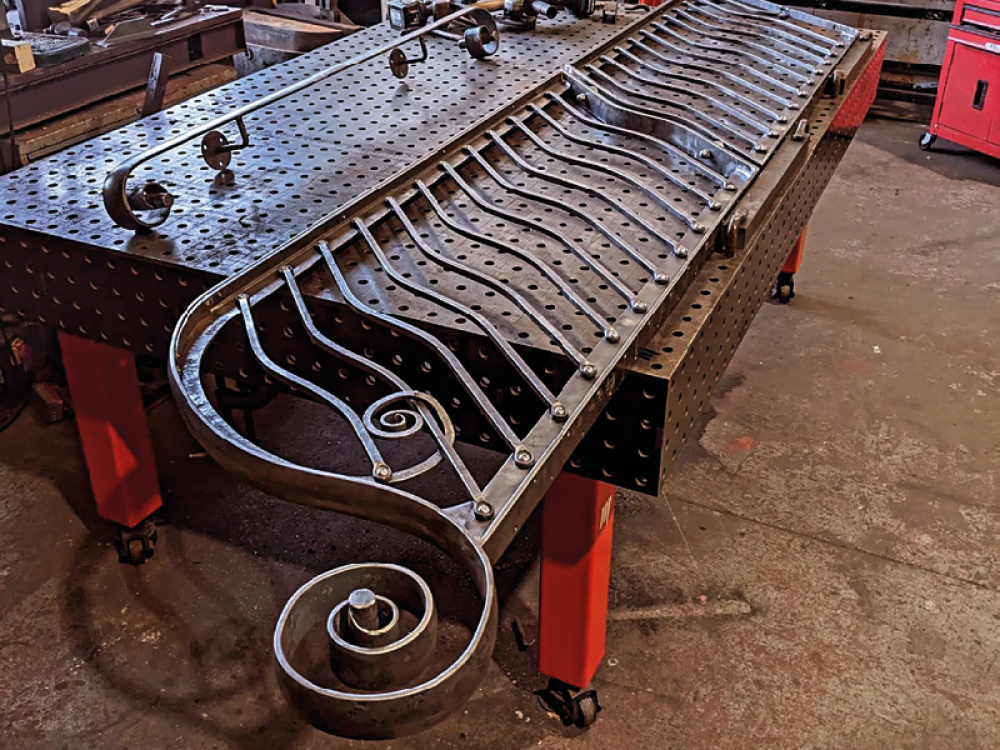
Training as a blacksmith was one thing, but Alex had to bet on himself when branching out with his own business. Hammer and Hound Forge began as a blog, chronicling his projects at college. Shortly after qualifying, Covid hit and Alex essentially took over his parents’ garage. ‘I took any commissions which came in. I made grave plot markers, a couple of garden gates, a lot of historical reenactment equipment. I was making it with whatever equipment I was able to scrounge that relatives had given to me or friends of the family. I made the garage filthy and it wasn’t the right place.’
He then moved to a much larger space in Blyth, taking on any work that came in to support his business. ‘It was just me, the money that I had and the hope that I’d make enough to cover next month’s rent,’ says Alex. ‘I didn’t even have a layout table. Some of the early pieces that I made I was trying to make them perfectly flat on a concrete floor that was not flat at all. My first year I didn’t make any money, because what money I did make I reinvested straight back into the business.’
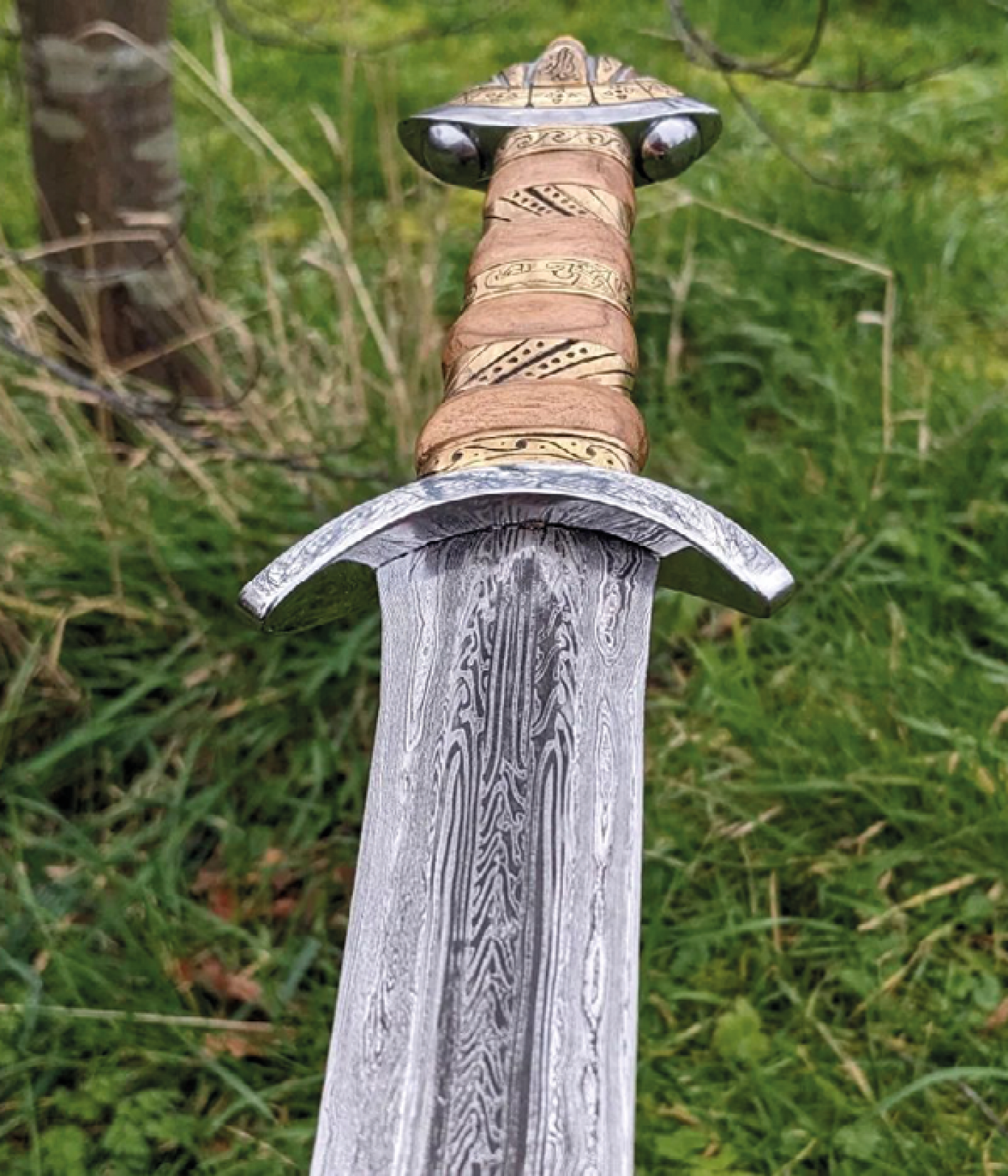
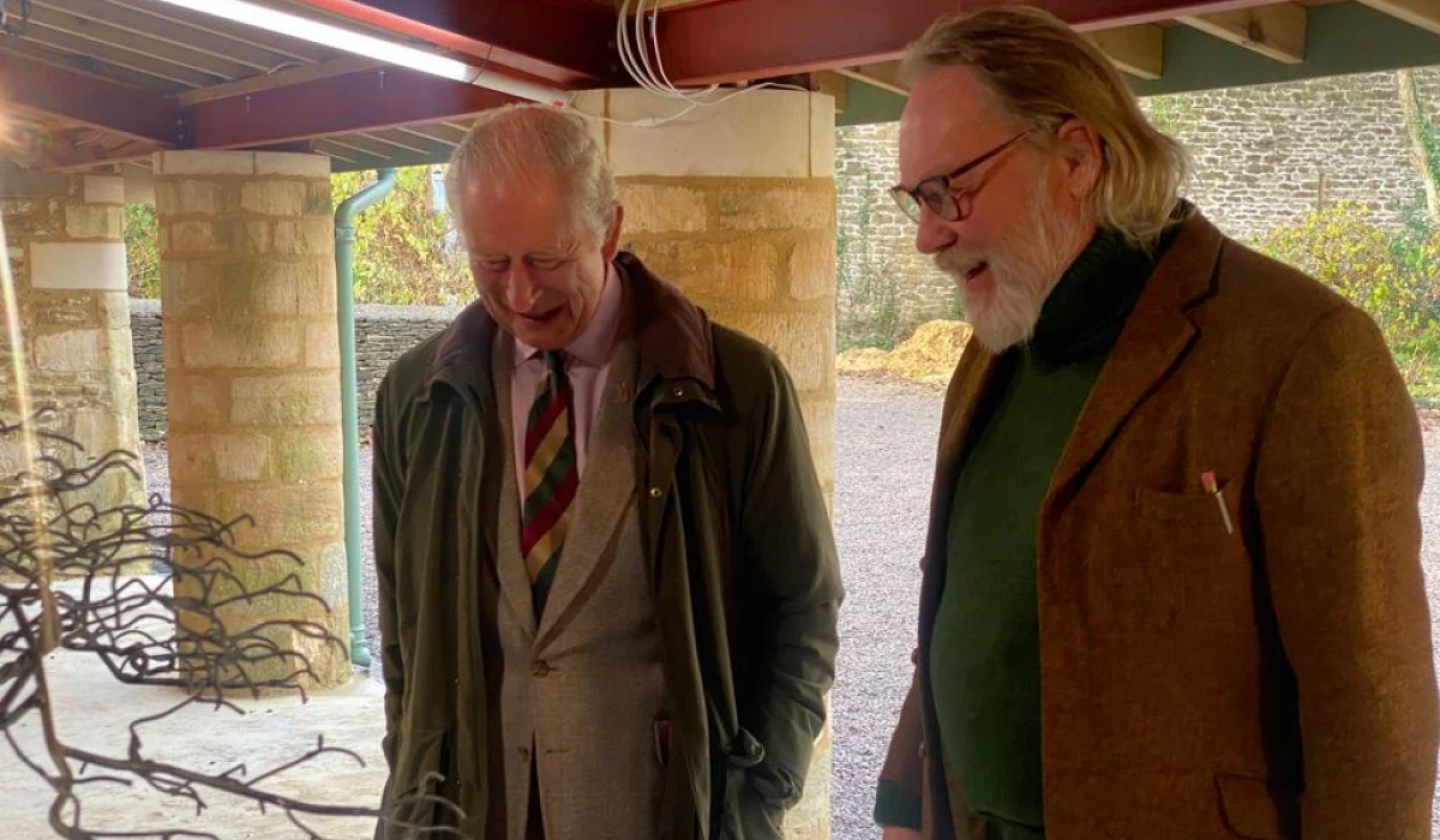
The business soon began to take off and as Alex learned more, he became involved in exciting projects across the region. ‘I forged the reproduction of the Bamburgh sword which is in the museum at Bamburgh Castle, and that was a really cool job. When you’ve got £1,000 worth of gold, and you have to dissolve it in acid to do the electroplating, your heart is in your mouth,’ he laughs. ‘I helped to build the 1950s cinema for Beamish. I’ve also done art projects at Killhope Lead Mining Museum and that’s really nice because every time I go out there I get to see my artwork decorating the museum.’ Alex also appeared on the TV show The Prince’s Master Crafters: the Next Generation where he was able to demonstrate his skill to Jim Moir and King Charles.
A key aspect of Alex’s work now is sharing his knowledge with others. He began offering courses first as a way to stabilise his income, but also as a way to spread his knowledge of the craft. Some of Alex’s lessons include teaching volunteer groups from museums how to safely handle their own forges with confidence. Alex also runs experiences for those interested in trying their hand at the forge like he did so many years ago, and his work with young people in particular earned him the Robin Wood Changemaker Award from Heritage Crafts.
The award is a celebration of a maker who is dedicated to their craft and has made a lasting impression in their field, named after Robin Wood MBE who revived the craft of pole-lathe bowl turning. In particular, Alex was celebrated for his groundbreaking policy of allowing minors onto his courses when accompanied by a guardian, encouraging them to grow in confidence and learn new skills.
‘I could quite happily shift into silverwork, woodwork, glasswork, or leatherwork. It’s more about the mental attitude of being a craftsman. That’s what I try to teach the kids’
When we bring the win up, Alex shifts the conversation away from himself and back to his students. ‘I started teaching to create a stabilising influence on the business and I was getting all sorts of people from all sorts of backgrounds. A lot of them will come and I’ll never see them again, but more of them will come back,’ he says. ‘There seems to be an awful lot of kids that feel exactly the way I felt. I’ve had parents come to me and say they would really like to be able to do this more often and could I advise on anything. I fall back on what I learned when I was training and how I applied to charities and was given bursaries. A number of parents have gone and done the same for their kids.’
As well as offering guidance on how to pursue his craft, he works closely with young people in his own forge to build confidence. ‘What I do with these youngsters isn’t just teaching them how to hit pieces of metal. I take the opportunity to coax them out of a lot of their immaturity. These youngsters are struggling with a variety of different mental health problems, many of them have autism or they have ADHD. They’re exactly the same as I used to be. The fact that I have been through very similar things as what a lot of these youngsters are suffering from means I can empathise really well,’ Alex explains.
He also emphasises that the benefit is not just learning a new skill, but learning how to cope with set backs. ‘I love metal – but if I broke my arm and I was unable to continue being a blacksmith, I could quite happily shift into silverwork, woodwork, glasswork, or leatherwork. I could change because I just really enjoy working with my hands. It’s more about the mental attitude of being a craftsman. That’s what I try to teach the kids,’ he tells us.
Often, Alex explains, he encounters young people who want to throw in the towel as soon as a task becomes difficult, and his goal is to steer them away from the mindset of instant gratification. ‘Usually when they start out with their first couple of sessions, I’m just trying to get them to play. I’m trying to get them out of the mindset that work is something to be begrudged, ashamed of, or rushed. I’m trying to get them to have a bit of pride and creative desire over their pieces. Once we start to get them to take pride over the work they make, that’s when I can start to introduce them to slightly more complicated techniques,’ he says. ‘You have to be mentally tougher than the metal. With craft, you don’t get good at it in one day – you have to dedicate you life to the anvil to get good at it. I’m good at what I do, but I still have mountains to learn.’
Alex is particularly proud to tell us of a young man who has been working with him for around a year. ‘When he first started with me, he was super shy. He wouldn’t look people in the eye and looked at his boots most of the time. He would make a simple mistake and that would be the entire day ruined,’ Alex explains. ‘Now he’s bright-eyed and bushy-tailed. I can’t get him to shut up. He’s still got a long way to go on his journey as a blacksmith, and he’s still got a long way to go on his journey of figuring out who he is, but he has become a good young man.’ Just like Alex was when he began, he’s only 16, but with Alex’s help he’s working towards a bright future in heritage craft.