What Does The Potential Reintroduction of Golden Eagles Mean For Us?
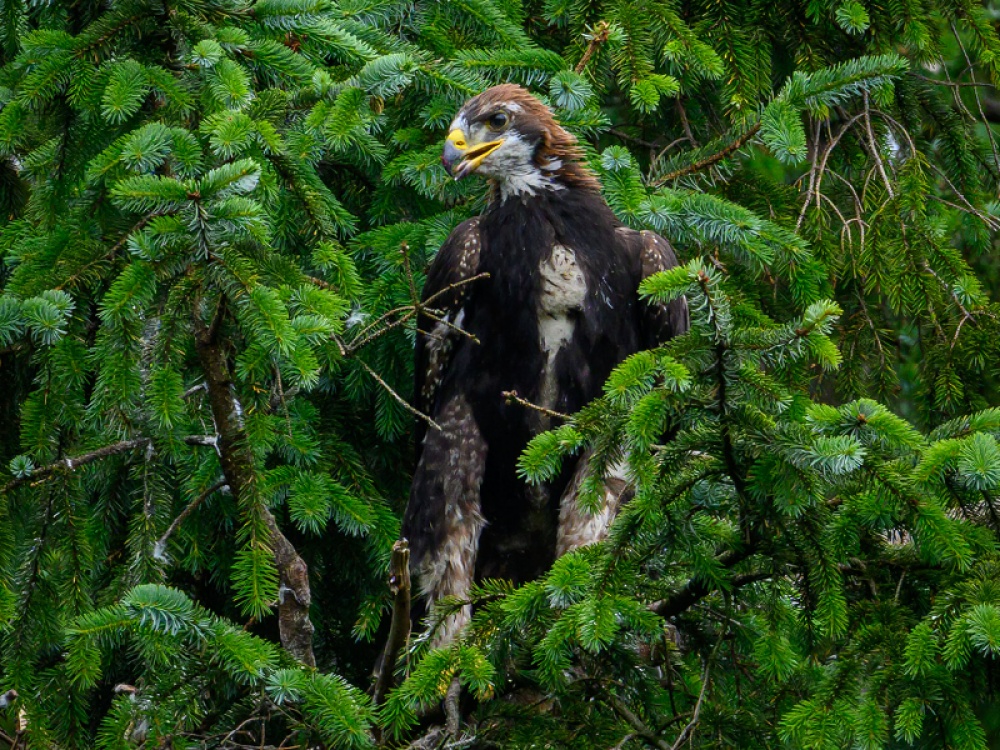
Golden eagles are one of the UK's most impressive birds of prey, but they virtually disappeared from our uplands more than a century ago


Golden eagles became extinct in England in the 19th century but in recent years some young eagles released in the south of Scotland have begun exploring northern England. Now, a feasibility study, commissioned by Defra, carried out by Forest Research and Natural Research and published by Forestry England, is assessing whether golden eagles could return to England.
‘It takes a desk study approach for the most part, although there were some interviews carried out as part of the study, and it looks at different approaches to understanding where golden eagles can survive in England, using different models and different information to understand that, and learning from previous studies,’ says Forestry England Species Recovery Manager Ed Parr Ferris. The study identified eight landscapes in England that can potentially support a golden eagle with a suitable habitat and conditions and low enough risks around people. They are the Cheviots, North Pennines, Lake District, Yorkshire Dales, Bowland, South Pennines, North York Moors and the South West. ‘It originally took a much wider approach but that got narrowed down to those that are most likely to support it,’ explains Ed. ‘Eagles in Britain have generally been associated with uplands, and it's identified those eight areas.’
Golden eagles could return naturally from southern Scotland, with landowners and managers collaborating, but it could take decades for them to successfully breed and expand across northern England. ‘One of the things this suggests is we could explore reintroductions to speed up that process, but also to give the eagles access to places whereby they can expand across the area quicker and more effectively,’ says Ed. ‘We’re looking at different areas where they could establish themselves with a self-sustaining population.’
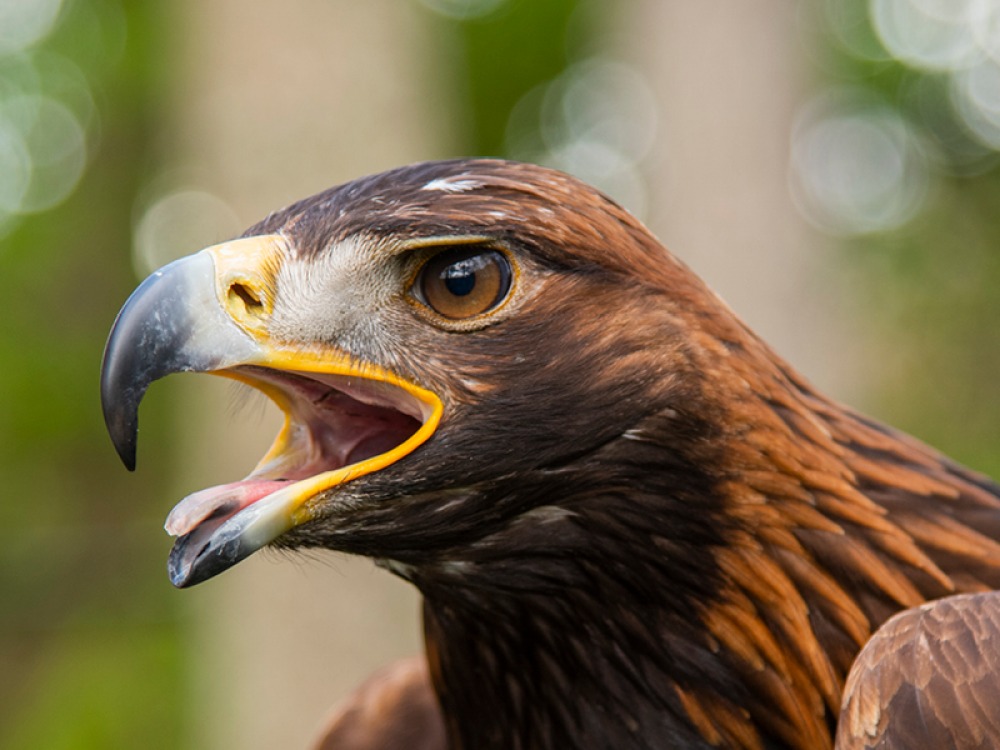
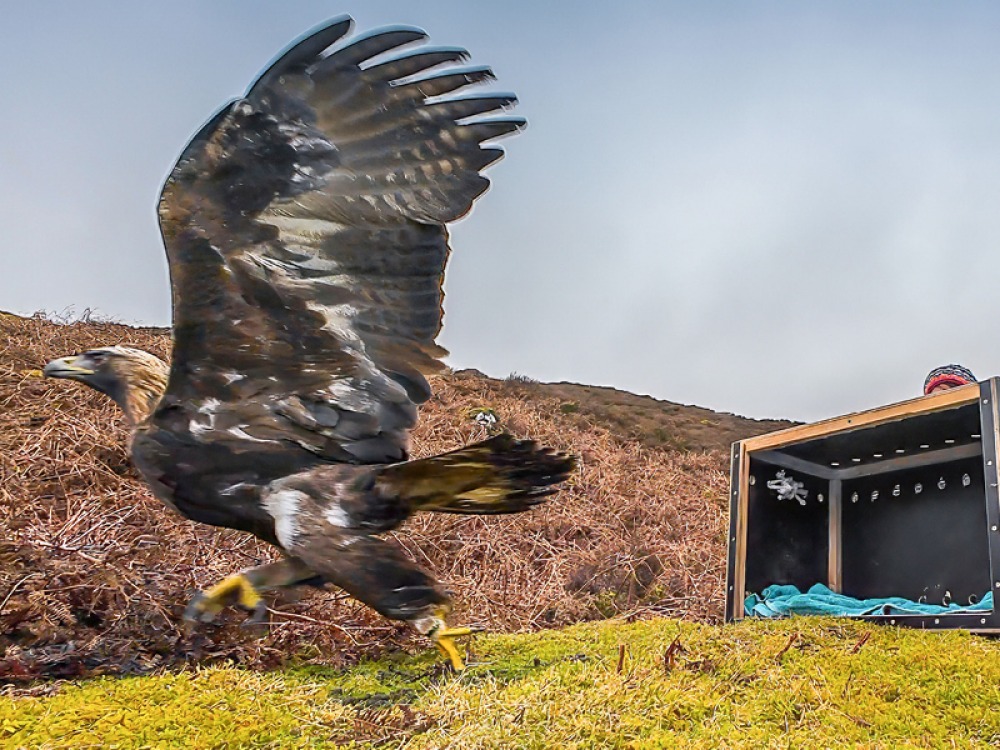
Golden eagles are large, powerful birds that help to control populations of other predators, such as foxes and crows. ‘They’ve got a wingspan of about two metres, so they’re our second largest bird of prey,’ Ed says. ‘Those broad wings and their powerful flight mean that they can really use the updraft and wind to move and soar across huge distances, and that's why those upland open areas are so important. That topography gives the airflow for them to move over and find food.
‘Historically, we would have found golden eagles across most of our upland areas in England. They were certainly widespread and a very familiar part of our upland areas, and the moorlands and mountainous regions of the country, and they would have spread beyond that exploring other areas nearby as well.’
Golden eagles soar across the landscape in search of food, and open moorland habitats with high wind speeds, and quite often wet areas, contain their prey. ‘They need very large territories,’ Ed explains. ‘They will then be looking for prey, like rabbits and hares and some birds. They'll often take carrion as well, dead animals in the landscape, and they'll be exploring that landscape to search for them. They also need nesting sites, and those nesting sites need to be remote. Golden eagles don't enjoy being close to people, they really do not tolerate much disturbance, so being isolated in the uplands like that removes them from a lot of that disturbance.’
During the 18th and 19th centuries (particularly during the Victorian era) they were subject to persecution by landowners, gamekeepers and people who considered them as a threat to livestock, game species and egg collection. There were also issues due to loss of habitat and change in our landscape due to human population expansion. ‘With that we saw them contract to the least disturbed areas, until eventually we saw them go functionally extinct in England, and they retreated to Scotland,’ explains Ed. ‘We have had individual birds and small numbers of birds survive in some places in northern England, but I wouldn't have said that they are a functioning population. That's really a group of individuals that are surviving rather than thriving as a population.’
Forestry England has been awarded £1 million in government funding to put towards this project, and they’re working with experts at Restoring Upland Nature (RUN), the charity that ran the South of Scotland Golden Eagle Project. ‘The aim of that is to restore a fully-functioning, self-sustaining population of golden eagles in northern England,’ explains Ed. ‘It’s still to be determined as to how we get those eagles back into the landscape. There’s two options: we can aid natural recolonisation from Scotland, or we can reintroduce or translocate to other parts of England to speed up that process. Having these birds in our landscapes is all about restoring this threatened species but also the functions that they bring.
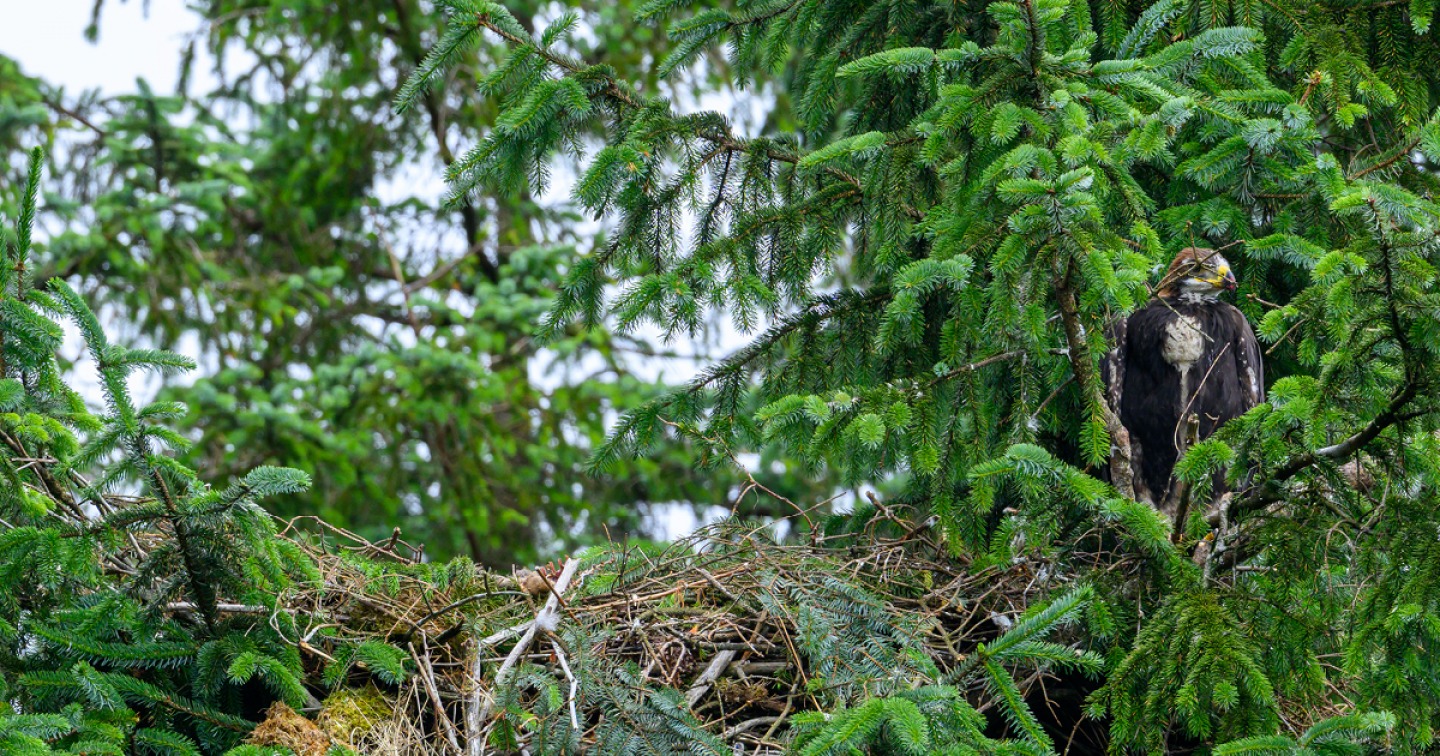
‘As an apex predator, a golden eagle creates balance within the landscape. It will naturally predate those things that are both abundant but also easy to catch and they tend to take out other lower predators, mesopredators, that have greater impact potentially on other species. By controlling those (they don't eradicate them, they just control them), then it opens up opportunities for other species, some of our rarest species in the landscape. It’s that rebalancing effect in our upland landscapes that golden eagles have such an important role in. There’s another side to this which is that, socially and economically, bringing back an iconic species like golden eagles triggers a whole load of other things, whether that's wildlife tourism, pride in our landscapes, but also nature recovery in these areas.’
What’s equally important is engaging with the community throughout the process. ‘We're really fortunate that we've been able to bring in RUN as our delivery partner as they are experts in doing this. A really important part of any reintroduction is to work with the local communities – those people that are directly going to see the impact of having these birds back in the landscape and understand what it means to them,’ says Ed. ‘These are birds that for the large part haven't been around for over a century, and when you bring back a species that hasn't been around for a long time we've got to understand how people feel about that. People might not know themselves so we can help to explain what that means for them in terms of what these birds are like and what they're going to do in the landscape to make sure everyone is starting from the same point in terms of knowledge about these birds.’
This feedback and collaboration affects how the project might be delivered, and where. ‘It's only by doing that that you get, first of all, an enthusiastic community of people who want to see these birds, but people who are happy to see them return to their landscapes and know what that means and how we can adapt to having them in their landscape,’ Ed adds.
‘That’s really important. When we bring back a species, it might bring changes for us and some of those might be beneficial while some might be challenges we have to work through, but if we know about them up front, we can adapt, change and support, and that's a really critical part. So the first year of the project is about working with the communities in these areas across northern England and starting to listen to what that might mean. We’re bringing on some of those people as partners in the project as well so that landowning communities are represented within the project partnership itself, and that's really important so they can help to steer and guide what we're doing. Off the back of that, hopefully people will have confidence that these birds coming back is a positive thing and that we can work together to have them back in our landscape.’
Ed is truly passionate about this project. ‘I think that the idea of having a really majestic, iconic bird, an apex predator, in our landscapes is a hope for all of us that are involved in this project, but having them back in a place where people recognise them, support them, are really proud to have them back, and that their landscapes support these species, would be amazing,’ says Ed. ‘Then that trigger for everything else – an understanding about nature recovery in our uplands – would be wonderful.’
Forestry England and RUN are looking to work with people from across our region on this project. ‘We haven't determined yet where this project is going to focus, and we are genuinely looking across all those areas of uplands,’ says Ed. ‘We welcome people engaging with the project, and we’re going to be building the partnership shortly, but once we're ready we'll be reaching out to lots of people across the North of England. People should feel free to get in touch, tell us their thoughts and stay in touch so we can work together to hopefully make this a success, and Forestry England will be a big part of that alongside RUN.’