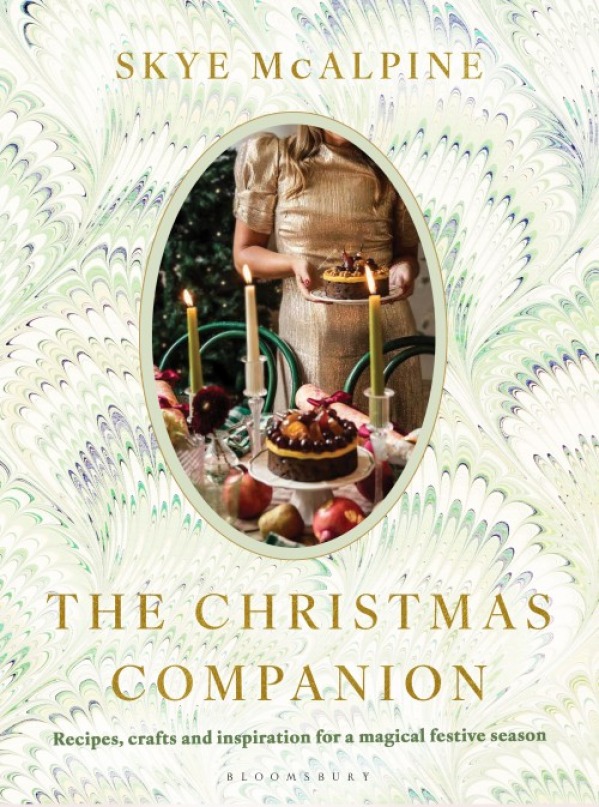
Extract taken from The Christmas Companion by Skye McAlpine
(Bloomsbury Publishing, Hardback, £28).
Photography © Skye McAlpine


Join Our World... Sign up for our exclusive newsletter.

Be inspired every day with Living North




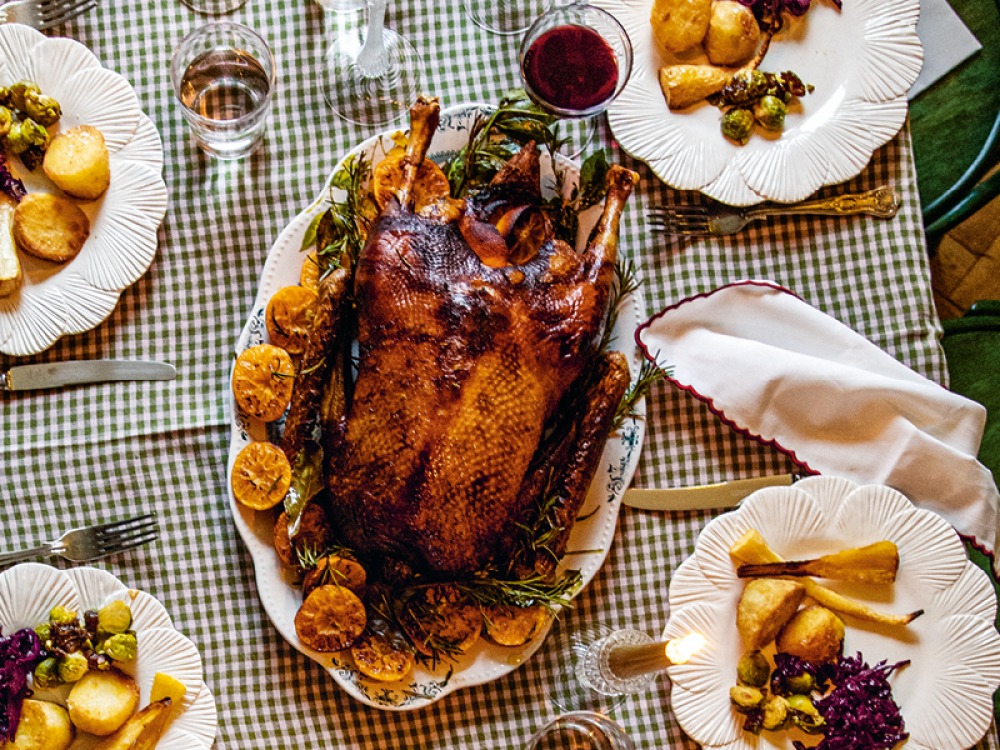
There is something Dickensian (in a good way) about a roast goose; many, my husband included, very much prefer it to turkey. The sticky, sweet roasted clementines, with their golden, burnished hues, just add to the delectable extravagance of it all. When you cook the bird, you want the meat buttery rich and tender, but the skin salty crisp; that same delectable texture as Peking duck. The best way to achieve this is with the cooking method below, where you pour boiling water over the bird, then pat dry.
A brief note on timings: for a larger (or smaller) bird, roast for 10 minutes at 240C/220C fan/Gas 9. Reduce the heat to 190C/170C fan/Gas 5 and cook for 32 minutes per kg. When calculating cooking time, include the weight of the citrus inside the bird.
Bring a kettle of water to the boil. Pierce the skin of the goose all over with a fork. Set it on a wire rack in the sink, then pour boiling water over it. Pat dry with kitchen paper, then settle the bird, on its wire rack, in a roasting tray. Slice three lemons, cut six clementines in half and stuff them inside the cavity with most of the bay leaves and the rosemary sprigs. Sprinkle the skin generously with salt and set in the fridge to dry for at least two hours (or, better still, overnight).
An hour before you’re ready to roast the goose, take it out of the fridge and heat the oven to 240C / 220C fan / Gas 9. Halve the remaining six clementines, slicing them across their bodies, and arrange them snugly in a roasting tray; then season generously with salt and pepper, throw in a few more bay leaves and drizzle over the olive oil. Set aside.
In a small bowl, combine the honey with the lemon zest and juice, add a generous pinch of salt and smother all over the skin of the bird. Cover with foil and set in the oven; after 10 minutes, reduce the oven temperature to 190C/170C fan/Gas 5 for two and a half to three hours. For the last 30 minutes of cooking, remove the foil so the skin can crisp up. To test if the goose is done, insert a sharp knife into the thickest part and check the juices run clear; or use a probe thermometer: it is cooked at 70C. Take out of the oven, cover with foil and a couple of clean tea towels, then rest it for 30 minutes.
Meanwhile, set the tray of clementines in the oven to roast for 30–40 minutes, until tender and caramelised. Serve the goose with the roasted sweet fruit.

If you are able to serve this in a glass dish then all the better, because part of the magic of a trifle, I can’t help but feel, is to see and enjoy all the different layers. This Anglo-Italian variation on the theme of trifle, with its layer of dark, sticky gingerbread, ruby-red cranberry sauce, custard yellow, frothy zabaione and final stratum of soft, snowy whipped cream, is certainly no exception. Equally – and obviously – it will taste just as good however you serve it, so if all you have is a salad bowl, that will do well too. Don’t let the absence of the right bowl put you off: this particular combination of cloud-like zabaione with dense, peppery gingerbread is enough to make even those who think they don’t really like trifle (of which I count myself a member) change their minds.
A traditional trifle calls for a layer of custard, which I’ve replaced here with airy zabaione, infused with Amaretto liquor, instead of the more conventional prosecco or Marsala. The hint of sweet almond is a subtle and pleasing complement to the layer of sticky, spiced ginger cake. All together the cake, cream and zabaione are quite sweet, which is why I like the sharpness of cranberry sauce (be it from a jar or homemade) here rather than a more canonical sweet jam, such as raspberry or apricot, but you could also use fresh fruit instead. A layer of frozen jammy raspberries would work well, as would blackberries or redcurrants. And if you crave the jellied sweetness of jam, far be it from me to stand in your way. As an added bonus, the trifle freezes very nicely; so you can, if you like, make it well in advance, then defrost in the fridge overnight and top with the last layer of whipped cream, to serve.
Slice the ginger cake into two to three centimetre-thick pieces and arrange in a trifle dish in a single layer, squishing the pieces of sticky cake together with your fingers so the entire area is covered. Now spoon the cranberry sauce over the cake, spreading it out evenly.
Fill a pan up to one-third full of water, set it over a medium heat and bring to the boil. Put the egg yolks and sugar into a heatproof bowl and whisk with electric beaters – plugged in (if they need to be) close to the stove – for two to three minutes, or until you have a light, fluffy and voluminous mass. As the mixture begins to froth up, set the bowl over the pan of gently simmering water, taking care that the hot water doesn’t touch the bowl. Keep whisking until the mixture is thick enough for a trail of it to remain on the surface when drizzled over from the whisk. Slowly pour in the Amaretto, whisking all the while. This should take three to five minutes, and as you add the liquid, the zabaione will double in size and thicken. Remove the bowl from the heat and let the zabaione cool to room temperature, whisking occasionally to prevent a skin from forming.
Toss the flaked almonds into a nonstick frying pan and set over a medium heat. Toast for two to three minutes, shaking the pan from time to time to move the shards of nuts about, until they are lightly golden. Take off the heat and set aside. In a second bowl, whip 400ml of the double cream until soft peaks form, taking care not to over-whip. Gently fold the whipped cream into the cooled zabaione and spoon the yellow, Amaretto-scented custard into the trifle dish, over the cranberry sauce, spreading it out evenly. Store in the fridge, covered, for up to 36 hours. Alternatively, freeze for up to three months, then defrost overnight in the fridge before adding the whipped cream and nuts.
When ready to serve, whip the remaining cream to soft peaks, spoon it over the layer of zabaione and sprinkle over the toasted flaked almonds. You can prepare this up to 24 hours before serving and keep it in the fridge until you’re ready for pudding.
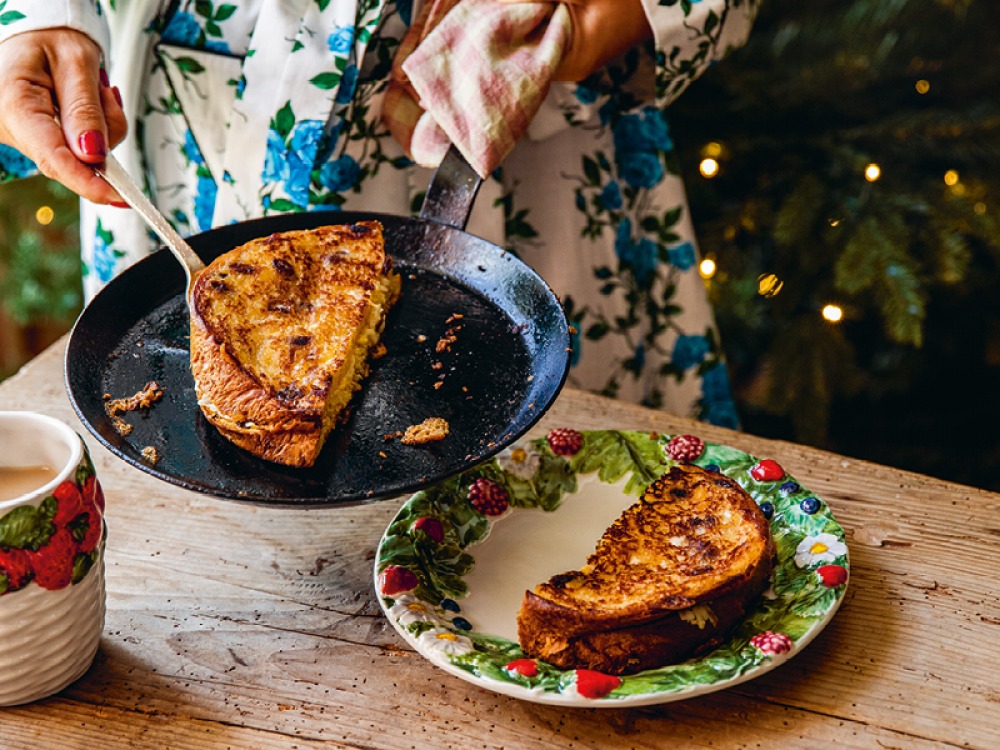
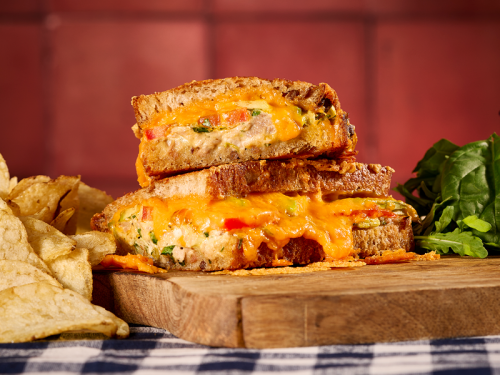
There is so much that is seemingly wrong about this combination of melted, rich cheese with golden toasted sweet bread, yet – by some kind of alchemy – the two work exceptionally well together. Trust me on the addition of mustard: you need a slick of something sharp and peppery to cut through the glorious greasy, buttery richness of the whole affair (indeed, by the same principle, this would be good with a few cornichons or pickled onions on the side). Trust me also on the mayonnaise: I know it seems egregious to slather mayo over something as delicately flavoured as a slice of panettone, but you won’t taste it. I promise. The mayonnaise seemingly evaporates into nothingness, but the combination of its constituent parts – eggs and olive oil – paves the way for a perfectly golden exterior on the sandwich.
This makes for a gloriously rich and indulgent breakfast, especially for those who like to start the day with something savoury, but I am also quite partial to a grilled cheese sandwich for supper, with nothing more than a little crisp green salad on the side.
Slice the panettone into two evenly (and roughly equal) sized pieces. If it’s a round, crossways section, I like to cut it on the diagonal, so that when sandwiched together you have a rounded triangular sandwich.
Set a nonstick pan over a medium heat and melt the butter. Spread the mayonnaise over one side of each of the pieces of panettone. Now turn a slice over so its mayonnaise-coated side is facing downwards and spread with a thin layer of mustard, then top with the grated cheese. Sandwich together with the second slice of panettone, mayonnaise-coated side facing upwards this time, then set in the pan.
Fry gently over a medium heat for two to three minutes, until the bread turns golden, then carefully flip the sandwich on to the other side and fry for a further two to three minutes, until golden on both sides and the cheese has melted. Serve immediately.
Extract taken from The Christmas Companion by Skye McAlpine
(Bloomsbury Publishing, Hardback, £28).
Photography © Skye McAlpine