Discover a New Album Inspired by Holy Island
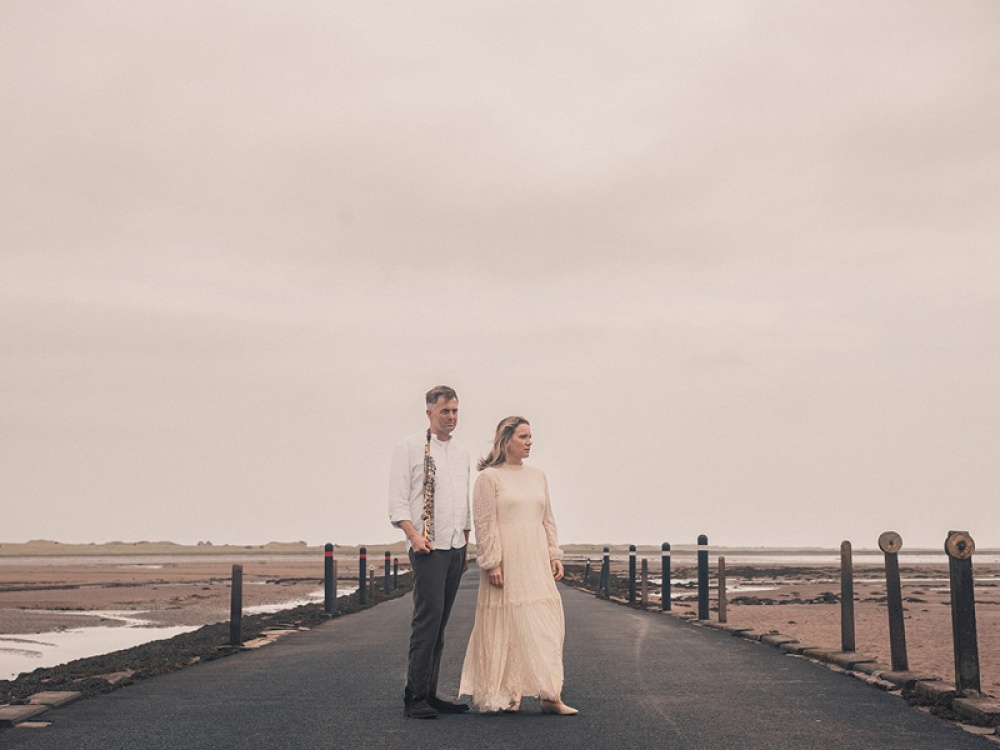
Step beyond the causeway into a striking soundscape of contemporary classical and folk tradition with Grace Davidson and Christian Forshaw's new album


Their most recent album together is called Lindisfarne: Beyond the Causeway. It incorporates elements of folk, classical, sacred and contemporary music – which to many, may seem like an overwhelming mix of genres. But Christian and Grace are proving otherwise.
‘I have learnt that boundaries only really exist on paper, and not in sound. Music is often the combination of a series of influences, but sometimes they aren’t always obvious to the listener,’ Christian says. ‘By fusing together the most unlikely musical combinations, something new can often emerge. As a composer, my role is to run with those ideas and sculpt them into something which is hopefully coherent and connects with people.’
Grace continues, ‘I think the wonderful fusion of styles within Christian’s music, and Lindisfarne in particular, happened very naturally and enhances who we both are as musicians.’ With her background in early music – spanning Medieval, Renaissance, Baroque, contemporary and film soundtrack world – Grace’s expertise helps to bonds rather than confuse the different styles.
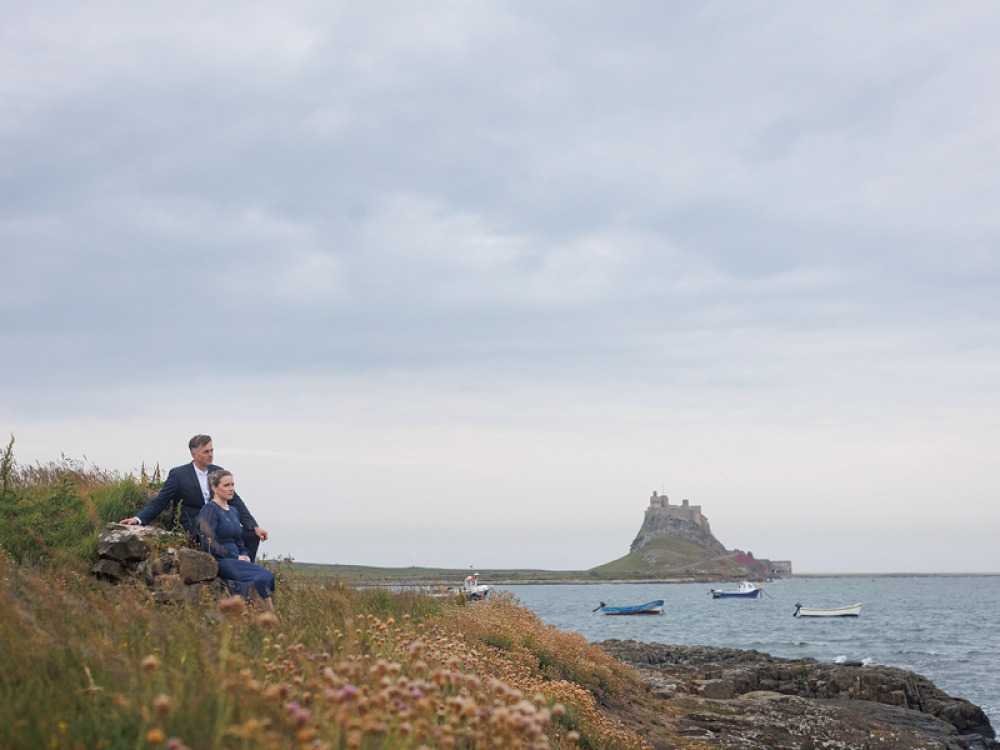
The album consists of 10 tracks, but which mean the most to them? ‘The Angel of the North is special for me because it was one of the first vocal tracks to be written on the album,’ says Grace. ‘We first premiered and performed it on Lindisfarne many years ago.’ But for Christian, another track stood out for a more personal reason. ‘Track two is the closest to me,’ he says. ‘I wrote Wanderer following the untimely passing of a friend, and it alludes to Wandering Star by Portishead — a track we enjoyed listening to together one evening.’
The album intends to capture the feeling of peace and stillness that Christian felt upon visiting the island, as well as being uplifting. ‘I am drawn in by the feeling of pilgrimage and isolation, especially when the tide is in,’ he says. ‘The island takes on a real stillness and sense of peace, but also has the drama of a turbulent history stretching back centuries. Those are qualities I have always sought in my music: reflection, stillness, but also dramatic, soaring lines.’
The album incorporates Grace’s soprano voice, alongside Christian’s saxophone – an unusual instrument given the genres apparent within the work. ‘I think I was always attracted to the saxophone because of its lack of boundaries. Despite being invented closer to Beethoven’s lifetime than to early jazz, it has become synonymous with jazz musicians because of its maverick identity,’ Christian tells us. ‘The sound I try to make reflected my choral upbringing, and I love the way Grace’s voice intertwines with the saxophone, at times making it difficult to tell them apart.’
Both Grace and Christian have been part of the musical world for many years, each leaving their own unique mark on different genres. We wondered if they’d faced any setbacks, and how they’ve overcome them. ‘I’ve had to learn not to overwork myself,’ Grace says. ‘Its been difficult learning it’s not possible to be everywhere and do everything all at once, and trying not to worry about pleasing everyone all the time.’ Christian however thinks his greatest challenge has been keeping going and holding onto his own musical values. ‘There are many knocks along the way,’ he admits, ‘and sometimes it takes all of your strength to pick yourself up and carry on. But those are the experiences which give you something to write about.’
If you’re interested in seeing more of Grace and Christian, or their work, they will be performing the album in Ireland next month, and have several tours waiting to be announced. Grace will also have some solo engagements, including singing live to projection film soundtracks for Howard Shore and Joe Hisaishi in Amsterdam, Brussels, Rotterdam and Pamplona.