
How to Make the Ultimate Easter Feast
Dazzle your guests this Easter with these indulgent yet deceptively easy recipes


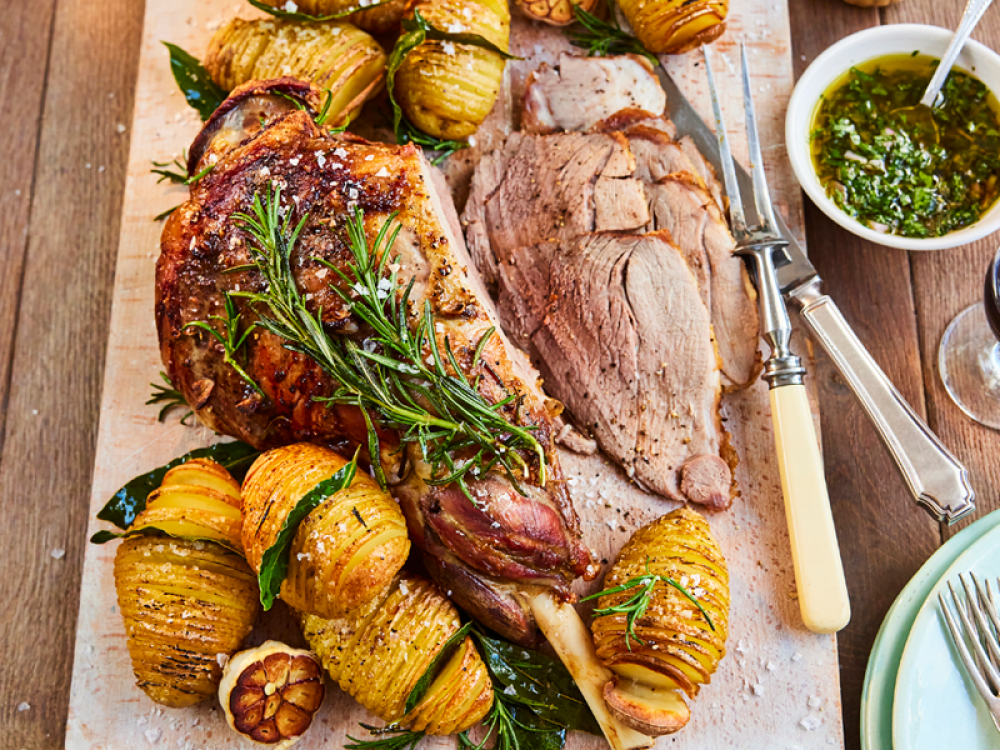
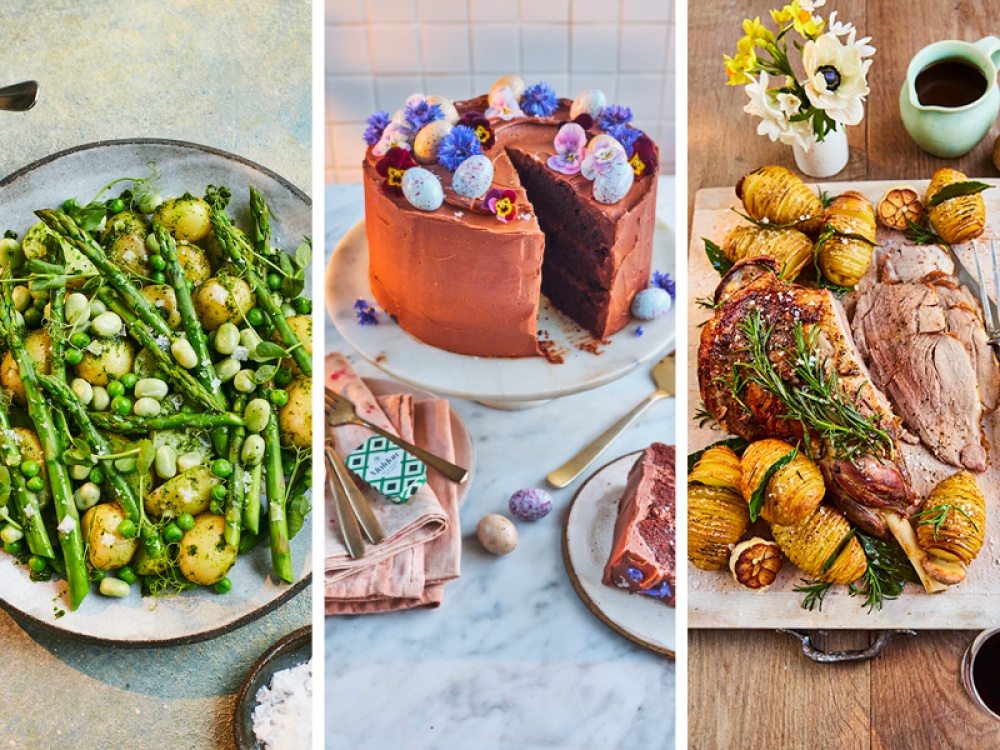
Leg of Lamb with Hasselback Potatoes and Salsa Verde
- 2kg leg of lamb
- A handful of rosemary sprigs
- 2 garlic bulbs
- 10 bay leaves
- 5 banana shallots
- 1.5kg maris piper potatoes
- 1 lemon, halved
- 5 tbsp olive oil
- Maldon Sea Salt flakes
- Cracked black pepper
- For the salsa verde
- 1 small banana shallot, finely chopped
- 2 anchovies, chopped
- 1 tbsp capers, drained and chopped
- Small handful of parsley, leaved picked and finely chopped
- Small handful of basil, leaves picked and finely chopped
- 1 tbsp red wine vinegar or sherry vinegar
- 150ml olive oil
Preheat the oven to 180C.
Firstly, start with the hasselback potatoes. The easiest way to make the cuts is to place a potato onto a chopping board and put a chopstick flat on either side. Then using a knife, carefully cut slices all the way along the potato – the chopsticks will ensure that you don’t cut fully through the potato. Repeat this with each potato.
Place the leg of lamb onto a large roasting tray skin side up, and then nestle the prepared potatoes around it. Cut the shallots in half lengthways and add them to the tray. Cut the garlic bulbs in half, cutting through the cloves like a cross section. Add two of the halves to the tray. Use a sharp knife to insert some small cuts into the skin of the lamb, then press some of the other cut garlic cloves and small sprigs from the rosemary into the cuts. Slice the lemon in half and add this to the tray as well. Finally slot the bay leaves into some of the cuts of the potatoes.
Drizzle the potatoes, shallots, garlic and lemons with three tablespoons of the olive oil then drizzle the remaining two across the lamb. Season well with Maldon Sea Salt and cracked black pepper. Place into the preheated oven and roast for one hour 25 minutes.
While the lamb and potatoes are cooking, make the salsa verde. Add the chopped shallot, anchovies, capers and herbs into a bowl. Add the red wine vinegar and give it a stir. Then slowly drizzle in the olive oil and give it a good mix. Season with Maldon Sea Salt and cracked black pepper to taste. Set aside.
Once the lamb is cooked, remove it from the oven. The potatoes should be lovely and golden, and tender in the middle – but if they need a little longer, simply lift the lamb out onto a board to rest and return them to the oven for 10 minutes. Allow the lamb to rest before carving and serving with the potatoes, some greens and the salsa verde.
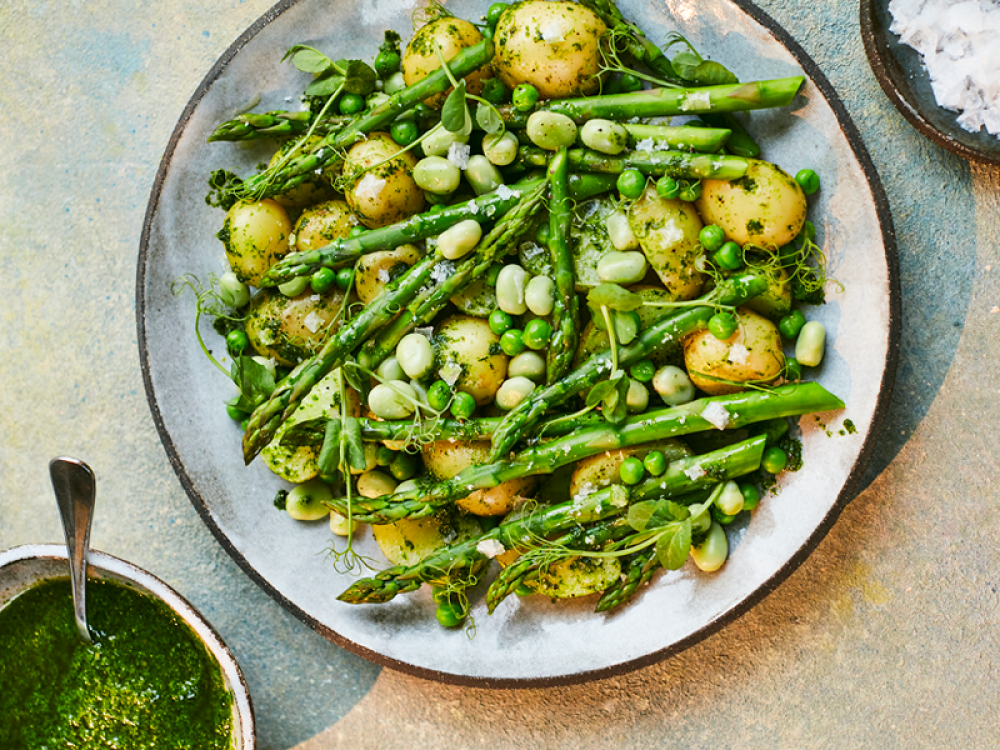
British Spring Salad
- 500g Jersey Royal potatoes
- 150g frozen broad beans
- 150g frozen garden peas
- 250g asparagus
- For the wild garlic pesto
- 75g wild garlic leaves
- A small handful basil leaves
- 150ml olive oil
- 20g pine nuts
- 1 tsp capers
- 10g pecorino, finely grated
- Handful of pea shoots
- Cracked black pepper
- Pinch of Maldon Salt
Start by preparing the wild garlic pesto. In a food processor or blender add the pesto ingredients and blitz until it forms a paste, this can be as chunky or smooth as you like. It will be vibrant green from the wild garlic leaves. Set aside.
Next cook the Jersey Royal potatoes. If any of them are larger than the other, cut them in half. Place them in a large pan of water and bring to the boil and then reduce to a simmer. Cook for 10 minutes until they feel tender when inserted with a knife.
While the potatoes are cooking bring a second pan of water up to the boil. Once boiling blanch your asparagus, peas and broad beans for one minute until just tender. Remove the pan from the heat and drain.
Once the potatoes are cooked, drain them too and allow to steam for a minute. After this toss them in two to three tablespoons of the wild garlic pesto.
On a large serving platter spoon on the warm pesto potatoes. Top with the blanched asparagus, broad beans and peas. Drizzle with the remaining pesto, some cracked black pepper and some Maldon Salt. Garnish with the fresh pea shoots and serve.
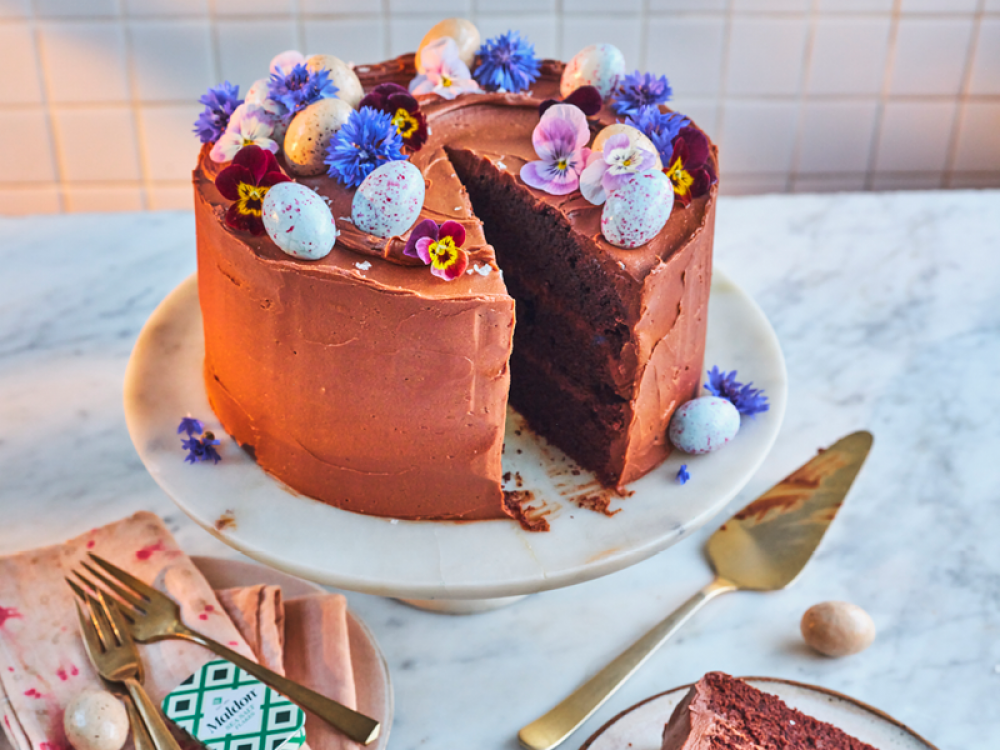
Tahini Chocolate Cake
- 450g plain flour
- 450g golden caster sugar
- 225g light brown sugar
- 150g cocoa powder
- 2 tsp baking powder
- 3 tsp bicarbonate of soda
- Pinch of Maldon Sea Salt, plus extra for garnish
- 8 medium eggs
- 300ml buttermilk
- 100g tahini
- 250ml vegetable oil
- 2 tsp vanilla extract
- For the chocolate buttercream
- 400g unsalted butter, at room temperature
- 600g icing sugar
- 100g cocoa powder
- 8 tbsp whole milk
- 200g dark chocolate, melted and cooled
- To decorate
- edible flowers, blue chocolate eggs (optional)
Grease and line three 20-centimetre baking tins with greaseproof paper. Preheat the oven to 180C. In a large mixing bowl sift in the plain flour. Next add the golden caster sugar, soft brown sugar, cocoa powder, baking powder, bicarbonate of soda and Maldon Sea Salt. Mix the dry ingredients together, and then make a well in the middle.
In a separate bowl mix your wet ingredients – the eggs, buttermilk, tahini, vegetable oil and vanilla extract. Whisk this together, and when it is fully incorporated pour it into the well in the middle of the dry ingredients.
Use a KitchenAid stand mixer to combine altogether, until you have a smooth batter (but be careful not to over-mix). Then pour the mixture evenly between the three cake tins. Place them on a shelf in the middle of the preheated oven and bake for 30 minutes. Check they are fully cooked through by inserting a skewer or cocktail stick in the middle of the sponge and ensuring it comes out clean.
Set the cakes on a wire rack and allow them to cool completely.
While the cakes are cooling you can make the chocolate buttercream. In the stand mixer bowl, beat the butter until it is fully softened and smooth. In a separate bowl sift the icing sugar and the cocoa powder. Slowly add the icing sugar and cocoa powder to the butter mixture in spoonful’s, beating each addition in before adding the next (so you don’t create a sugar dust cloud!).
Continue until you have added all the icing sugar and cocoa powder, and the mixture is thick and smooth. Finally add the melted and cooled chocolate, along with the whole milk, and beat this through to create a silky smooth and chocolatey buttercream.
Once the sponge layers have fully cooled you can assemble your cake. Spread a little buttercream onto the base of the cake stand or board in the centre, then place the first sponge on top of this. The buttercream will help it stick in place.
Spread some of the buttercream all over the top of this cake, and then sandwich the second sponge on top, pressing down gently. Repeat this with the final sponge. Now you want to use the remaining buttercream to smooth all around the sides of the cake and on the top. Using a palette knife or cake scraper can help you achieve a smooth finish.