How Monet in South Shields is Inspiring New Creations
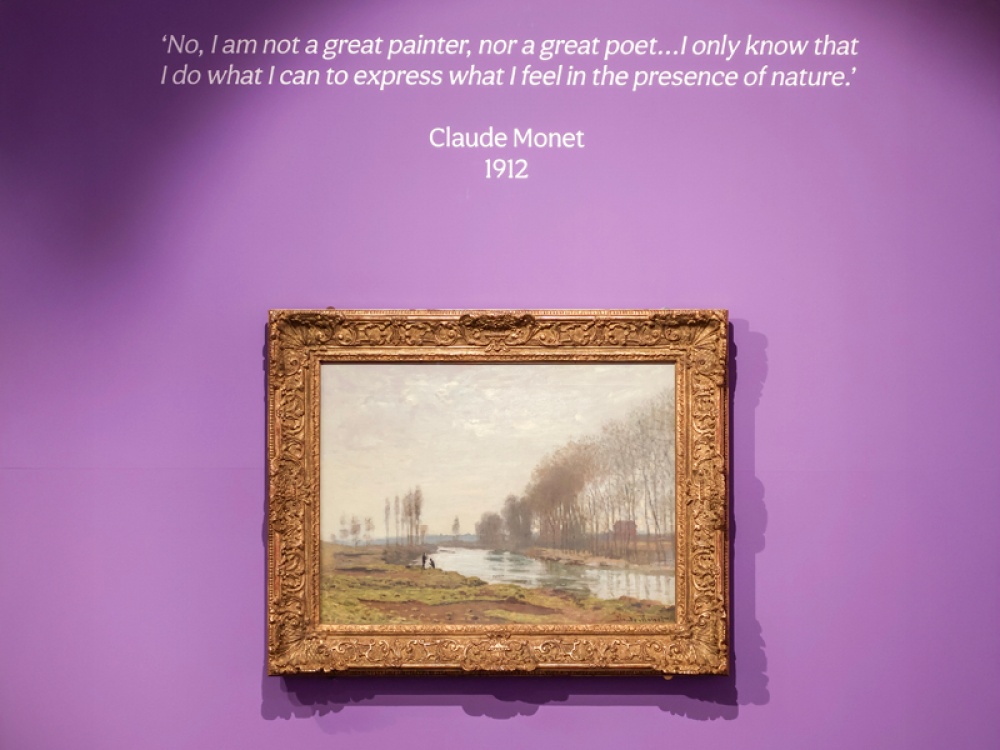
It's no secret that Monet's work captivates art-lovers across the globe, but one artwork in particular is attracting visitors to South Shields Museum & Art Gallery and has inspired a mindful way of viewing and interpreting art


‘South Shields Museum & Art Gallery has got an amazing location on the High Street in South Shields, so it’s physically at the heart of the community but that’s where we want to be in terms of arts and culture as well,’ explains manager Geoff Woodward. ‘It’s got an amazing collection of the social history of South Tyneside, a mix of really fascinating objects and documents, and a lovely art collection. We’re a family-friendly place where people can explore the heritage and culture of South Tyneside and hopefully find something new, something exciting and something that makes them think and makes a difference to their day.’
The exhibition, The National Gallery Masterpiece Tour Monet: In the Presence of Nature, highlights the restorative power of art and nature and is encouraging visitors to explore themes of calm, retreat and resilience. This partnership between The National Gallery and North East Museums follows two previous successful partnerships: Constable Visits Jarrow in 2023 and National Treasures: Turner in Newcastle at the Laing Art Gallery in 2024. ‘Obviously it was very competitive, so I crossed my fingers and really hoped that we could be part of it,’ says Geoff. ‘When we found out that we’d been selected, we were absolutely delighted.’
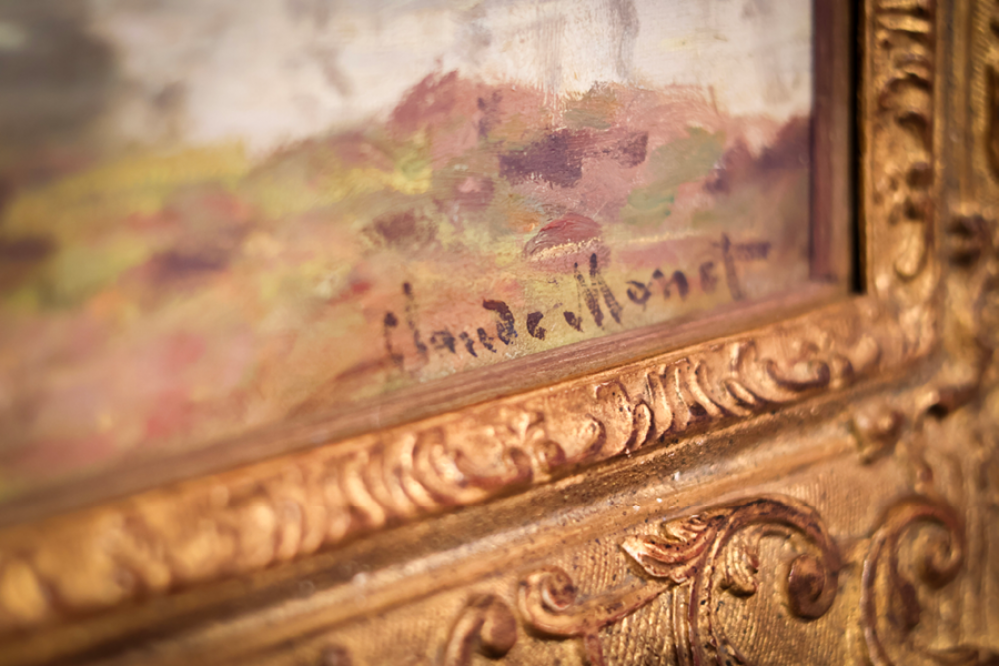
Monet’s artwork now forms the centrepiece of a creative programme aimed at supporting young people in South Tyneside experiencing Emotional Based School Avoidance (EBSA). ‘This is a big problem nationally and locally as well,’ says Geoff. ‘We’ve done some pilot work previously using the museum and the art collection in particular to work with not just the children but their parents as well. It’s really important to include parents and children together and the museum, although it is an institutional space in a sense, has got a different type of atmosphere from a school so it seems to work quite well. Using art as a tool for thinking about self-expression, and working through feelings and anxiety that these children and their parents have, was shown to be really, really helpful in terms of their health and well-being – that was really beneficial.’ While the Monet painting is inevitably proving a great tourist attraction, the team wanted to build on this work, taking inspiration from it.
The exhibition flows through three spaces. The first displays Monet’s painting and includes details on his time in Argenteuil. ‘He was very prolific in terms of his artistic output while he was there,’ says Geoff. ‘We wanted to talk about the place and also his own challenges that he’d had (he was struggling financially, and generally to get recognition). We also wanted to draw the parallels between Argenteuil (which was a small town just outside of Paris but is now part of the Paris suburbs on the River Seine) and South Shields. At the time that Monet painted the picture, in 1872, it was becoming industrialised. It was on a big river and the railway had reached it, so more people were coming to visit. There are lots of similarities there.’
What followed was a partnership within a partnership. ‘There’s a museum in one of Monet’s houses and we’ve partnered with them and they lent us some resources that we can put into that space to give people a real sense of what Argenteuil was like at the time Monet painted the picture and there’ll be joint school sessions happening between schools in France and schools in South Tyneside. There’s a lot of sensory activities in there, using materials to think about what you might see in a painting, and about textures, sounds and colours. You’re not just looking at it, you’re engaging in a more active way and thinking about what’s actually in the picture, and what it could feel like to walk into the picture.’
The second space focuses on the EBSA work already being generated, and more about what EBSA is. ‘One of the things that Monet was really instrumental in was painting outside en plein air,’ says Geoff. ‘Previously artists had painted outside but they were just sketching then working on the painting back in the studio, whereas Monet and other Impressionists were going outside and finishing their paintings outside. He loved nature. He talked about it a lot in his letters but it was really helpful for his own health and well-being as well. The digital elements will explore that with videos capturing a landscape sequence that will reflect those themes that Monet and Impressionists were picking up on. It’s going be really exciting to see how that space develops and there’s some really moving things in there. It’s just going to get stronger and stronger and that’s brilliant.’
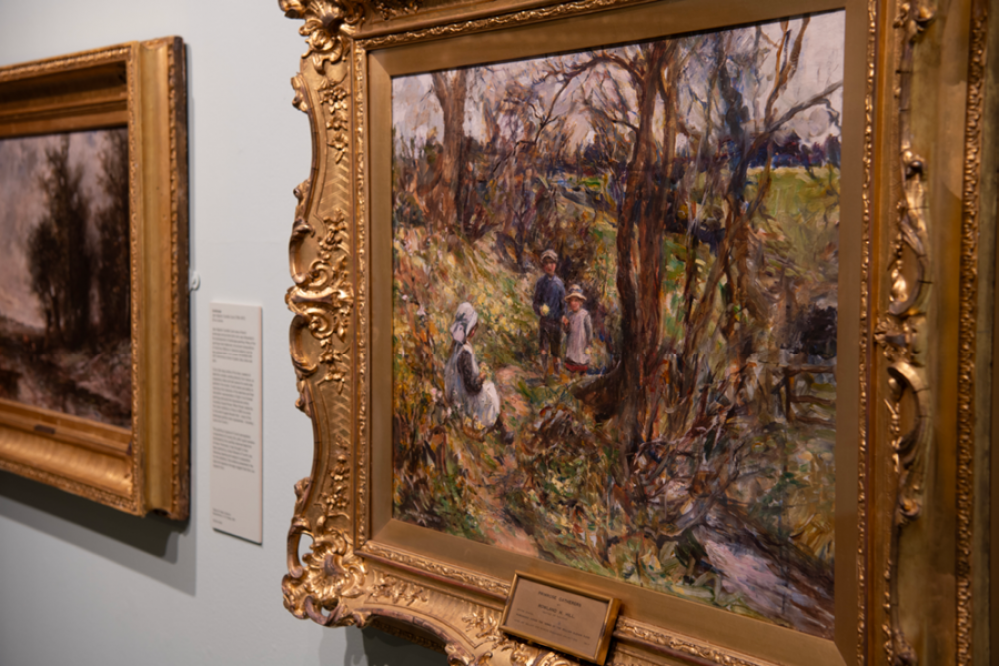
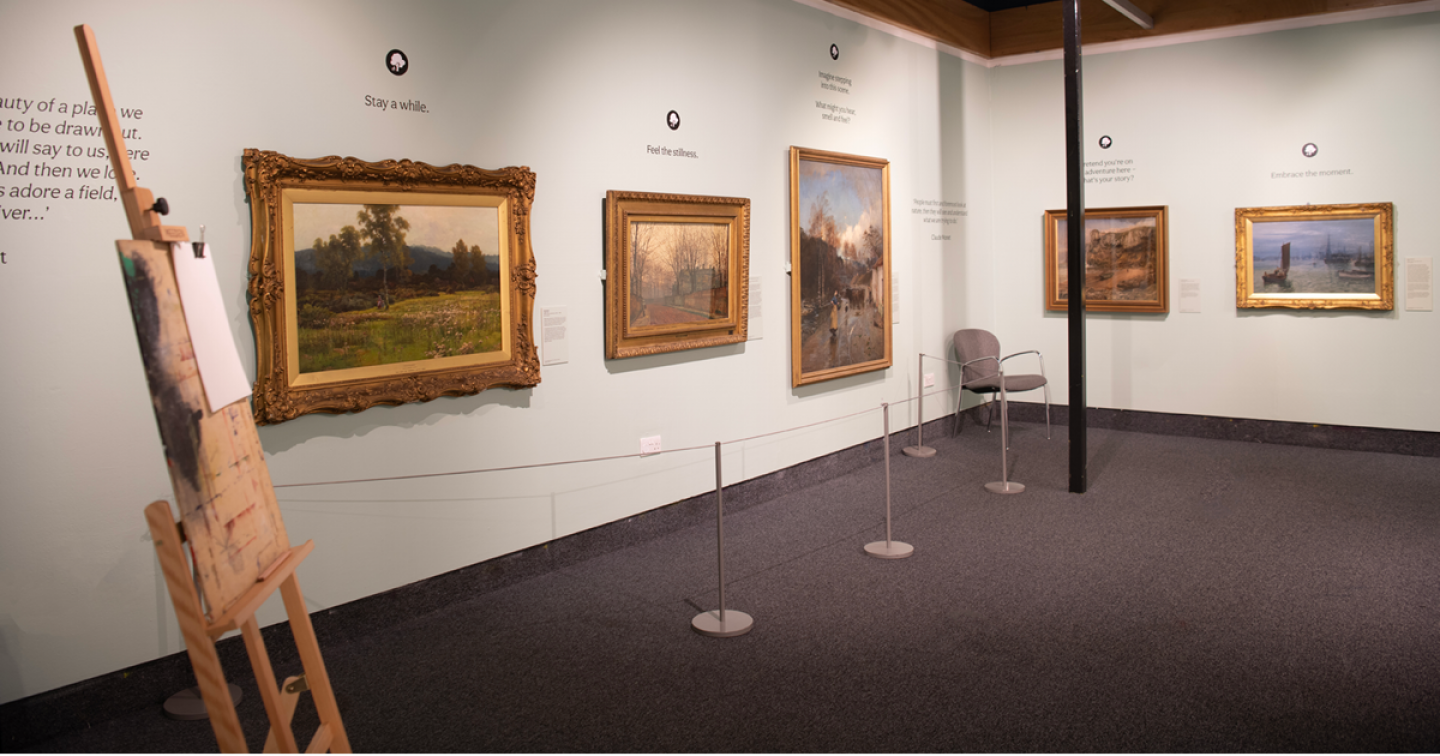
The third space sees a number of paintings from the collection in South Shields, and some from other North East Museums collections (Shipley Art Gallery and the Lang Art Gallery), echoing Monet’s approach. ‘That’s really encouraging people to engage in a deeper way,’ says Geoff. ‘French writer Marcel Proust talked about Monet’s artistic vision as being like a magic mirror that enables you to look more deeply into the natural world around you and see it in an enhanced and intensified way through our own feelings, imagination and memories. We’re encouraging people to pick up Monet’s magic mirror, and look at these other paintings and almost have a relationship with the picture in a deep sense. It’s so simple, but it’s not something we really do unless we force ourselves to do it, so we’re really encouraging people to do that. We’ve got some easels up in there as well, so people can do their own little sketches if they like, and what we want people to do is take that magic mirror of Monet’s with them when they go, so it’s not just about having a great experience, seeing an amazing painting by Monet and then seeing all these other lovely landscape paintings and engaging with them in that sensory way, but it’s encouraging people to leave the building and take those thoughts with them. We’re really hoping that this gives people a toolkit in a sense that will help them get more fulfilment out of the everyday and the ordinary.’
The museum has already received great feedback from the exhibition which continues throughout March. ‘We had some lovely feedback from a gentleman who brought his elderly mother who’s got dementia, and he wrote in and said that they had an amazing experience,’ says Geoff. ‘He said it was like the best therapy ever because he was able to look at these paintings with his mum and she could get so much out of that sensory approach to the paintings.’
With two more major artworks to be displayed following this exhibition, Geoff hopes the museum will continue to develop the relationships built so far. ’It will take us in exciting new directions and we’re not quite sure where those will be but we’re all, as a team, really excited that we’ve got this opportunity to use art in this way,’ says Geoff. ‘I think Monet himself would have been astounded, but delighted, that for one picture of his from hundreds that he painted over his lifetime, we’re not just putting that on the wall for people to look at and enjoy as a painting but we’re doing all this work alongside it and drawn from it that’s going to hopefully make a difference in people’s lives.’