How Wild Oysters are Making a Comeback in the North East
In a UK first, the Wild Oysters Project: Tyne and Wear has recently used groundbreaking methods to release 4,000 native oysters into the North Sea. Marine Ecology Technical Lead Ashleigh Tinlin-Mackenzie tells us more


Despite their current state, research suggests that there was once a thriving population of wild oysters stretching all along the coast. ‘We’ve been monitoring since 2020 and before that really there was no known population of [native] oysters left in the whole of the region, and they were considered locally extinct,’ Ashleigh explains. ‘There were a few anecdotal stories of fishermen finding the odd one here and there over the years. But certainly in terms of oyster reefs, which are these dense natural aggregations of oysters all stuck together, there’s been nowhere for oyster reefs in the region for decades or centuries.’
Research early in the project (which began in 2020) revealed that oysters were once deeply entrenched in the local culture. The Piscatorial Atlas from 1883, which was written and compiled by fishermen and charts significant marine species distribution of the time, shows a large band of wild oysters all along the coast. ‘There’s quite a lot of cultural heritage with that as well. In the 1800s there was a hall called Oystershell Hall in Newcastle, on Oystershell Lane, and it was totally rendered in oyster shells on the outside. There were also oyster saloons in Tynemouth and oyster specialist fishmongers in South Shields, so we do know that there is a long-forgotten cultural heritage here of oysters.’
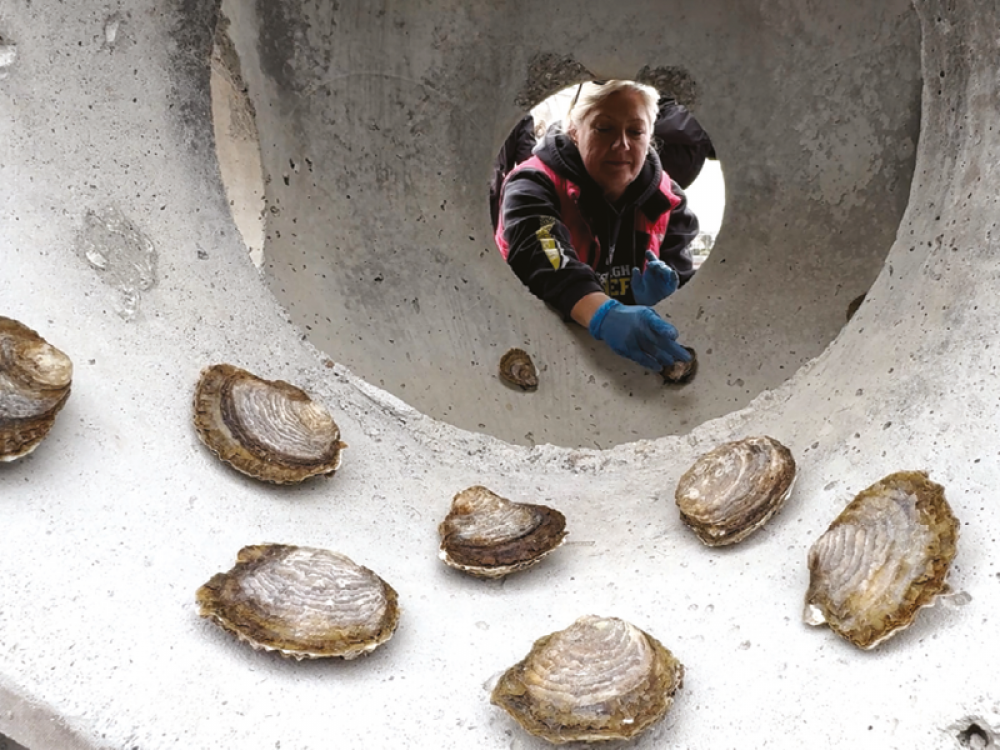
Focusing on the area around the mouth of the River Wear and further north at Whitburn, the project seeks to reverse the oysters’ local extinction. ‘The population has collapsed across Europe with over 90 percent of the population lost and it’s hard to pin down one factor really – they had a lot going against them unfortunately,’ says Ashleigh. ‘We have oyster-specific diseases, invasive species, other species that moved into the area which either compete with them for resources or prey on them as a food source, habitat loss, and then also pollution.’
Bringing native oysters back and supporting them to create reefs has plenty of knock-on benefits for the environment. ‘Oyster reefs can clean not just the water but also create really important habitats for other marine animals,’ Ashleigh explains. Known as ‘ecosystem engineers’, when oysters create reefs, they also create habitats for other wildlife. ‘When oysters form a reef, they do so in really dense aggregations and cement onto one another on top of each other. That creates a really complex 3D structure on the seabed and that structure then becomes a home and feeding ground for countless other marine creatures.’
Oysters also act as natural filtration systems, benefiting everyone. ‘They filter lots of particles out of the water which can include excess nutrients and pollutants which ultimately improves both water clarity and also water quality for marine species [as well as] people who use the coastal waters for recreation like swimming.’ Going even further, oyster reefs form a natural coastal defence by acting as a breakwater in shallow water. ‘We call them the superheroes of the sea – they pack a punch for sure,’ says Ashleigh.
Though the project can’t tackle all of the threats facing native oysters at once, it can and has worked to provide a stable structure for oyster reefs to begin forming in the North Sea, which has proven extremely difficult. ‘We found out working on the exposed, dynamic North Sea east coast that we needed to find a solution to anchor our oysters in position,’ Ashleigh explains. ‘Methods used outside the UK just couldn’t quite stand up to our stormy seas here, so we had to try and find a way to adapt current methods to something that would work here.’
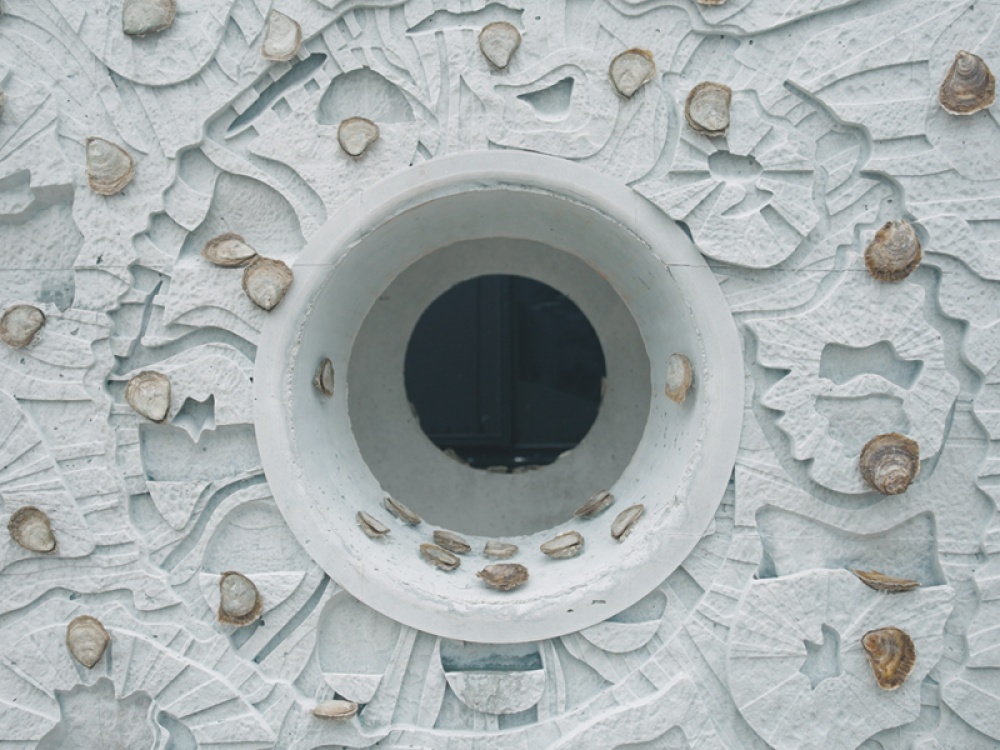
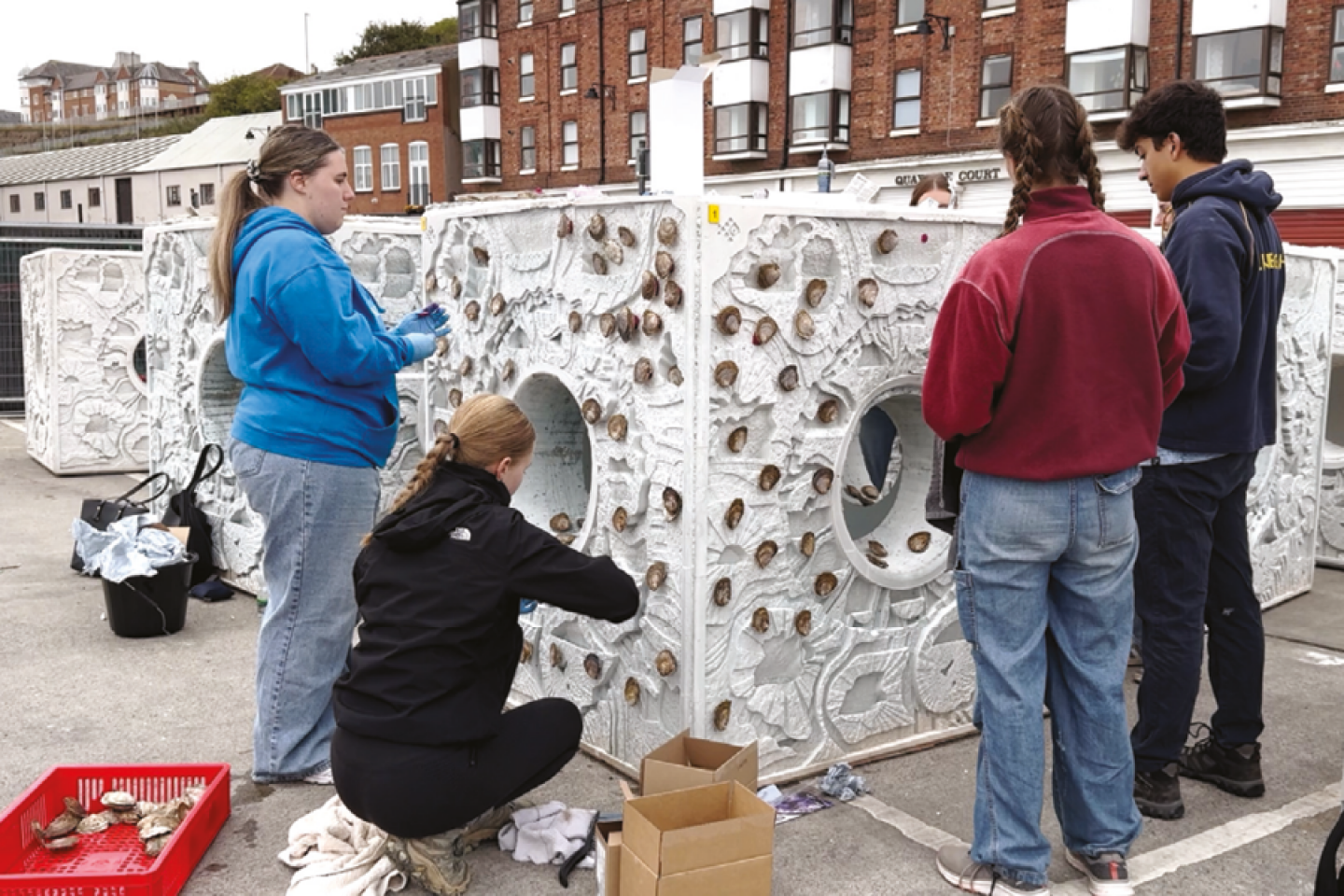
Finding the solution to this problem is how, in a UK-first, The Wild Oysters Project adapted reef cubes designed for marine ecosystems to work for oyster restoration. ‘They’re made to be put around wind farms to create habitats, but we decided to adapt them into what we’re calling oyster reef cubes,’ says Ashleigh. ‘We used them as a solid heavy base which will not move during storms and will provide a habitat and shelter for lots of marine life, and most importantly the native oysters that we’re trying to restore.’
The cubes themselves are impressive structures. ‘They’re huge – they weigh six tonnes each and each one holds 250 native oysters. The logistics of that are quite challenging in terms of deployment,’ Ashleigh says. ‘We were the first project to use reef cubes for oyster restoration at this scale.’
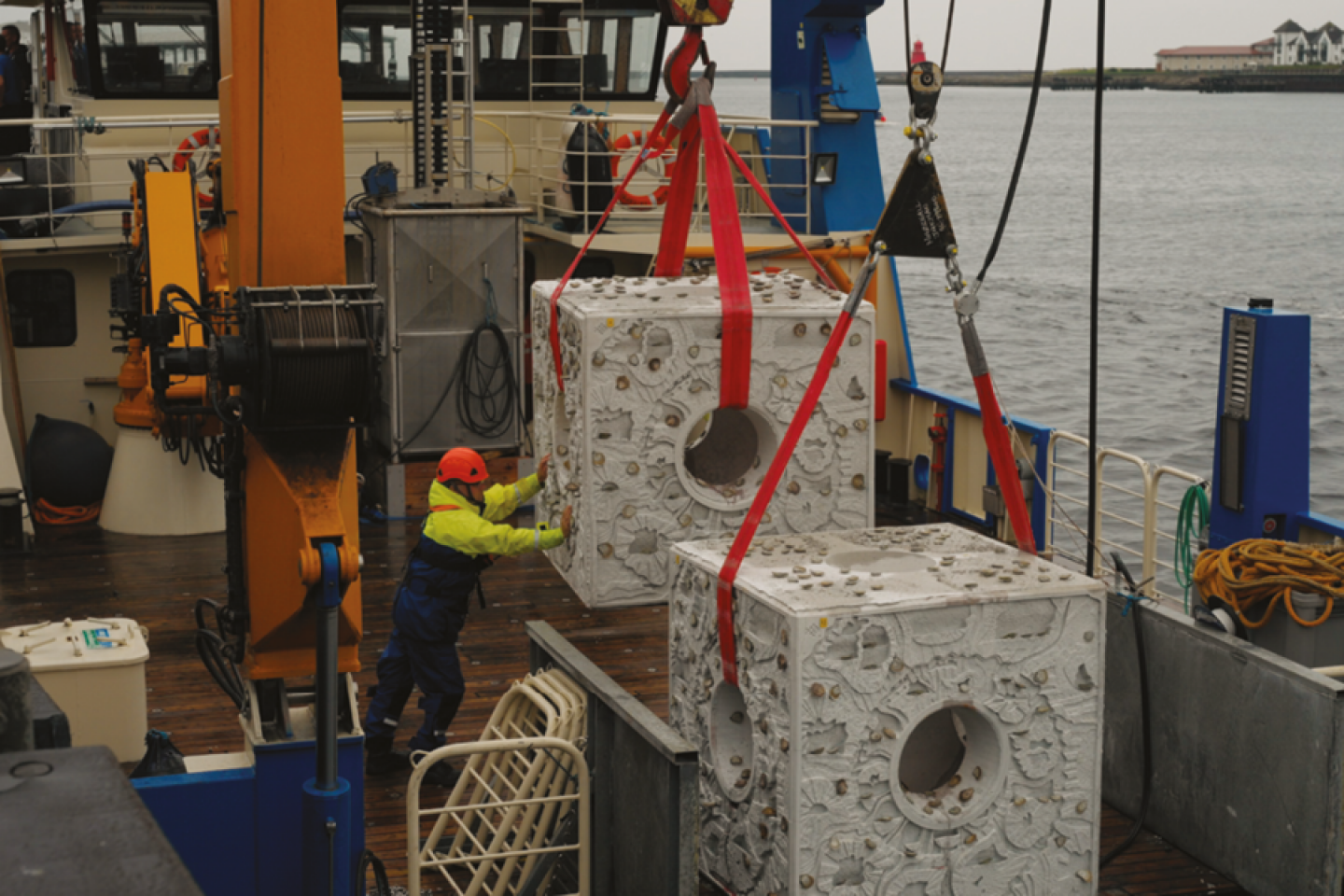
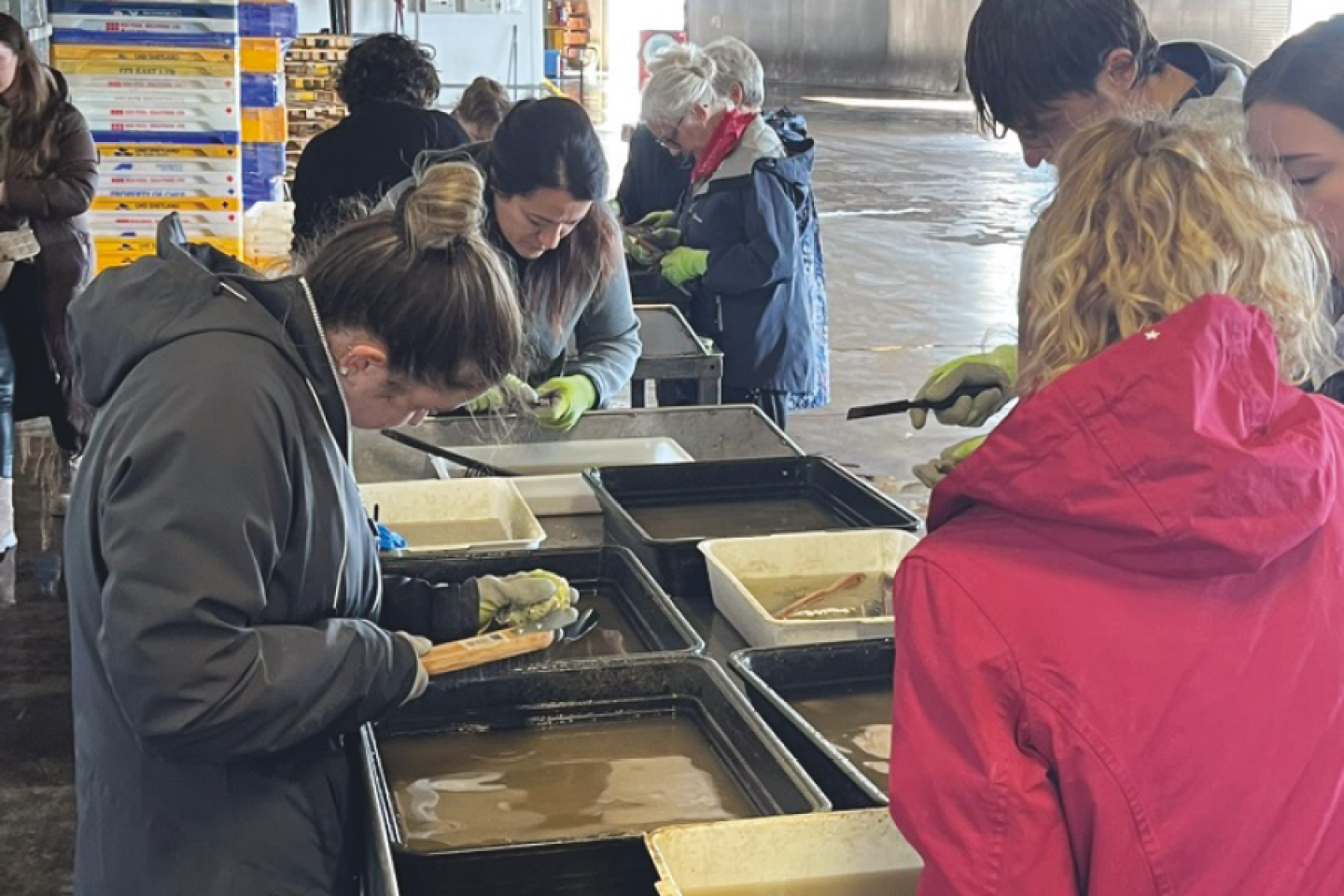
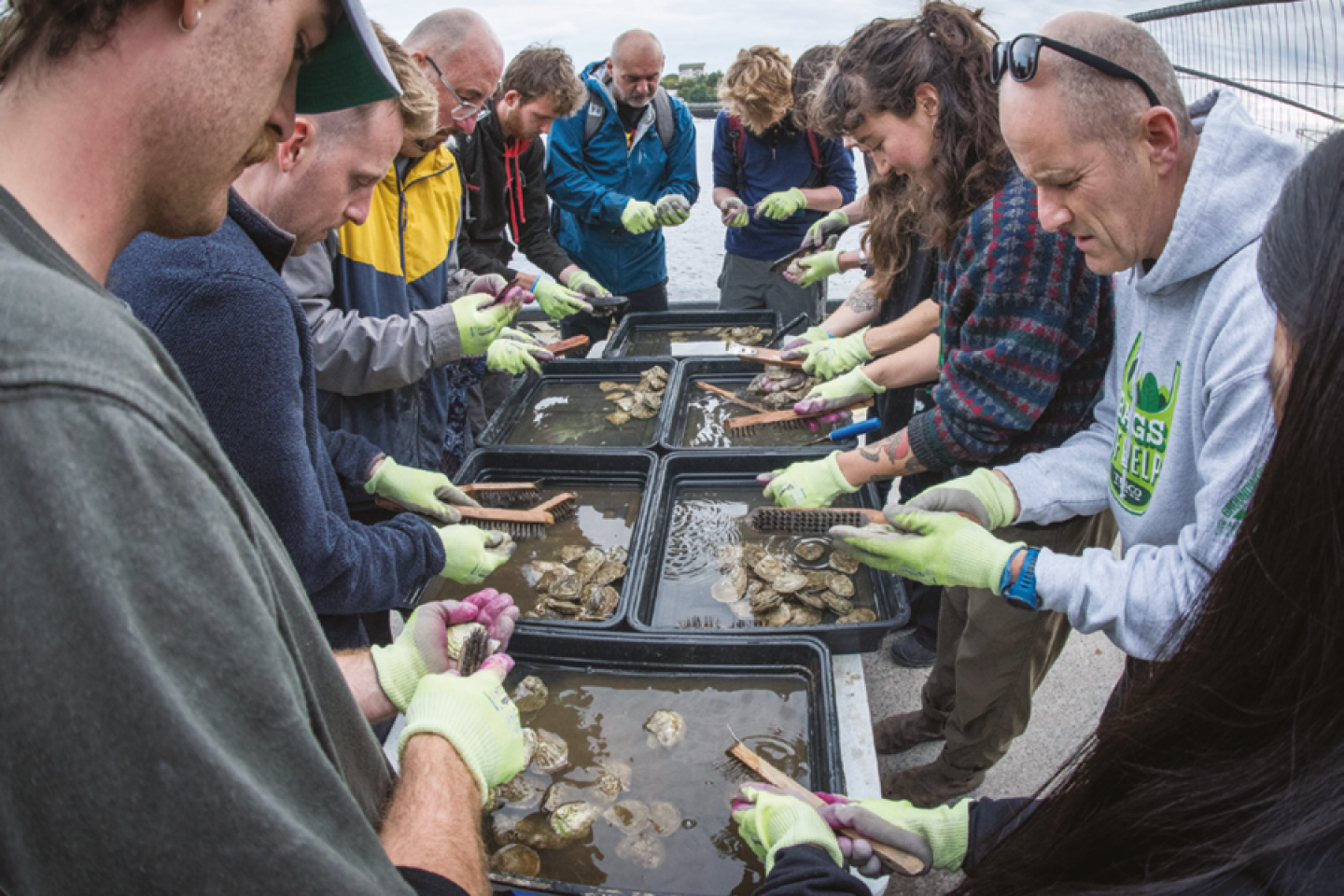
In late 2025, 4,000 mature native oysters were released at Whitburn using 20 oyster reef cubes. These textured concrete-like blocks are made from a robust, seawater-resistant and carbon-neutral concrete alternative, known as Marine Crete. Oysters were cleaned by teams of volunteers before being carefully attached to the oyster reef cubes, which were engraved with ridges and textures to mimic natural marine surfaces. To supplement this, 35,000 juvenile oysters were deployed, as well as 40 tonnes of repurposed scallop shells which will help to form the bed of the future oyster reef as it grows.
Helping the community feel connected to the project is a priority, and to mark the release, 4,000 crocheted oysters have been created by volunteers across the region. The crocheted oysters will be available for adoption soon and in the meantime, the public can sign up to an adoption waitlist online. ‘Basically it’s like adopting one of our oysters through a crocheted oyster,’ says Ashleigh. ‘The idea is that the public can pay to adopt one of these oysters and they will be sent a lovely little hand-crocheted oyster plus I think you’ll get a certificate and updates from the project.’ The money raised from the adoptions, which include a £10 donation, will go back into the project, ensuring it remains funded and can continue its vital work to support the local oyster population.
For a restoration project like this, success comes in stages. ‘Short-term is seeing the results of our trials and putting that learning into practice,’ Ashleigh says. ‘Medium-term hopefully oysters survive, reproduce and recruit, and in the long-term it will be seeing them turn into these thriving oyster reefs along the coast.’ Currently, success looks like gaining fresh insights and sharing their findings with other projects. ‘Being able to learn from these trials and share our learnings with the wider restoration community, and helping other projects with our learning, would be a huge success.’
Overall, the work of the project aims to contribute to securing what Ashleigh describes as a ‘resilient North Sea’. ‘Ecological resilience is the ability of an ecosystem or habitat to withstand things like climate change, pollution and also to recover quickly,’ she explains. ‘So a resilient North Sea is one that is future-proofed with the ability to adapt to change. It is quite a complex system, it’s not just one change that makes a difference. If you can make the whole system as healthy as it can be, it’s going to adapt to change a lot better.’