Legendary Crime Writer Anne Cleeves On Her 40-Year Career
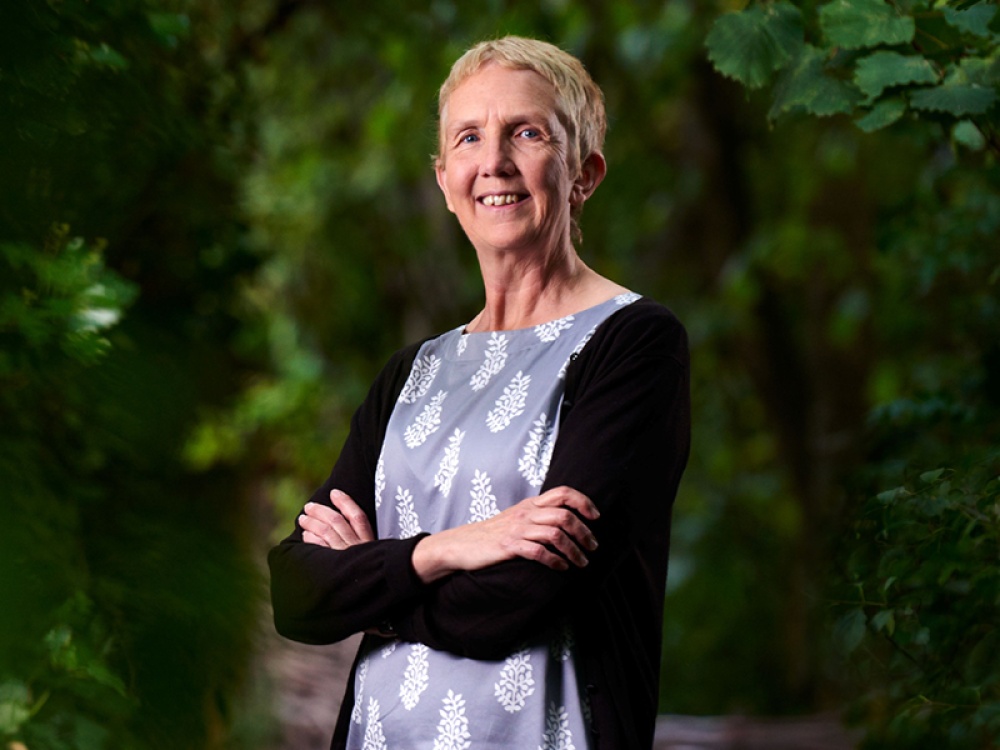
Anne's new book, The Dying Light, is published on 8th October


After multiple television adaptations of her books, awards including the prestigious Duncan Lawrie Dagger Award and the Diamond Dagger Award from the Crime Writer’s Association, and an OBE for her services to literacy and libraries, it may come as a surprise that Ann began her writing career almost by chance.
Her first book, A Bird in the Hand, follows elderly birdwatcher George Palmer-Jones and his wife Molly and was written during her time on the tidal island of Hilbre. ‘I suppose it was a kind of escape,’ she says. ‘My husband was an ornithologist, and he was warden of Hilbre. We were the only people living there, with no mains water, no mains electricity, and I’d stopped working because I was pregnant.’ Birds, Ann says, weren’t her thing. ‘I started writing really because there wasn’t much else to do.’
Ann initially submitted the story to a crime writing competition without luck, but the process had proved to her that she had it in her to complete a novel. ‘I sent that off and didn’t get anywhere but it had made me finish it and then, just by chance, I sent it off to a couple of other publishers,’ she explains. By this point, Ann and her husband Tim had two children and had relocated to Worcestershire. ‘I remember the car had broken down and it was just sat on the drive waiting until the next month’s pay check so we could get it fixed. So I was dragging the kids on buses everywhere, and then I got the letter saying it had been accepted for publication. That was quite special.’
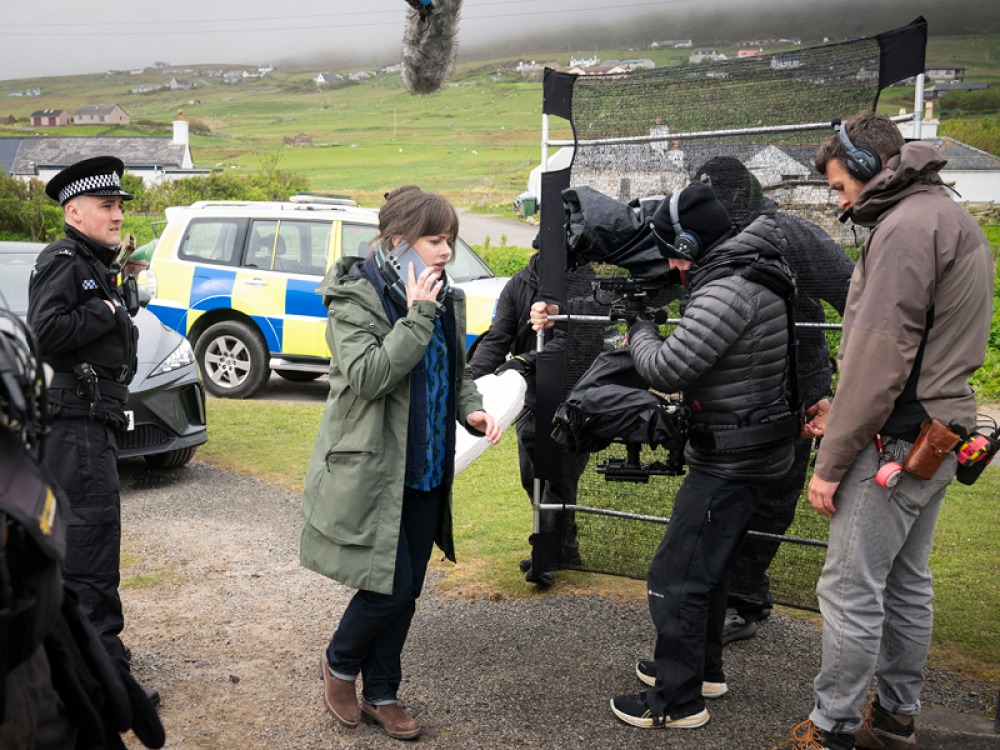
In comparison to her early works, Ann notes she now has an assuredness when approaching a new book. ‘I’m more confident now. I can start a book with the expectation that I will finish it. I was just groping my way through with that first book. It took me years from the start to actually finishing it and getting a response,’ she recalls. Her catalogue of work to date includes the wildly popular Matthew Venn, Shetland, and Vera Stanhope series (all of which have been adapted for television), as well as standalone works.
Pursuing writing for the love of the process, rather than for its potential success, has meant Ann’s writing has never felt like work. ‘When I started, there was no expectation of me. I wasn’t commercially successful for the first 20 years, and the books went into libraries and maybe into a couple of independent bookshops locally. You’d never see a book of mine in Waterstones for instance,’ she explains. ‘There was never any pressure and I never got paid in advance so I never felt any sort of stress or anxiety about it. I just wrote what I wanted to write.’
What Ann wanted to write was crime fiction, which she had always turned to as a comfort read. Part of the appeal, she explains, is the guaranteed structure of a crime story. Ann tries to claim she has little skill when it comes to building a plot, but with her long list of writing accolades that’s hard to believe. ‘I think I’m alright at character,’ she allows. ‘You get the structure with crime fiction, especially with the traditional crime fiction that I write. There’s a murder at the beginning, a limited number of suspects and some resolution at the end. So I don’t really have to worry about that. I know where I’m aiming for even if I don’t plot it out in advance.’
The majority of Ann’s books are part of a series, and as a lover of character this is something she prefers. ‘I do really like writing a series because you can see a character grow over a number of books, and in a way it’s easier because you get to know the returning characters so well. It’s like writing from memory rather than imagination. You’re writing about people you know intimately.’
The most famous of Ann’s characters is undoubtedly DI Vera Stanhope, the no-nonsense investigator who has inspired the 14-series television show. The character was first introduced in The Crow Trap, published in 1999. Ann was closely involved with the show which came to a close in 2024, and is herself preparing to say goodbye to Vera for the last time with the upcoming release of the final book in the series. The book is set to be released late next year, and Ann tells us that she always knows when it’s time to say farewell. ‘I think I know when it’s time to stop,’ she says. ‘I think I know when it’s getting a bit easy writing about them. When you’re not excited about waking up and writing a book, then it’s time to think about doing something different.’ Fans will be content with Vera’s departure though, and Ann has kept them in mind as she’s was writing. ‘It was quite fun to write because I wanted to work out how I was going to leave it and just to make it as real as possible for the readers,’ she explains.
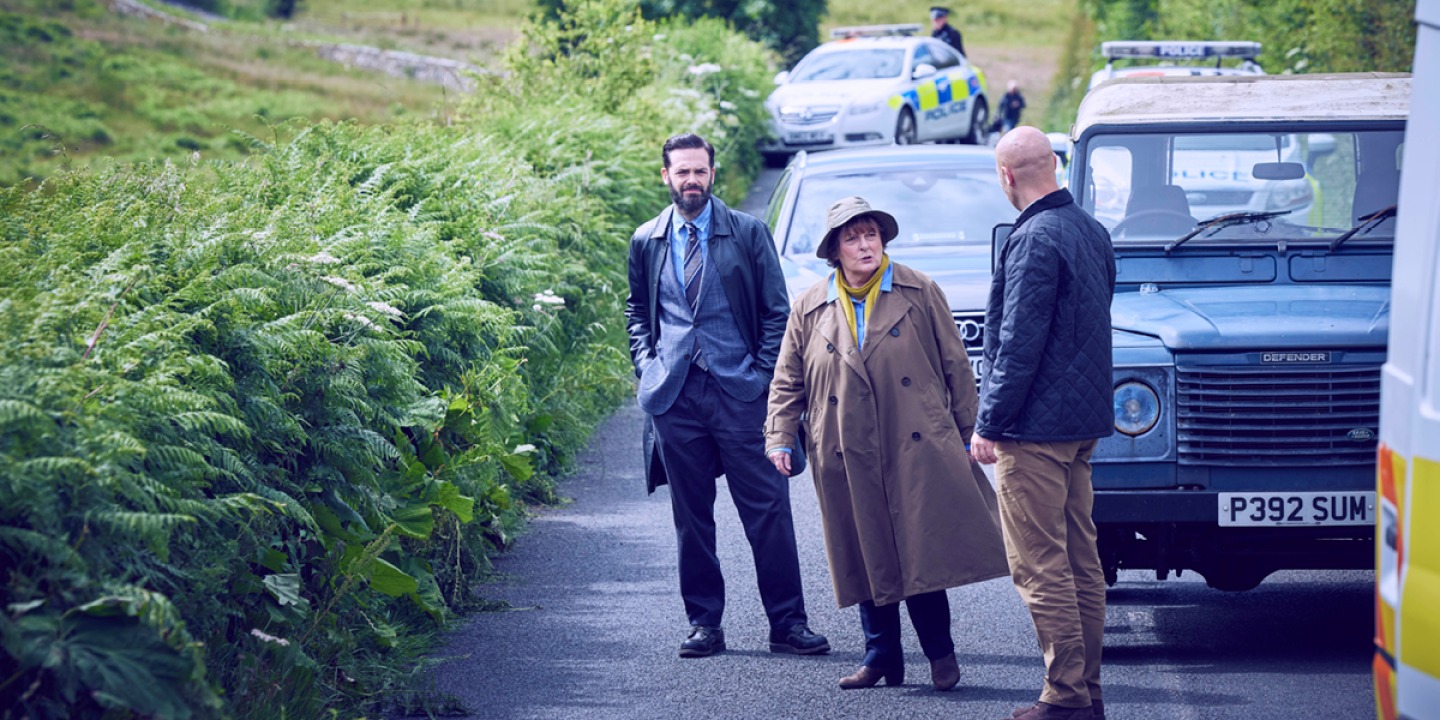
Ann appreciates that crime has a very broad appeal, and suggests that part of the reason for that is how close to home the topics can be for readers. ‘If a kid goes missing from a care home or an old guy is wandering because he’s got dementia or you’ve got someone having a psychotic episode in a supermarket, it’s the police that get called. So they are dealing with those aspects of social, communal justice in a way that no other authority is,’ she says. Community is a core theme that Ann loves to write about. ‘I concentrate on the things that I really do enjoy writing about like community, family, and what holds it together or pulls it apart.’
Looking back at her prolific career, Ann discusses her list of achievements with the same level-headedness she brings to every project. ‘Winning the Gold Dagger in 2006 was a career changer,’ she says. This was the point when Ann was able to pursue writing full-time. ‘In 2017 I got the Diamond Dagger Award, which is voted for by other members of the Crime Writer’s Association. It’s sort of a lifetime achievement for hanging on in there for all that time! It was great because my daughters and my husband came to that. He died a few months later, so it was very special that he was there.’
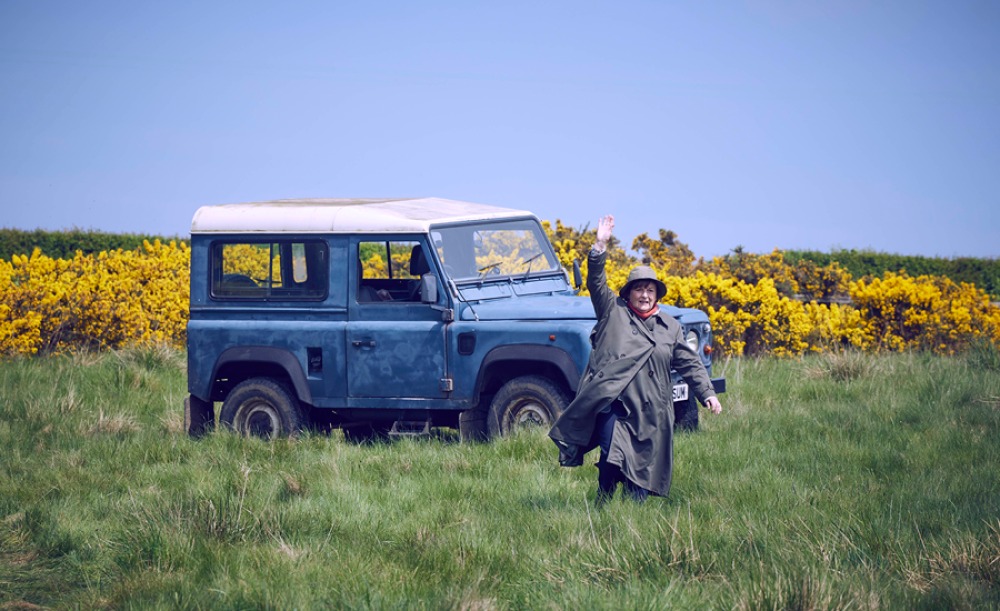
The irony of continuing to work for nearly a decade after earning a lifetime achievement award is not lost on Ann, but she has no plans to stop. ‘I just love telling stories,’ she says. ‘Most of my contemporaries are retired but I can’t imagine getting up in the morning and not doing it. While I’m still writing and people are still reading, I’m going to carry on.’
Much of Ann’s current work goes beyond writing, and she works hard to promote literacy in the local area and in the UK. Her work with Bay Tales, Whitley Bay’s crime fiction festival, brings her a great deal of joy. ‘Bay Tales is fabulous and that’s all down to Vic Watson,’ she says. ‘She’s built up all the publishers and got the writers to come along. Really it is a reader’s festival, and people come because they know they’re going to have a good time. They can come on their own, make friends and the whole town really gets involved.’
Ann also set up the Reading for Wellbeing project to encourage others to find solace in reading. ‘What I want to do really is spread that love of reading that got me into writing and got me through some tough times,’ she explains. ‘[The project] started in the North East and is still very much based here although we’ve got outlying pockets all over the country. Not everybody finds an escape in writing, but most people can find an escape in reading.’
Ultimately, Ann hopes that this work will form an important part of her legacy, which is based on a collaborative attitude she says is strong in the North East. ‘Obviously it wasn’t an original idea that reading is helpful, but that’s something about the North – we’re used to working collaboratively, because we have to. You can’t really have one idea and set off on your own,’ she says.
Coming up for Ann this October is the publication of The Dying Light, the newest instalment in the Matthew Venn series. Just like with A Bird in the Hand all those years ago, Ann still finds comfort in her work. ‘I still write really early in the morning and I still absolutely love it,’ she says. ‘It doesn’t feel like work at all. I’m very, very lucky.’